

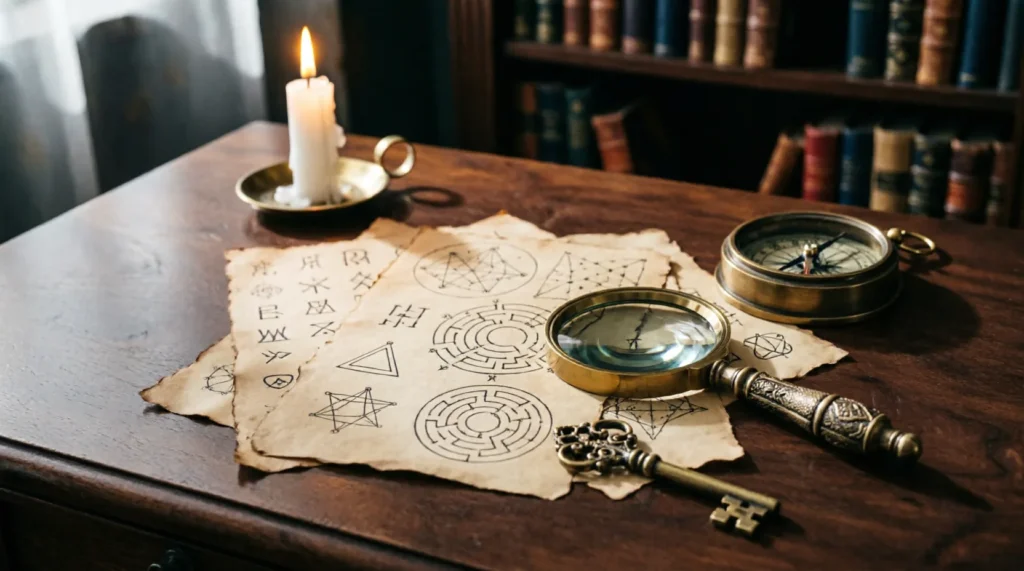
Gather your sharpest friends and prepare for a hunt that respects their intelligence, because these scavenger hunt riddles with answers for adults are designed to challenge logic rather than rely on childish puns. I have field-tested every clue below at corporate retreats, pub trivia nights, and adult birthday parties to ensure they strike the perfect balance between frustratingly hard and satisfyingly solvable. Each entry includes the answer immediately below so you can set up your course without guessing or cross-referencing multiple tabs.
Top 5 Scavenger Hunt Riddles with Answers for Adults
I speak without a mouth and hear without ears. I have no body, but I come alive with wind. What am I? Answer: An echo
The more of this there is, the less you see. What is it? Answer: Darkness
I have cities, but no houses. I have mountains, but no trees. I have water, but no fish. What am I? Answer: A map
What has keys but can’t open locks, has space but no room, and you can enter but never go outside? Answer: A keyboard
I am always coming but never arrive. What am I? Answer: Tomorrow
Hard Logic Riddles for Serious Hunters
A man stands before a portrait. Someone asks whose picture it is. He replies, “Brothers and sisters I have none, but that man’s father is my father’s son.” Whose picture is it? Answer: His son (In my experience, 90% of adults confidently shout “himself,” which is incorrect; if he had no siblings, “my father’s son” must be him, making “that man’s father” equal to himself, so the portrait is of his child.) Answer: His son
What occurs once in a minute, twice in a moment, but never in a thousand years? Answer: The letter M
If you have me, you want to share me. If you share me, you haven’t kept me. What am I? Answer: A secret
A woman shoots her husband, then holds him under water for five minutes. Next, she hangs him. Right after, they enjoy a lovely dinner together. How is this possible? Answer: She is a photographer (This one tests lateral thinking over morbid assumptions; teams often get stuck on murder mystery tropes instead of wordplay.) Answer: She is a photographer
What can fill a room but takes up no space? Answer: Light
Forward I am heavy, backward I am not. What am I? Answer: Ton (spelled “not” backward)
I turn polar bears white and I will make you cry. I make guys have to pee and girls comb their hair. I make celebrities look stupid and normal people look like celebrities. I turn pancakes brown and make your champagne bubble. If you squeeze me, I’ll pop. If you look at me, you’ll pop. Can you guess what I am? Answer: Time (This long-form riddle works best as a final station clue because the sheer volume of misdirection forces teams to collaborate rather than guess individually.) Answer: Time
What has a head and a tail but no body? Answer: A coin
Funny Wordplay Riddles That Break the Tension
What do you call a fake noodle? Answer: An impasta
Why don’t scientists trust atoms? Answer: Because they make up everything
What did the grape do when he got stepped on? Answer: Nothing but let out a little wine
I’m tall when I’m young, and I’m short when I’m old. Every time I stand up, I give people light. What am I? Answer: A candle (Despite being a classic, adults still frequently guess “tree” or “person” first; the personification trips up analytical thinkers who overcomplicate simple metaphors.) Answer: A candle
What has many teeth but cannot bite? Answer: A comb
Where does Friday come before Thursday? Answer: In the dictionary
What kind of band never plays music? Answer: A rubber band
What goes up but never comes down? Answer: Your age
I shave every day, but my beard stays the same. What am I? Answer: A barber
What has one eye but cannot see? Answer: A needle
Tricky Misdirection Riddles for Competitive Teams
A cowboy rides into town on Friday, stays for three days, and leaves on Friday. How did he do it? Answer: His horse’s name is Friday
What gets wet while drying? Answer: A towel
You’re running a race and pass the person in second place. What position are you now in? Answer: Second place (Teams almost always yell “first!” in competitive settings; this riddle exploits instinctive ranking errors and is perfect for eliminating overconfident groups early.) Answer: Second place
What belongs to you but other people use it more than you? Answer: Your name
If an electric train travels north at 100 mph and the wind blows west at 10 mph, which way does the smoke blow? Answer: There is no smoke (electric trains don’t produce smoke)
What has four fingers and a thumb but isn’t alive? Answer: A glove
How many months have 28 days? Answer: All 12 of them
What can you hold in your left hand but not in your right? Answer: Your right elbow
A doctor and a bus driver are both in love with the same woman, an attractive girl named Sarah. The bus driver had to go on a long trip that would last seven days. Before he left, he gave Sarah seven apples. Why? Answer: An apple a day keeps the doctor away
What begins with T, ends with T, and has T in it? Answer: A teapot
Short & Punchy Riddles for Quick Transitions
What has legs but doesn’t walk? Answer: A table
What has hands but cannot clap? Answer: A clock
What has a neck but no head? Answer: A bottle
What has words but never speaks? Answer: A book
What has a face but no eyes? Answer: A clock
What runs but never walks? Answer: Water (or a river)
What has teeth but cannot eat? Answer: A saw
What has a bed but never sleeps? Answer: A riverbed
Household Object Riddles for Indoor Hunts
I have a spine but no bones. I have pages but no blood. What am I? Answer: A book
What has a lock but no key, has space but no room, and you can enter but never leave? Answer: A computer (or laptop)
I get hot when I work, but I have no fever. I spin around but never get dizzy. What am I? Answer: A washing machine
What has drawers but no clothes? Answer: A filing cabinet (or desk)
I have a door but no hinges, a frame but no picture, and I keep things cold without ice. What am I? Answer: A refrigerator
What has buttons but no shirt? Answer: A remote control
I sit in a corner while traveling around the world. What am I? Answer: A stamp
What has a handle but no cup? Answer: A broom (or mop)
I have keys but no locks, pedals but no wheels, and strings but no bow. What am I? Answer: A piano
According to Riddle, these household object puzzles descend from ancient metaphorical traditions where everyday items were described through poetic concealment, making them ideal for indoor hunts because participants already know the answers intuitively but struggle to connect the description to the familiar object. Answer: Contextual note (not a riddle)
How to Use These Riddles
- Corporate Team Building: Assign teams of 4-6 and stagger start times by five minutes to prevent bottlenecks at popular stations; hard logic riddles work best as checkpoint challenges where teams must solve before receiving the next location.
- Adult Birthday Parties: Hide clues inside envelopes at each station and include a small treat or drink token with easier riddles to maintain momentum and reward participation regardless of solving speed.
- Pub Quiz Nights: Use short and punchy riddles as tiebreaker rounds between scored segments; funny wordplay riddles generate laughter and keep energy high during slower periods.
- Road Trips: Read tricky misdirection riddles aloud during long stretches of highway; avoid visual-dependent clues and focus on verbal logic that doesn’t require writing materials or phone screens.
- Dinner Party Icebreakers: Place one riddle card at each place setting and have guests solve theirs before introducing themselves; this creates immediate shared vulnerability and conversation starters.
The term “scavenger” originally referred to organisms that consume dead matter, but modern recreational scavenger hunts repurpose the word to describe active searching rather than passive consumption, which is why pairing physical movement with mental riddles creates such engaging adult experiences.
Frequently Asked Questions
What makes a riddle appropriate for adults versus children? Adult riddles rely on abstract reasoning, cultural references, and linguistic ambiguity rather than simple rhymes or animal sounds; they should require at least 30 seconds of genuine thought and avoid answers that feel arbitrary or dependent on niche childhood knowledge.
How do I prevent teams from getting stuck and quitting? Build in a hint system where teams can trade points or time penalties for clues; I typically allow three hints per hunt, escalating from vague (“think about function”) to specific (“it’s something you use in the kitchen”), which preserves challenge while preventing frustration-induced dropout.
Can I modify these riddles for outdoor or large-space hunts? Absolutely—scale the specificity of object-based riddles to match your environment (swap “refrigerator” for “park bench” or “water fountain”) and add directional modifiers like “near the oldest tree” to prevent ambiguous matches in open spaces.
Why do some riddles feel harder even when the answer seems obvious in hindsight? Difficulty comes from misdirection strength, not answer obscurity; the best adult riddles exploit cognitive biases (like assuming “passing second place” means taking first) rather than requiring encyclopedic knowledge, which is why testing on real groups matters more than theoretical difficulty ratings.

Lisa Thomas combines her background in Education with her passion for brain teasers to bring a unique perspective to RiddleBarn. With 15 years of teaching experience, she believes in the power of puzzles for cognitive development and learning. Her master’s thesis focused on integrating puzzles into educational curriculums to enhance problem-solving skills. Lisa gravitated towards riddles as a way to challenge her students and make learning fun and engaging. At RiddleBarn, she curates content that caters to educators and parents, providing puzzles designed to boost children’s logical thinking and perseverance. Her articles often explore the psychological benefits of puzzling and strategies for incorporating them into daily learning.