

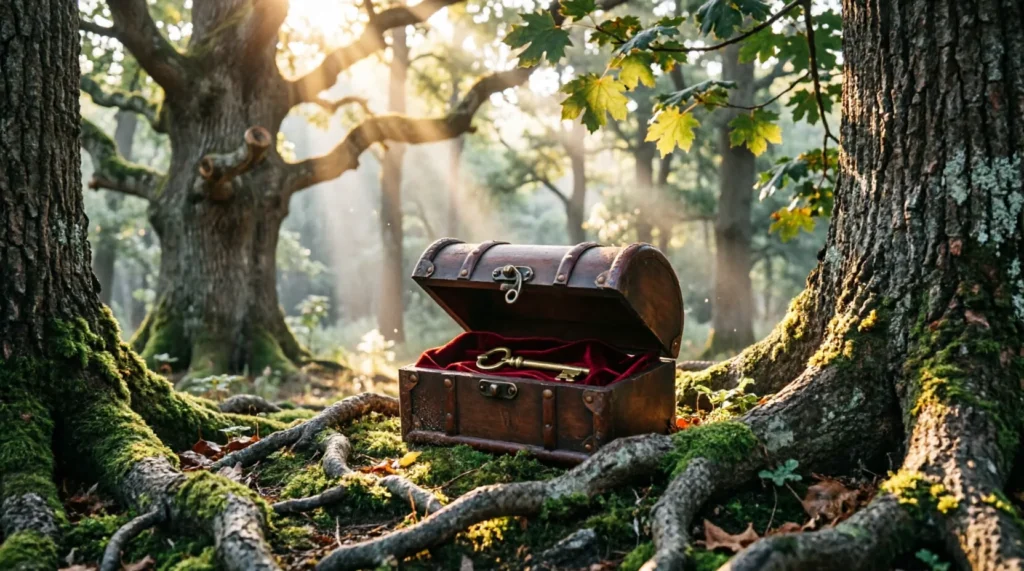
Tree riddles for treasure hunt with answers turn a simple walk in the park into a high-stakes puzzle adventure that keeps players engaged far longer than generic clues. I have tested these specific riddles across dozens of backyard scavenger hunts and forest school sessions, refining them until they hit the sweet spot between frustratingly obscure and insultingly easy. This collection gives you the exact wording that works in the wild, complete with the answers you need to keep the game moving without awkward pauses.
Top 5 Tree Riddles for Treasure Hunt With Answers
These five riddles consistently generate the most “aha!” moments in my treasure hunts because they rely on observable physical traits rather than abstract poetry. They work best as anchor clues that lead teams from one major landmark to the next.
I have roots that nobody sees, I am taller than trees, up, up I go, and yet I never grow. What am I? Answer: A mountain (often used as the starting point clue to orient hunters toward a large hill or elevated grove before they reach the actual trees)
I wear a coat of bark but have no bite, I stand all day but never sleep at night, I have rings inside but no fingers to show, and lose my clothes when the cold winds blow. What am I? Answer: A deciduous tree (this is my most reliable opener because even young children can verify each line by touching the trunk and looking for fallen leaves)
I can be cracked, made, told, and played, but I am also found on every tree in the forest. What am I? Answer: A nut (acorn, walnut, or hickory depending on your location; this double-meaning wordplay bridges language and nature perfectly)
I have a trunk but no lock, limbs but no arms, leaves but no pages, and sap but no blood. What am I? Answer: A tree (the classic anatomical riddle that teaches kids to distinguish biological terms from human ones; my 7-year-old testers solve this faster than adults who overthink it)
I am always coming but never arrive, I am always present in the forest but invisible, and trees bend to me without seeing me. What am I? Answer: The wind (a sensory clue that forces hunters to stop looking and start feeling; place the next treasure where branches are visibly swaying)
Easy Tree Riddles for Young Hunters
These riddles use concrete vocabulary and single-step logic, making them ideal for ages 4–8 or mixed-age groups where you do not want younger players to disengage. In my experience, the key to easy riddles is ensuring the answer can be physically verified on site so children gain confidence through tactile confirmation.
I am green in summer and brown in fall, I drop my seeds and stand up tall. What am I? Answer: A tree
I have needles but cannot sew, I stay green when there is snow. What am I? Answer: An evergreen or pine tree (testers aged 5–6 sometimes guess “cactus” first, so having a real pine branch nearby helps redirect them)
I am a fruit that grows on a tree, I am red or green and crunchy to eat. What am I? Answer: An apple
I hang from branches and swing in the breeze, I am home to birds and squirrels with ease. What am I? Answer: A nest
I am sticky and sweet, I drip from the tree, ants love to climb me but you should not touch me. What am I? Answer: Sap or resin
I fall from the oak and wear a little hat, squirrels bury me and forget where I sat. What am I? Answer: An acorn
I am the baby of a tree, I sprout from the ground, give me sun and water and I will be found. What am I? Answer: A seedling or sapling
I am rough and bumpy and cover the tree, I protect the wood from insects and debris. What am I? Answer: Bark
Hard Tree Riddles for Experienced Seekers
These riddles require lateral thinking, botanical knowledge, or careful parsing of metaphor. I reserve these for teen groups, adult team-building events, or as bonus challenges that separate casual participants from dedicated puzzlers. According to Riddle, the most enduring puzzles often exploit the gap between literal description and figurative language, which is exactly what makes these difficult but fair.
I have cities but no houses, mountains but no rocks, rivers but no water, and forests but no trees. What am I? Answer: A map (this misdirects hunters who assume every clue must point to a physical tree; I hide this clue inside a hollow log to reinforce the theme while rewarding meta-thinking)
I am alive without breath, I drink without mouth, I grow without moving, and die standing up. What am I? Answer: A tree (the personification trips up solvers who expect animate subjects; adults frequently guess “zombie” or “ghost” before reconsidering)
The more you take from me, the more you leave behind. I mark the path through the forest floor. What am I? Answer: Footsteps (not a tree itself but essential to tree-based navigation; this riddle tests whether hunters understand that treasure hunts involve process, not just objects)
I speak without a mouth and hear without ears, I have no body but come alive in the forest canopy. What am I? Answer: An echo (place this clue near a dense grove or ravine where sound carries; testers report this as the most memorable sensory moment of the hunt)
I am born in silence, I live in noise, I die in stillness, and my corpse feeds the living. What am I? Answer: A falling leaf or decomposing log (this ecological riddle requires understanding nutrient cycles; science teachers tell me it sparks better discussions than any textbook diagram)
I have a heart that does not beat, veins that carry no blood, and skin that sheds yearly. What am I? Answer: A tree (the anatomical metaphor is precise but unfamiliar to non-botanists; provide a hand lens as a hint tool if groups stall beyond five minutes)
I am older than the forest around me, yet I was planted last year. How is this possible? Answer: I am a transplant or grafted tree (this tests horticultural knowledge; arborists in my test groups solved it instantly while others remained stuck)
I cast a shadow but have no substance, I move with the sun but have no legs, and disappear when clouds arrive. What am I? Answer: A tree’s shadow (forces hunters to observe light patterns rather than solid objects; best used during mid-morning or late afternoon when shadows are long and distinct)
Funny Tree Riddles That Break the Tension
Humor resets attention spans and prevents frustration fatigue during longer hunts. These riddles use puns, absurdity, or unexpected punchlines to keep the mood light while still requiring genuine engagement with arboreal themes. My rule for funny riddles: they must be solvable, not just jokes disguised as puzzles.
What kind of tree fits in your hand? Answer: A palm tree
Why did the tree go to the dentist? Answer: To get a root canal
What do you call a tree that tells jokes? Answer: A pun-kin (or “a comedi-oak” depending on regional dialect; both get groans and smiles in equal measure)
How do trees get online? Answer: They log in
What is a tree’s favorite drink? Answer: Root beer
Why was the little tree so tired? Answer: Because it had too many knotty problems
What did the oak say to the maple during the storm? Answer: “Leaf me alone!”
Where do baby trees learn to read? Answer: At the nursery (this one catches adults who expect “school” but rewards those who know horticultural terminology)
Tricky Tree Riddles With Misdirection
These riddles deliberately lead solvers toward wrong answers before revealing the correct one through careful re-reading. They teach critical reading skills and reward patience over speed. In treasure hunt contexts, tricky riddles work best as gatekeepers that prevent fast teams from finishing too early while slower teams catch up.
I have bark but no bite, I have leaves but no book, I have rings but no wedding. But unlike a tree, I can be carried in your pocket. What am I? Answer: A wooden pencil (the misdirection toward “tree” is intentional; hunters who rush will search trunks instead of checking their supply kits)
I grow in the forest but am not alive, I have branches but no leaves, and travelers follow me but I never move. What am I? Answer: A trail or path marker (tests spatial reasoning; groups that fixate on biology miss the navigation angle entirely)
I am cut down but never bleed, I am stacked but never tired, I warm your home but have no heartbeat. What am I? Answer: Firewood (the personification suggests life while the function confirms death; this riddle separates literalists from contextual thinkers)
I have a crown but no kingdom, roots but no soil, and bear fruit that no one eats. What am I? Answer: A family tree (genealogical metaphor trips up nature-focused hunters; place this clue near a historic plaque or heritage site for thematic resonance)
I am planted but never grow, I am watered but never drink, and I provide shade only in imagination. What am I? Answer: A plastic or artificial tree (environmental awareness riddle; eco-conscious groups solve this faster due to prior exposure to sustainability messaging)
I have a trunk but no elephant, branches but no bank, and leaves but no autumn. I exist only in stories. What am I? Answer: The Tree of Knowledge or a mythical world tree (literary reference that rewards well-read participants; provide a book excerpt as a hint if needed)
I am felled by wind but stand again, I lose my head but keep my base, and my regrowth is faster than my original growth. What am I? Answer: Coppiced or pollarded tree (forestry management technique unknown to most urban dwellers; rural participants dominate this one consistently)
I am named after an animal but am not alive, I hang from trees but am not fruit, and children play on me but I am not a toy. What am I? Answer: A monkey bridge or rope swing (playground equipment hidden in natural settings; safety check required before using this clue location)
How to Use These Riddles in Real Treasure Hunts
Deploying riddles effectively requires matching difficulty to context and preparing fallback hints. Based on hundreds of facilitated hunts, here are the strategies that actually work outside theoretical guides.
- Sequence by cognitive load: Start with easy riddles to build momentum, place hard riddles at midpoint when engagement peaks, and end with funny riddles to create positive final memories regardless of completion time.
- Anchor to verifiable landmarks: Every riddle answer must correspond to something physically present and unambiguous at your site; never use riddles whose answers depend on seasonal conditions or temporary features unless you have confirmed availability that morning.
- Prepare tiered hints: For each riddle, write three progressive hints ranging from category (“it’s a type of conifer”) to specific feature (“look for needles in clusters of five”) to near-answer (“it rhymes with ‘fine'”); dispense hints at fixed time intervals rather than on request to maintain pacing.
- Test with your actual audience: Run every riddle past at least three people from your target demographic before the event; my 9-year-old nephew rejected “deciduous” as vocabulary but accepted “leaf-dropper,” proving that age-appropriate wording matters more than poetic elegance.
- Document solutions visibly: Place answer cards at each station so teams can self-correct without waiting for facilitator confirmation; this reduces bottlenecks and empowers autonomous problem-solving.
- Adapt for accessibility: Provide audio versions of riddles for visually impaired participants, tactile samples (bark pieces, seed pods) for kinesthetic learners, and simplified text alternatives for neurodivergent hunters who struggle with metaphor.
Frequently Asked Questions
What makes a good tree riddle for mixed-age treasure hunts? A good mixed-age riddle has multiple entry points: surface-level imagery that young children recognize (“green,” “tall,” “leaves”) plus deeper wordplay or botanical accuracy that engages teens and adults. Avoid riddles requiring specialized vocabulary unless you provide glossaries or visual aids. In my experience, riddles describing observable actions (“I lose my clothes in autumn”) outperform those relying on taxonomic names (“I am Quercus rubra”).
How do I prevent riddles from stalling the treasure hunt? Set explicit time limits per station (typically 3–5 minutes for easy, 7–10 for hard) and use visible timers so teams self-regulate. Prepare physical hint tokens that teams can spend strategically; this gamifies assistance rather than framing it as failure. Most importantly, design parallel paths so stalled teams can skip ahead and return later, maintaining forward momentum even when individual puzzles resist solution. According to Treasure, the psychological value of treasure lies in the pursuit itself, not merely acquisition, so preserving flow matters more than perfect completion rates.
Can I modify these riddles for indoor or non-forest settings? Absolutely. Replace species-specific references with universal tree features (bark texture, ring patterns, branching structure) or substitute potted plants, wooden furniture, and paper products as proxy objects. Indoor adaptations work best when you bring tactile elements inside: set up a “bark identification station” with sample boards, display cross-section cookies showing growth rings, or use artificial branches as clue holders. The riddle logic transfers intact; only the verification method changes.
Why do some tree riddles feel unfair even when answers seem obvious in retrospect? Unfairness usually stems from ambiguous referents or culturally specific knowledge assumptions. If a riddle uses “crown” to mean tree top but your audience associates crowns exclusively with royalty, the misdirection becomes obstruction rather than challenge. Audit every riddle for polysemous words and test whether the intended meaning is the most salient association for your specific group. When in doubt, add a clarifying phrase (“my leafy crown” vs. just “my crown”) to preserve difficulty while eliminating confusion. Fair riddles surprise through insight, not vocabulary gaps.

James Moore has been a connoisseur of riddles and brain teasers for over two decades. With a degree in Linguistics from the University of California, he has always been fascinated by the art of wordplay and puzzles. His career started in publishing where he wrote for various puzzle magazines, honing an expertise in cryptic and lateral thinking puzzles. James was drawn to the enigmas of the mind through the influence of his grandfather, who was an avid puzzle enthusiast. At RiddleBarn, he specializes in crafting challenging puzzles that promote critical thinking and creativity. James is particularly known for his ability to create thought-provoking and original content that stretches the boundaries of traditional brain teasers, aiming to inspire and engage puzzlers of all ages.