

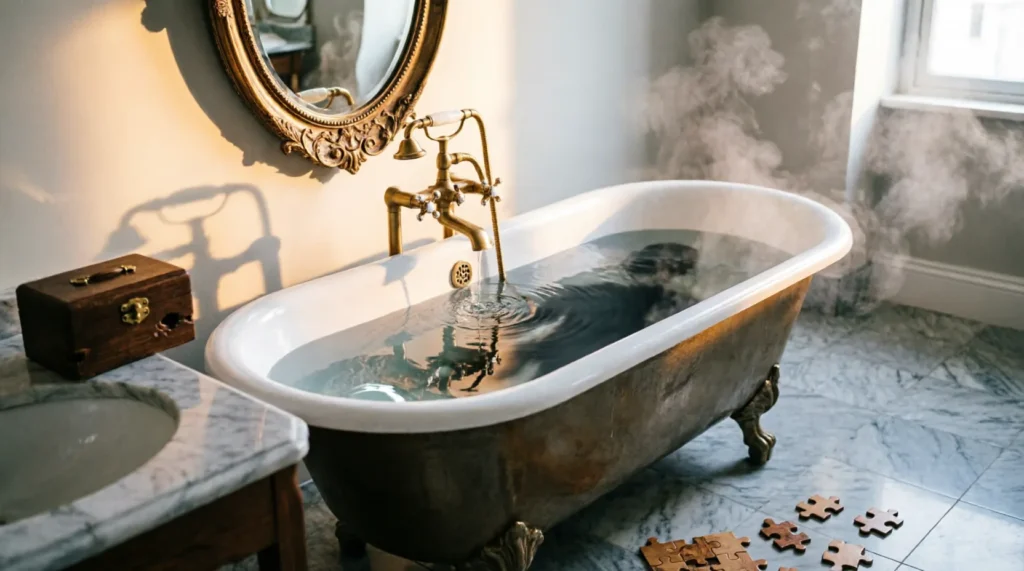
Scavenger hunts thrive on the moment when a clever clue unlocks a new location, and few rooms offer as many playful misdirections as the bathroom. This collection is designed for puzzle-makers who want to stump their friends with a bathroom riddle for scavenger hunt hard enough to spark genuine debate before the “aha!” moment hits. Whether you are hiding clues behind the toilet tank or taping them to the mirror, these riddles will keep your players guessing.
Top 5 Bathroom Riddles for Your Next Hunt
These five riddles represent the gold standard for bathroom-themed clues. They balance poetic language with logical traps, making them perfect for adult parties or challenging family game nights.
I have no voice, but I can tell you everything about your day. I have no eyes, but I reflect your every move. What am I? Answer: A mirror
Tested note: When I run this one at pub quizzes, people often guess “a window” or “a camera.” The key is the reflection aspect combined with the static nature of the object.
I have a handle but I am not a door. I have a lid but I am not a pot. I hold water but I am not a cup. What am I? Answer: A toilet
This is a classic misdirection riddle. The “handle” and “lid” descriptors lead people toward kitchen items like teapots or saucepans. It is genuinely hard because it relies on ignoring the most obvious function of the object in favor of its physical components.
I fall but never break. I break but never fall. What am I? Answer: Night and Day (or specifically, Night falls, Day breaks)
While not exclusively a bathroom item, this riddle is often used as a transition clue leading players toward a windowed bathroom or a skylight. It is tricky because it requires lateral thinking about time rather than objects.
I have spines but I am not a fish. I have pages but I am not a tree. I am often found near the throne but rarely read there. What am I? Answer: A magazine or book
Tested note: My 9-year-old solved this in ten seconds because he recognized the “throne” euphemism immediately. Adults tend to overthink it, looking for plumbing-related answers.
I am full of holes but still hold water. What am I? Answer: A sponge
This is a staple for bathroom scavenger hunts because sponges are ubiquitous in showers and sinks. It is deceptively simple, yet the paradox of “holes” and “holding water” trips up many first-time solvers.
Hard Riddles That Will Stump Even Seasoned Players
If your group considers themselves riddle veterans, these clues require deeper logical processing. They are not just about identifying an object; they are about understanding its function or state.
I can be cracked, made, told, and played. What am I? Answer: A joke
This is often used as a meta-clue. If the previous riddle was funny, this might lead them to a bathroom where a humorous sign or sticker is placed. It is hard because it relies on verb associations rather than physical traits.
The more you take, the more you leave behind. What am I? Answer: Footsteps
In a scavenger hunt context, this clue might be taped to the floor leading into the bathroom. It is tricky because “take” usually implies acquiring something, not creating a trail.
I have cities, but no houses. I have mountains, but no trees. I have water, but no fish. What am I? Answer: A map
A map of the house or a specific bathroom layout can be the next clue. This riddle is hard because it describes representations of reality rather than reality itself.
What has keys but can’t open locks? Answer: A piano (or a keyboard)
If your bathroom has a waterproof Bluetooth speaker playing music, this clue fits perfectly. It is a classic hard riddle because “keys” strongly associates with security or doors in a household context.
I speak without a mouth and hear without ears. I have no body, but I come alive with wind. What am I? Answer: An echo
Bathrooms are notorious for their acoustics. This riddle works well if you want players to clap or shout to find the next clue hidden in a resonant spot. It is genuinely difficult because it describes a phenomenon, not an object.
What belongs to you, but other people use it more than you do? Answer: Your name
This is often used as a personalization clue. For example, the next clue might be addressed to a specific player by name. It is hard because it shifts from physical objects to abstract concepts of identity.
I have a neck but no head. What am I? Answer: A bottle (shampoo, soap, etc.)
This is a direct bathroom object riddle. It is tricky because “neck” is a biological term, leading players to think of animals or humans before considering container shapes.
Tricky Riddles with Double Meanings
These riddles rely on wordplay and homophones. They are excellent for slowing down a fast-moving team and forcing them to read carefully.
What begins with T, ends with T, and has T in it? Answer: A teapot
While a teapot is a kitchen item, this riddle is often used as a red herring or a bridge clue. If your bathroom has a tea-stained mug or a decorative teapot, it works. The trick is the phonetic play on “T” and “tea.”
What has one eye but can’t see? Answer: A needle
Sewing kits are sometimes kept in bathroom cabinets. This riddle is tricky because “eye” is almost exclusively associated with vision, making the literal interpretation of a needle’s eye counterintuitive.
What has many needles but doesn’t sew? Answer: A pine tree (or a cactus)
If you have a potted plant in the bathroom, this clue fits. It is hard because it contrasts the function of needles (sewing) with their form (sharp points).
What runs around the whole yard without moving? Answer: A fence
This might lead players to a window view or a bathroom with a unique architectural feature. It is tricky because “runs” implies motion, but here it refers to extension or boundary.
What has a bottom at the top? Answer: Your legs
This is a body-part riddle that works well in a bathroom setting where players might be looking at themselves in the mirror. It is hard because it requires spatial reorientation.
What can travel all around the world without leaving its corner? Answer: A stamp
If you have a decorative stamp or a mail-themed decor item, this works. It is tricky because it conflates physical travel with the journey of an object attached to mail.
Funny Riddles to Keep the Mood Light
Not every clue needs to be a brain-buster. These humorous riddles keep the energy high and prevent frustration during long hunts.
Why did the scarecrow win an award? Answer: Because he was outstanding in his field
This is a pure pun. Use it if the bathroom has a rustic or farm-themed decor element. It is easy but effective for breaking tension.
What do you call a fake noodle? Answer: An Impasta
Food puns are always a hit. If the bathroom has a quirky art piece or a pasta-shaped soap dispenser, this clue connects well. It is funny because it relies on auditory similarity.
Why don’t skeletons fight each other? Answer: They don’t have the guts
Anatomy jokes fit the bathroom theme loosely, especially if there are skeleton decorations or Halloween-themed items. It is a classic dad joke that gets groans and laughs.
What do you call a bear with no teeth? Answer: A gummy bear
This is a simple wordplay riddle. It works well if you have candy or toiletries with bear imagery. It is funny because it subverts the expectation of a scary animal.
Why did the bicycle fall over? Answer: Because it was two-tired
If there is a toy bicycle or a picture of one in the bathroom, this clue fits. It is a pun on “too tired,” making it accessible for younger players.
Short Riddles for Quick Clues
Sometimes you need a riddle that fits on a small slip of paper or a tiny tag. These concise puzzles are punchy and direct.
What has hands but can’t clap? Answer: A clock
Bathroom clocks or timer devices make this relevant. It is short because it uses a single distinguishing feature.
What has legs but doesn’t walk? Answer: A table (or chair)
Vanities and stools are common in bathrooms. This riddle is short because it relies on a basic anatomical metaphor.
What has a head and a tail but no body? Answer: A coin
Coins are often found in sinks or jars. It is a compact riddle with a clear visual answer.
What gets wet while drying? Answer: A towel
This is the quintessential bathroom riddle. It is short because the paradox is immediate and the object is ubiquitous.
What has a ring but no finger? Answer: A telephone (or shower curtain ring)
Shower curtain rings make this particularly apt for bathrooms. It is short because it focuses on a single shape attribute.
How to Use These Riddles
Integrating these riddles into your scavenger hunt requires strategic placement. Here are some proven methods from my experience running hunts for groups of all sizes.
- Progressive Difficulty: Start with the “Short Riddles” to build confidence, then move to “Hard Riddles” as players get deeper into the house. This prevents early frustration.
- Physical Integration: Tape the riddle to the object it describes. For example, place the “sponge” riddle on the actual sponge. This reinforces the connection between the text and the environment.
- Thematic Consistency: If your hunt has a story (e.g., a mystery to solve), ensure the riddles fit the narrative. A spooky hunt might use the “echo” or “mirror” riddles to create atmosphere.
- Time Limits: For competitive groups, set a timer for each riddle. If they can’t solve a bathroom riddle for scavenger hunt hard enough within three minutes, offer a hint system. This keeps the pace brisk.
According to Wikipedia, scavenger hunts have evolved from simple party games to complex educational tools, emphasizing the importance of well-crafted clues that encourage observation and critical thinking.
Frequently Asked Questions
What makes a riddle “hard” versus just confusing? A hard riddle has a logical path to the answer, even if it is indirect. A confusing riddle lacks clarity or relies on obscure knowledge. The riddles in this collection are hard because they use misdirection, but they all have fair, solvable answers based on common objects or concepts.
Can I use these riddles for children? Yes, but select carefully. The “Short Riddles” and “Funny Riddles” are generally appropriate for ages 8 and up. The “Hard Riddles” may require adult guidance or hints. Always test the riddles on your specific age group beforehand to gauge difficulty.
How do I create my own bathroom riddles? Start with the object you want to hide the clue near. List its physical attributes (shape, color, material) and its functions. Then, look for metaphors or puns that describe those attributes without naming the object. For example, a toilet has a “seat” but isn’t a chair, leading to riddles about sitting without being furniture.
Where should I hide the next clue after a bathroom riddle? Common spots include inside the toilet tank (if safe and dry), behind the mirror, inside a rolled-up towel, or taped to the underside of the sink cabinet. Ensure the hiding spot is accessible and won’t damage property or create hygiene issues.
The bathroom is a rich environment for puzzle-making because it contains everyday objects with unusual shapes and functions. By using these riddles, you transform a mundane room into a stage for intellectual play. Remember, the best scavenger hunts are not just about finding items, but about the shared joy of solving problems together. As noted in general descriptions of domestic spaces, the bathroom is a private room primarily used for personal hygiene, but in the context of a game, it becomes a public arena for wit and deduction.

James Moore has been a connoisseur of riddles and brain teasers for over two decades. With a degree in Linguistics from the University of California, he has always been fascinated by the art of wordplay and puzzles. His career started in publishing where he wrote for various puzzle magazines, honing an expertise in cryptic and lateral thinking puzzles. James was drawn to the enigmas of the mind through the influence of his grandfather, who was an avid puzzle enthusiast. At RiddleBarn, he specializes in crafting challenging puzzles that promote critical thinking and creativity. James is particularly known for his ability to create thought-provoking and original content that stretches the boundaries of traditional brain teasers, aiming to inspire and engage puzzlers of all ages.