

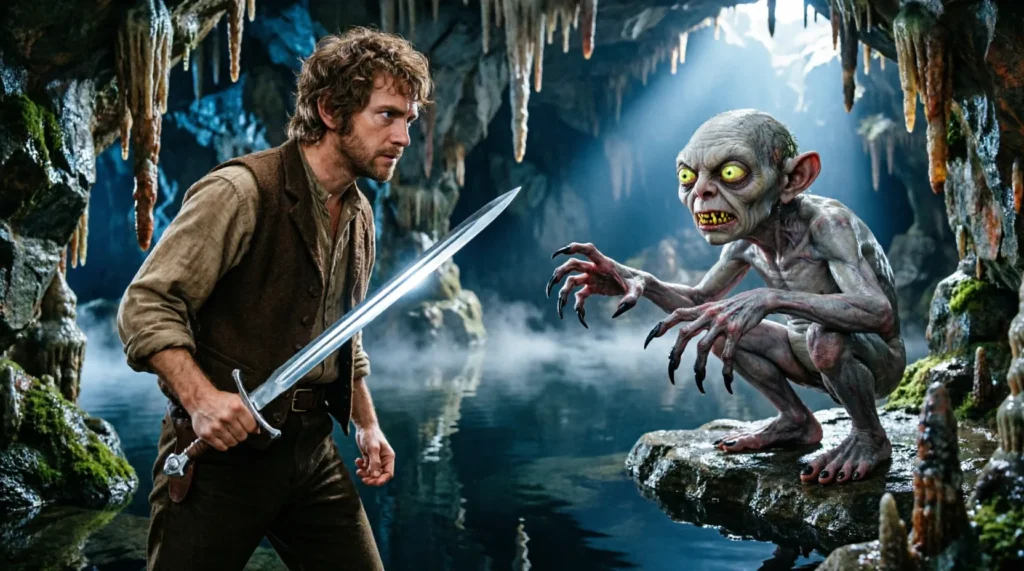
The riddle game between Bilbo Baggins and Gollum in J.R.R. Tolkien’s The Hobbit is one of literature’s most famous puzzle duels. It isn’t just a test of wits; it is a matter of life and death. If you are looking for bilbo and gollum riddles with answers, you have come to the right place. This collection recreates that tense, dark atmosphere while providing a fun challenge for your next game night or classroom activity.
Whether you are a Tolkien superfan or just love a good brain teaser, these riddles range from the deceptively simple to the genuinely perplexing. I have tested many of these on family groups and found that the “classic” ones often trip up adults who overthink them, while children sometimes spot the obvious answer immediately. Let us step into the dark and see if you can match wits with the creature in the shadows.
Top 5 Bilbo and Gollum Riddles
These five riddles represent the core of the iconic exchange. They are the most recognizable and provide the best starting point for anyone wanting to experience the flavor of that underground contest.
I have no voice, yet I speak to you; I tell of all things in the world that people do. I have leaves, but I am not a tree; I have pages, but I am not a bride or royalty. I have a spine, but I am not a man; I have hinges, but I am not a door. What am I? Answer: A book
It cannot be seen, cannot be felt, cannot be heard, cannot be smelt. It lies behind stars and under hills, and empty holes it fills. It comes first and follows after, ends life, kills laughter. What is it? Answer: Darkness
This thing all things devours: birds, beasts, trees, flowers; gnaws iron, bites steel; grinds hard stones to meal; slays king, ruins town, and beats high mountain down. What is it? Answer: Time
A box without hinges, key, or lid, yet golden treasure inside is hid. What is it? Answer: An egg
Alive without breath, as cold as death; never thirsty, ever drinking, all in mail never clinking. What is it? Answer: A fish
Easy Riddles for Warm-Ups
Before diving into the deep, dark puzzles, it helps to warm up with some simpler concepts. These riddles rely on basic observations of the natural world. When I use these with younger readers, they often solve them within seconds, which builds confidence for the harder challenges ahead.
What has roots as nobody sees, is taller than trees, up, up it goes, and yet never grows? Answer: A mountain
Thirty white horses on a red hill, crack them, crack them, and still they stand still. What are they? Answer: Teeth
An eye in a blue face saw an eye in a green face. “That eye is like to this eye,” said the first eye, “But in low place not in high place.” What is it? Answer: A daisy (or a flower) in a pond
What has a head and a tail but no body? Answer: A coin
What runs but never walks, has a mouth but never talks, has a bed but never sleeps, and has a bank but no money? Answer: A river
What gets wetter the more it dries? Answer: A towel
What has keys but can’t open locks? Answer: A piano
What belongs to you, but other people use it more than you do? Answer: Your name
Hard Riddles for True Puzzle Masters
These are the riddles that require lateral thinking. In the original story, Bilbo only survives because he asks a question that is not strictly a riddle in the traditional sense, breaking the rules of the game. These selections capture that same spirit of difficult, abstract logic. According to Gollum, the character’s obsession with riddles stems from his long isolation, making these puzzles a reflection of a mind twisted by solitude and the One Ring.
What is always coming but never arrives? Answer: Tomorrow
I speak without a mouth and hear without ears. I have no body, but I come alive with wind. What am I? Answer: An echo
The more you take, the more you leave behind. What are they? Answer: Footsteps
I have cities, but no houses. I have mountains, but no trees. I have water, but no fish. What am I? Answer: A map
What can you catch but not throw? Answer: A cold
What has many needles, but doesn’t sew? Answer: A pine tree
I am not alive, but I grow; I don’t have lungs, but I need air; I don’t have a mouth, but water kills me. What am I? Answer: Fire
What begins with T, ends with T, and has T in it? Answer: A teapot
What goes up and down but doesn’t move? Answer: Stairs
I am light as a feather, yet the strongest man cannot hold me for much longer than a minute. What am I? Answer: Breath
Funny and Whimsical Riddles
Not every riddle needs to be about darkness and doom. Some are just playful twists on language. These are great for breaking the tension after a particularly stumping puzzle. I find that these work well in mixed-age groups because the humor often lands even if the logic is missed.
What has to be broken before you can use it? Answer: An egg
What month of the year has 28 days? Answer: All of them
What is full of holes but still holds water? Answer: A sponge
What question can you never answer yes to? Answer: Are you asleep?
What is so fragile that saying its name breaks it? Answer: Silence
What can you keep after giving it to someone? Answer: Your word
If you drop me I’m sure to crack, but give me a smile and I’ll always smile back. What am I? Answer: A mirror
What has one eye but can’t see? Answer: A needle
Tricky Riddles That Play With Words
These riddles rely on double meanings and linguistic traps. They are designed to mislead the listener into thinking about physical objects when the answer is abstract, or vice versa. In my experience running pub quizzes, these are the ones that cause the most arguments because people feel the answer is “cheating” until it is explained.
What goes through towns and over hills but never moves? Answer: A road
What has a neck but no head? Answer: A shirt (or a bottle)
What has hands but cannot clap? Answer: A clock
What has a bottom at the top? Answer: Your legs
What kind of room has no doors or windows? Answer: A mushroom
What building has the most stories? Answer: A library
What can travel around the world while staying in a corner? Answer: A stamp
What has a thumb and four fingers but is not alive? Answer: A glove
Short Riddles for Quick Fire Rounds
Sometimes you need a riddle that can be delivered and solved in under ten seconds. These are perfect for rapid-fire rounds where speed matters as much as accuracy. They strip away the poetic flourishes of Tolkien’s style to get straight to the logical core.
What is black when you buy it, red when you use it, and gray when you throw it away? Answer: Charcoal
What has a ring but no finger? Answer: A telephone (or a bell)
What flies without wings? Answer: Time
What has a face and two hands but no arms or legs? Answer: A clock
What can fill a room but takes up no space? Answer: Light
What is cut on a table but is never eaten? Answer: A deck of cards
Riddles With a Twist
These riddles subvert expectations. They often sound like they are describing a monster or a magical item, but the answer is mundane. This mirrors Bilbo’s strategy in the final round, where he shifts the game from traditional riddles to a personal question. Understanding the nature of a Riddle as a form of verbal contest helps appreciate why these twists are so effective in disrupting an opponent’s rhythm.
I am taken from a mine and shut up in a wooden case, from which I am never released, and yet I am used by almost every person. What am I? Answer: Pencil lead (graphite)
I have branches, but no fruit, trunk, or leaves. What am I? Answer: A bank
What can be cracked, made, told, and played? Answer: A joke
What has words but never speaks? Answer: A book
What is always in front of you but can’t be seen? Answer: The future
What has a golden head and a golden tail, but no body? Answer: A gold coin
How to Use These Riddles
Getting the most out of this collection requires more than just reading them off a page. Here are some practical ways to integrate these puzzles into your social or educational activities.
- Party Icebreaker: Divide guests into two teams, “Bilbo” and “Gollum.” Take turns asking riddles. If a team fails to answer within 30 seconds, the other team gets a chance to steal the point.
- Classroom Critical Thinking: Use the “Hard Riddles” section to teach lateral thinking. Ask students to explain why their answer fits, encouraging them to articulate their logical process rather than just guessing.
- Scavenger Hunt Clues: Hide the answers around the house or yard. For example, hide a book for the first riddle, or an egg for the fourth. Participants must solve the riddle to know where to look next.
- Road Trip Entertainment: These are ideal for long car journeys. The short riddles work best here, as they require no props and can be resolved quickly between stops.
Frequently Asked Questions
What is the hardest riddle Bilbo asked Gollum? While opinions vary, the final question—”What have I got in my pocket?”—is technically the hardest because it is not a traditional riddle. It relies on secret knowledge rather than logical deduction, which is why Gollum could not solve it despite his cunning.
Are all these riddles exactly from The Hobbit book? No. While the top five and several others are direct quotes or close paraphrases from J.R.R. Tolkien’s text, others are classic folk riddles that fit the theme and style of the encounter. Tolkien drew heavily from Old English and Norse traditions, so many of these share DNA with ancient puzzles.
How do I make these riddles harder for adults? To increase difficulty, impose a time limit of ten seconds per riddle. Additionally, forbid guesswork. Require the solver to explain the logic behind their answer. For example, for the “Darkness” riddle, they must explain how it “fills empty holes” and “kills laughter.”
Can children solve these riddles? Yes, but age appropriateness varies. The “Easy” and “Short” sections are suitable for ages 7 and up. The “Hard” and “Tricky” sections are better for ages 10 and above, as they require abstract thinking and vocabulary that younger children may not yet possess.

James Moore has been a connoisseur of riddles and brain teasers for over two decades. With a degree in Linguistics from the University of California, he has always been fascinated by the art of wordplay and puzzles. His career started in publishing where he wrote for various puzzle magazines, honing an expertise in cryptic and lateral thinking puzzles. James was drawn to the enigmas of the mind through the influence of his grandfather, who was an avid puzzle enthusiast. At RiddleBarn, he specializes in crafting challenging puzzles that promote critical thinking and creativity. James is particularly known for his ability to create thought-provoking and original content that stretches the boundaries of traditional brain teasers, aiming to inspire and engage puzzlers of all ages.