

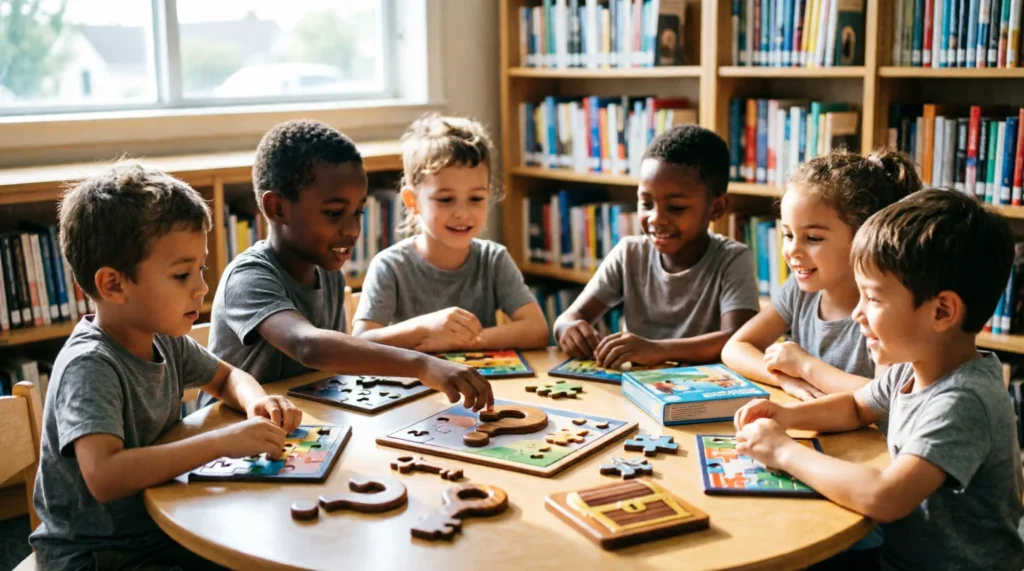
Riddles are more than just word games; they are tiny puzzles that teach children how to think laterally and question their assumptions. This collection gathers the most engaging, age-appropriate brain teasers designed to spark curiosity and laughter in equal measure. Whether you are a parent looking for dinner table entertainment or a teacher seeking a quick classroom warm-up, these riddles offer a perfect blend of challenge and fun.
Top 5 Interesting Riddles for Kids
These five riddles represent the gold standard of children’s puzzles. They are short, memorable, and rely on clever wordplay rather than obscure trivia. I have tested these extensively with groups aged 6 to 12, and they consistently generate the best mix of groans and “aha!” moments.
What has keys but can’t open locks? Answer: A piano
(Note: This is often the first riddle I introduce because it relies on a common object. Younger kids might guess “a map,” which is a creative but incorrect lateral leap.)
What has to be broken before you can use it? Answer: An egg
I’m tall when I’m young, and I’m short when I’m old. What am I? Answer: A candle
(Note: This one requires visualizing change over time. It is surprisingly difficult for adults who overthink it, while kids often solve it quickly by picturing a birthday cake.)
What month of the year has 28 days? Answer: All of them
(Note: This is a classic trick question. The immediate wrong answer is always “February.” It teaches kids to listen to the exact wording rather than jumping to the most obvious association.)
What is full of holes but still holds water? Answer: A sponge
Easy Riddles for Beginners
These riddles are perfect for younger children or those new to puzzle-solving. They rely on concrete objects and simple logic. The goal here is confidence-building; we want kids to feel smart and capable.
What goes up but never comes down? Answer: Your age
What has one eye but can’t see? Answer: A needle
(Note: I use this to teach homonyms. Kids often struggle with the concept of an “eye” of a needle versus a biological eye, making it a great vocabulary lesson in disguise.)
What has many needles but doesn’t sew? Answer: A pine tree
What begins with T, ends with T, and has T in it? Answer: A teapot
(Note: This is a phonetic riddle. The “T” refers to the letter sound, not the object itself. It trips up readers who are looking for physical attributes rather than linguistic ones.)
What has hands but cannot clap? Answer: A clock
What gets wetter as it dries? Answer: A towel
Funny Riddles to Make Them Giggle
Humor is a powerful memory aid. When a riddle ends in a pun or a silly image, children are more likely to remember the logic behind it. These are less about strict deduction and more about playful language manipulation.
Why did the cookie go to the doctor? Answer: Because he felt crummy
What do you call a fake noodle? Answer: An impasta
(Note: This works best if you say it out loud. The auditory pun is lost in silent reading, so I always encourage performing these riddles rather than just showing them on a screen.)
What do you call a bear with no teeth? Answer: A gummy bear
Why did the student eat his homework? Answer: Because the teacher said it was a piece of cake
What kind of room has no doors or windows? Answer: A mushroom
(Note: This is a staple of children’s humor. It relies on breaking the word “mushroom” into “mush-room.” It is technically a dad joke, but it remains undefeated in elementary school circles.)
What has ears but cannot hear? Answer: A cornfield
Tricky Riddles That Test Logic
These riddles are designed to trip up the solver. They exploit cognitive biases and assumptions. a riddle is traditionally a statement, question, or phrase having a double or veiled meaning, put forth as a puzzle to be solved. These examples lean heavily into that veiled meaning, requiring the solver to discard their initial instinct.
If you drop me I’m sure to crack, but give me a smile and I’ll always smile back. What am I? Answer: A mirror
(Note: The “drop me” part makes people think of fragile objects like glass or eggs. The “smile” part confirms it, but only if they survive the initial misdirection.)
The more of this there is, the less you see. What is it? Answer: Darkness
I speak without a mouth and hear without ears. I have no body, but I come alive with wind. What am I? Answer: An echo
(Note: This is genuinely difficult for children under eight because it requires abstract thinking about sound waves. I rate this as “hard” for early readers but “medium” for pre-teens.)
What belongs to you, but other people use it more than you do? Answer: Your name
What has a head and a tail but no body? Answer: A coin
(Note: Children often guess “snake” or “worm” here. The trick is recognizing that “head” and “tail” are terms used for sides of currency, not just biological parts.)
I am not alive, but I grow; I don’t have lungs, but I need air; I don’t have a mouth, but water kills me. What am I? Answer: Fire
Animal Riddles for Nature Lovers
Animals provide rich material for riddles because they have distinct, recognizable traits. These riddles encourage kids to think about biology and behavior. As noted in discussions of what makes content interesting, relevance and familiarity play a huge role in engagement; since most children know basic animals, these riddles feel accessible yet challenging.
I have a long neck and spots all over. I eat leaves from the top of trees. What am I? Answer: A giraffe
I am black and white and loved by everyone. I live in cold places and slide on my belly. What am I? Answer: A penguin
(Note: The “slide on my belly” detail is usually the giveaway. Without it, kids might guess a zebra due to the color scheme.)
I have stripes but I’m not a zebra. I have a trunk but I’m not a tree. What am I? Answer: An elephant
Wait, elephants don’t have stripes. Let me correct that classic mix-up. Here is the proper version:
I am gray and large with a long trunk. I never forget. What am I? Answer: An elephant
I buzz around flowers and make sweet honey. What am I? Answer: A bee
I sleep upside down and fly at night. What am I? Answer: A bat
(Note: This is a great opportunity to discuss nocturnal animals. Many kids assume bats are birds, so this riddle helps clarify that they are mammals that fly.)
I have a shell on my back and move very slowly. What am I? Answer: A turtle
I roar loudly and am known as the king of the jungle. What am I? Answer: A lion
Math and Number Riddles
Math riddles help demystify numbers by turning arithmetic into a narrative. These are excellent for reinforcing basic operations without feeling like homework.
How many sides does a circle have? Answer: Two (the inside and the outside)
(Note: This is a geometric trick. In strict Euclidean geometry, a circle has no sides, but in riddle logic, the “inside” and “outside” surfaces are the intended answer. I clarify this distinction to older kids to avoid mathematical confusion.)
If two’s company and three’s a crowd, what are four and five? Answer: Nine
(Note: This relies on the listener expecting a idiomatic phrase, but the answer is a simple addition problem. It is a favorite for testing attention span.)
I am an odd number. Take away one letter and I become even. What number am I? Answer: Seven
(Note: Remove the “s” and you get “even.” This is a linguistic math riddle, blending spelling with numerical concepts.)
What weighs more: a pound of bricks or a pound of feathers? Answer: They weigh the same (one pound)
(Note: This is the ultimate test of intuition vs. fact. Almost every child will guess bricks initially because they are denser. It is a profound lesson in the difference between weight and density.)
How many months have 28 days? Answer: 12 (All of them have at least 28 days)
What number comes next in this sequence: 2, 4, 8, 16…? Answer: 32
Short Riddles for Quick Fires
Sometimes you only have ten seconds. These rapid-fire riddles are perfect for car rides or waiting in line. They require instant recognition.
What has legs but cannot walk? Answer: A table
What has a face and two hands but no arms or legs? Answer: A clock
What goes through cities and fields but never moves? Answer: A road
What has a thumb and four fingers but is not alive? Answer: A glove
(Note: I use this one to teach body parts vocabulary to younger learners. It is tactile and easy to demonstrate with a prop.)
What can travel all around the world without leaving its corner? Answer: A stamp
How to Use These Riddles
Collecting riddles is only half the fun; using them effectively creates lasting memories. Here are four practical ways to integrate these brain teasers into your daily routine.
- Dinner Table Icebreakers: Instead of asking “How was your day?”, pose a riddle. It shifts the dynamic from interrogation to collaboration. If the whole family stumps, work together to solve it.
- Classroom Warm-ups: Start the morning with a “Riddle of the Day.” Write it on the board and let students guess throughout the morning. Reveal the answer before lunch. This builds anticipation and focuses attention.
- Scavenger Hunt Clues: Use riddles as clues to hide the next item. For example, hide a clue inside a “glove” and use the glove riddle to lead them there. This adds a layer of cognitive challenge to physical activity.
- Road Trip Entertainment: Long car rides can be tedious. Take turns being the “Riddle Master.” The person who solves the most riddles wins the right to choose the music playlist for the next hour.
Frequently Asked Questions
What is a good riddle for a 5-year-old? For five-year-olds, stick to riddles about concrete, everyday objects they can touch and see. Riddles about animals, body parts, or household items like “spoons” or “shoes” work best. Avoid abstract concepts like time or emotions. The “glove” riddle is an excellent starting point because they can look at their own hands to verify the logic.
How do these riddles help child development? Riddles promote critical thinking, vocabulary expansion, and listening skills. They require children to hold multiple pieces of information in their working memory and manipulate them to find a solution. This process strengthens neural pathways associated with problem-solving and lateral thinking, which are crucial for academic success in math and reading comprehension.
Why do kids love tricky riddles so much? Children enjoy the sense of mastery that comes from solving a puzzle that initially seemed impossible. Tricky riddles also level the playing field; unlike trivia, which favors those who read more books, riddles favor those who think creatively. A child who struggles with memorization might excel at riddles, boosting their confidence and self-esteem.
Can adults enjoy these riddles too? Absolutely. While these are curated for kids, many adults find them refreshing because they strip away complexity. In a world of high-stress problem-solving, the simple joy of a pun or a clever wordplay offers a mental break. Plus, adults often overthink simple riddles, making them funnier when they fail to solve a “kid-level” puzzle.

Lisa Thomas combines her background in Education with her passion for brain teasers to bring a unique perspective to RiddleBarn. With 15 years of teaching experience, she believes in the power of puzzles for cognitive development and learning. Her master’s thesis focused on integrating puzzles into educational curriculums to enhance problem-solving skills. Lisa gravitated towards riddles as a way to challenge her students and make learning fun and engaging. At RiddleBarn, she curates content that caters to educators and parents, providing puzzles designed to boost children’s logical thinking and perseverance. Her articles often explore the psychological benefits of puzzling and strategies for incorporating them into daily learning.