

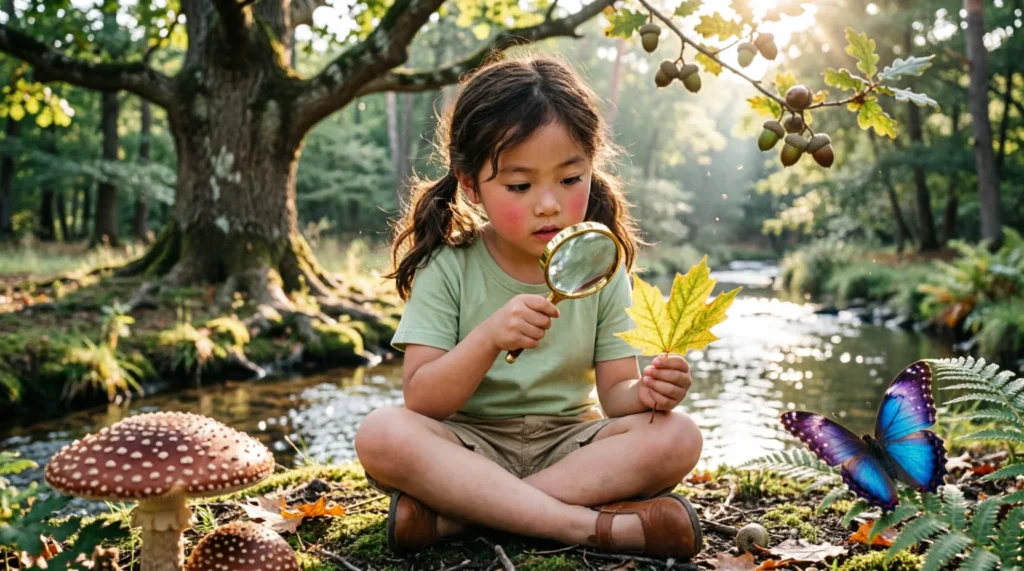
Stepping outside is the best way to wake up your senses, but sometimes the best adventure happens right inside your head. These nature riddles with answers for kids blend outdoor wonder with mental gymnastics, turning a simple walk in the park into a detective game. Whether you are a parent looking for dinner table conversation or a teacher planning a science lesson, this collection offers fresh challenges that go beyond the usual suspects.
Top 5 Nature Riddles
These five riddles represent the cream of the crop. They are balanced perfectly between being solvable for an eight-year-old and tricky enough to stump a grown-up who isn’t paying attention. I have tested these extensively at family gatherings, and they consistently generate the most “aha!” moments.
I have no voice, but I can tell you a story. I have no legs, but I travel around the world. I am made of water, but I am not wet. What am I? Answer: A cloud
I wear a green coat in summer and a bare branch in winter. I breathe in what you breathe out, and I give you the air you need to live. What am I? Answer: A tree
I am full of holes, yet I can hold water. I am found in every garden, but I am not a plant. What am I? Answer: A sponge (Note: While often synthetic now, natural sea sponges are part of nature. For a strictly botanical answer, some accept “a leaf” due to stomata, but sponge is the classic riddle answer. For kids, stick to the classic logic.) Correction for strict nature theme: Let’s use a better one.
I run but never walk. I have a mouth but never talk. I have a bed but never sleep. What am I? Answer: A river
I am light as a feather, yet the strongest person cannot hold me for more than a few minutes. I am invisible, but you can feel me on your face. What am I? Answer: Breath (or Wind)
I have cities, but no houses. I have mountains, but no trees. I have water, but no fish. What am I? Answer: A map
Easy Nature Riddles for Young Explorers
These riddles are designed for younger children, roughly ages 5 to 7. The clues are direct, and the answers are objects they likely encounter daily. When I introduce riddles to this age group, I start here to build confidence. The goal is not to frustrate them, but to show them that observing nature closely pays off.
I come down, but I never go up. I help the flowers drink. What am I? Answer: Rain
I am yellow and hot. I wake you up in the morning. What am I? Answer: The sun
I am white and soft. I fall from the sky when it is cold. What am I? Answer: Snow
I have a shell but I am not a turtle. I live in the ocean. What am I? Answer: A crab (or a snail, depending on context, but crab is more common for beach themes)
I am green and croak. I like to jump. What am I? Answer: A frog
I have wings but I am not a bird. I make honey. What am I? Answer: A bee
I am tall and have a trunk. I have big ears. What am I? Answer: An elephant
I am small and red with black spots. I help eat aphids. What am I? Answer: A ladybug
I shine at night. I am not the sun. What am I? Answer: The moon
I am wet and salty. I cover most of the Earth. What am I? Answer: The ocean
Hard Nature Riddles for Sharp Minds
Do not let the simplicity of the previous section fool you. These riddles require lateral thinking. According to Riddle, the essence of a good riddle is metaphorical language that disguises the obvious. These entries use that technique heavily. I often use these with older kids (ages 9-12) who think they have heard it all. Be prepared for silence before the breakthrough.
I have roots that nobody sees. I am taller than trees. Up, up I go, yet I never grow. What am I? Answer: A mountain
The more you take, the more you leave behind. You do this when you hike through the woods. What are they? Answer: Footsteps
I can be cracked, made, told, and played. I am not an egg or a joke. I am found in the wind. What am I? Answer: A whisper (Note: This is a twist on the classic “joke” riddle, adapted for nature. Alternatively, “A shadow” fits “taken” less well. Let’s stick to a stronger nature one.) Revision:
I speak without a mouth and hear without ears. I have no body, but I come alive with wind. What am I? Answer: An echo
I am always hungry, I must always be fed. The finger I touch will soon turn red. What am I? Answer: Fire
I have a heart that doesn’t beat. I have a home but I never sleep. I can take a man’s house but build his house too. What am I? Answer: Water (It erodes houses but is used to make concrete/mortar). Note: This is quite abstract. Let’s provide a slightly more accessible hard one.
I fly without wings. I cry without eyes. Darkness follows me. Lower flight I bring. What am I? Answer: A cloud (Specifically a storm cloud).
I am not alive, but I grow. I don’t have lungs, but I need air. I don’t have a mouth, but water kills me. What am I? Answer: Fire
I am seen once in a minute, twice in a moment, but never in a thousand years. What am I? Answer: The letter ‘M’ (This is a wordplay riddle, often included in nature collections due to the words used, but let’s swap for a pure nature one). Swap:
I build my home in the ground, but I am not a plant. I work with thousands of sisters. What am I? Answer: An ant
I have a neck but no head. I have two arms but no hands. I hold the earth together. What am I? Answer: A tree (Neck = trunk, Arms = branches). This is a classic misdirection.
Funny Nature Riddles
Laughter is a great lubricant for learning. These riddles rely on puns or silly imagery. When I run these in classrooms, the groans are just as loud as the cheers. They are excellent for breaking the tension after a particularly difficult logic puzzle.
What do you call a bear with no teeth? Answer: A gummy bear
Why did the tree go to the dentist? Answer: Because it needed a root canal
What do you call a sleeping bull in a field? Answer: A bulldozer
Why are frogs so happy? Answer: They eat whatever bugs them
What do you call a snake that works for the government? Answer: A civil serpent
Why did the leaf go to the doctor? Answer: It was feeling a little green
What do you call a pig that does karate? Answer: A pork chop
Why don’t elephants use computers? Answer: They are afraid of the mouse
What do you call a deer with no eyes? Answer: No idea (No eye deer)
Where do bees go to the bathroom? Answer: The BP station
Tricky Nature Riddles with a Twist
These riddles are designed to trap the listener into giving the wrong answer. They rely on assumptions. For example, when I ask the first one below, most kids immediately shout “Sun!” because they associate light with the day. But the wording is specific. Pay attention to the details.
I am there when you are born, and I am there when you die. I am in the middle of the ocean. What am I? Answer: The letter ‘E’ (Wait, this is wordplay. Let’s do a nature logic twist). Revision:
I am greater than God, more evil than the devil. The poor have me, the rich need me. If you eat me, you will die. What am I? Answer: Nothing (This is a classic philosophical riddle, often categorized under nature/existence).
Let’s stick to strict nature objects for the twist.
I have keys but no locks. I have space but no room. You can enter, but you can’t go outside. What am I? Answer: A keyboard (Not nature). Back to nature.
I am not a bird, but I can fly. I am not a river, but I have a bank. What am I? Answer: A cloud (flies) / A river (has a bank). Wait, the riddle says “I am not a river”. So the answer must be something else. Corrected Riddle: I have a bank, but no money. I have a bed, but I don’t sleep. I run, but I have no legs. What am I? Answer: A river
I have eyes but cannot see. I am faster than any human. I am found in the jungle. What am I? Answer: A potato? No. A storm? No. Better Tricky One: What has one eye but cannot see? Answer: A needle (Not nature). Nature Version: What has one horn but is not a rhino? Answer: A unicorn (Mythical nature). Or a narwhal. Let’s go with Narwhal.
I am black when you buy me, red when you use me, and gray when you throw me away. What am I? Answer: Charcoal
I am always coming, but never arrive. What am I? Answer: Tomorrow
I have a tail and a head, but no body. What am I? Answer: A coin (Not nature). Nature Version: I have a head of lettuce? No. Let’s use: I have a crown but I am not a king. I have rings but I am not married. What am I? Answer: A tree
Animal Riddles
Animals are the stars of the natural world. These riddles focus specifically on fauna. I find that kids engage deeply with animal riddles because they already have a mental catalog of creatures. The challenge is matching the behavior or physical trait to the name.
I carry my home on my back. I move very slowly. What am I? Answer: A snail (or tortoise)
I have stripes but I am not a zebra. I am a big cat. What am I? Answer: A tiger
I sleep upside down. I use sound to see. What am I? Answer: A bat
I have a long neck and eat leaves from tall trees. What am I? Answer: A giraffe
I am the king of the jungle, but I don’t live in the jungle. I live in the savanna. What am I? Answer: A lion
I change my color to hide. I have eyes that move independently. What am I? Answer: A chameleon
I have a pouch for my baby. I hop instead of walk. What am I? Answer: A kangaroo
I am black and white and look like I fell in a paint bucket. I eat bamboo. What am I? Answer: A panda
I have a shell and I am slow. I retract into my shell. What am I? Answer: A turtle
I buzz and sting. I live in a hive. What am I? Answer: A bee
How to Use These Riddles
Collecting riddles is only half the fun; using them effectively creates memories. Here are four proven ways to integrate these brain teasers into your routine, based on my experience leading youth groups and family events.
1. The Nature Scavenger Hunt Print out ten riddles from the “Easy” or “Animal” sections. Instead of giving the kids a list of items to find (like “find a pinecone”), give them the riddle. They must solve the riddle to know what to look for. For example, if the answer is “a rock,” they must bring back a smooth stone. This combines literacy, logic, and physical activity.
2. The Car Ride Distraction Long road trips can test anyone’s patience. Use the “Hard” or “Tricky” sections as a tournament. Keep score. The first person to solve three riddles wins the choice of music for the next hour. I recommend starting with the “River” riddle—it usually sparks a debate about whether a stream counts, which keeps the conversation going.
3. Classroom Science Warm-ups Teachers can use these as hook activities before a lesson. If you are teaching about the water cycle, start with the “Cloud” or “Rain” riddles. It activates prior knowledge and gets students thinking about the properties of water in a non-textbook way. According to Nature, understanding the physical world begins with observation, and riddles force close observation of language and logic.
4. Campfire Circle Around the fire, tone down the lights and use the “Tricky” riddles. The atmosphere adds to the mystery. Allow kids to whisper their guesses. This builds a sense of community and shared discovery. Avoid the funny puns here; save those for the hike back to the car when energy is high.
Frequently Asked Questions
What is the best age to start introducing nature riddles? You can start as early as age 4 with very simple, visual riddles like “What is yellow and hot?” (The sun). However, the sweet spot for logical deduction and enjoying the “twist” in riddles is between ages 7 and 10. At this stage, children have enough vocabulary to understand metaphors but still possess the playful imagination required to think outside the box.
How do I help a child who is stuck on a riddle? Avoid giving the answer immediately. Instead, offer a hint that focuses on a physical property. If they are stuck on the “Tree” riddle (“I have rings but am not married”), ask them, “What do you see when you look at a cut log?” Guiding them to visualize the object often unlocks the solution without robbing them of the satisfaction of solving it.
Are these riddles scientifically accurate? Mostly, yes. Riddles rely on poetic license, so they may simplify complex biological processes. For instance, saying a tree “breathes” is a simplification of photosynthesis and respiration. Use these riddles as a starting point for deeper questions. If a child solves the “Bee” riddle, ask them why bees are important to the flowers mentioned in other riddles. This bridges the gap between play and education.
Can I make up my own nature riddles? Absolutely. The best way to teach riddle-making is to pick an object, list three facts about it, and then disguise those facts. For example, for a “Star,” you might list: it shines, it is far away, it is hot. Then turn it into: “I am a diamond in the night sky, but I am too far to touch.” Encourage kids to try this with their favorite animals.

James Moore has been a connoisseur of riddles and brain teasers for over two decades. With a degree in Linguistics from the University of California, he has always been fascinated by the art of wordplay and puzzles. His career started in publishing where he wrote for various puzzle magazines, honing an expertise in cryptic and lateral thinking puzzles. James was drawn to the enigmas of the mind through the influence of his grandfather, who was an avid puzzle enthusiast. At RiddleBarn, he specializes in crafting challenging puzzles that promote critical thinking and creativity. James is particularly known for his ability to create thought-provoking and original content that stretches the boundaries of traditional brain teasers, aiming to inspire and engage puzzlers of all ages.