

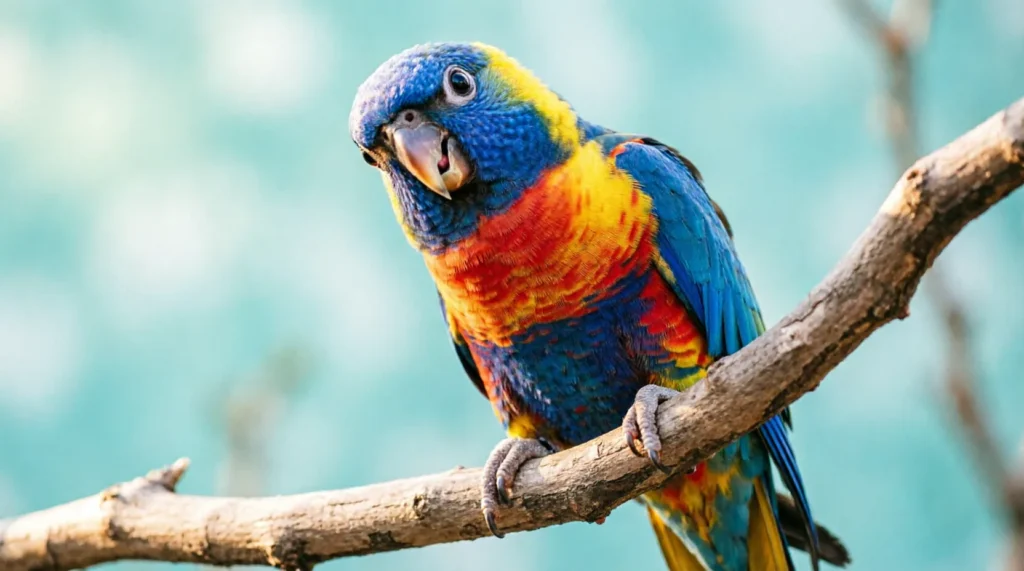
Parrots are some of the most vibrant and intelligent creatures in the animal kingdom, making them perfect subjects for clever wordplay. This collection brings together the best parrot riddles with answers for kids, designed to spark curiosity and laughter during family game nights or classroom breaks. Whether you are looking for easy warm-ups or tricky challenges that require a bit of lateral thinking, these puzzles celebrate the unique traits of these feathered friends.
Top 5 Parrot Riddles
Here are the five most popular and engaging riddles about parrots. These are tested favorites that consistently get kids talking and guessing.
I have bright feathers but no paintbrush, I can mimic your voice but have no phone. What am I? Answer: A parrot
I sit on a perch all day long, I repeat what you say but never sing a song. What am I? Answer: A parrot
My beak is strong enough to crack nuts, my wings are colorful like a rainbow. I love to talk but cannot walk on two feet like you. What am I? Answer: A parrot
I live in a cage but dream of the jungle, I copy your words with a funny lunge. What am I? Answer: A parrot
I am green, red, blue, or yellow, and I am known as a very chatty fellow. I eat seeds and fruits all day long. What am I? Answer: A parrot
Easy Parrot Riddles for Young Children
These riddles are designed for younger kids who are just starting to explore word games. They focus on obvious physical traits and simple behaviors associated with parrots.
I have two wings but I do not fly high in the sky like an eagle. I prefer to stay close to my owner. What am I? Answer: A pet parrot
I have a curved beak that looks like a hook. I use it to climb and eat. What part of me is this? Answer: A parrot’s beak
I am a bird that does not build a nest in a tree. I live in a house with bars. Where do I live? Answer: In a cage
I love to eat sunflower seeds and crackers. I crunch them loudly with my strong mouth. What am I eating with? Answer: My beak
I am not a dog, but I can learn to say “hello.” I am not a cat, but I have claws. What am I? Answer: A parrot
My feathers are soft and bright. When I am happy, I might puff them up. What covers my body? Answer: Feathers
I have two eyes on the sides of my head. I can see almost all around me without turning. What kind of vision do I have? Answer: Wide-angle vision
I sleep standing up on one leg. I tuck my head under my wing to stay warm. What am I doing? Answer: Sleeping
I am a baby parrot. I cannot fly yet and I need my parents to feed me. What am I called? Answer: A chick
I have scales on my legs and feet, not fur. I grip my perch tightly. What are my feet made of? Answer: Scales
I make a loud squawking noise when I am excited or scared. What sound do I make? Answer: Squawk
I am a type of parrot that is very small and often blue or white. I am popular in homes. What kind of parrot am I? Answer: A budgie (budgerigar)
Funny Parrot Riddles That Make Kids Laugh
Humor helps memory stick. These riddles play on the stereotypical behavior of parrots copying humans, often leading to silly scenarios that kids find hilarious.
Why did the parrot wear a raincoat? Answer: Because he wanted to be a poly-parrot!
What do you call a parrot that tells jokes? Answer: A comedi-animal!
Why was the parrot bad at playing hide and seek? Answer: Because he always shouted, “I see you!”
What does a parrot say when it wants to borrow money? Answer: “Polly want a cracker… and a loan!”
Why did the parrot get kicked out of the library? Answer: He kept repeating everything the librarian said!
What is a parrot’s favorite type of music? Answer: Copy-cat rock!
Why don’t parrots make good spies? Answer: Because they repeat everything they hear!
What do you call a parrot that loves math? Answer: A poly-gon!
Why did the parrot sit on the clock? Answer: He wanted to be on time for his next squawk!
What is a parrot’s favorite game? Answer: Repeat after me!
Why was the parrot invited to the party? Answer: Because he was a great talker!
What do you call a parrot that can do magic tricks? Answer: A prestidigi-parrot!
Tricky Parrot Riddles for Sharp Minds
These riddles require a bit more lateral thinking. They are not necessarily hard because of obscure facts, but because the answer requires looking past the obvious. According to Wikipedia, riddles often rely on metaphorical language, and these examples use that technique to challenge young solvers.
I have a tongue but cannot taste. I have a beak but no nose. I can speak but have no vocal cords like yours. What am I? Answer: A parrot (Note: Parrots actually do have vocal cords, but they use a structure called the syrinx. For the purpose of the riddle’s trick, it highlights the difference from human speech mechanisms.)
I am green like grass, but I am not a plant. I am red like an apple, but I am not fruit. I am blue like the sky, but I am not air. What am I? Answer: A macaw or parrot
I can fly, but I often choose to walk. I can talk, but I have nothing new to say. I am wild, but I live in your home. What am I? Answer: A pet parrot
The more you talk to me, the more I talk back. But if you stay silent, I say nothing. What am I? Answer: A parrot
I have no hands, but I can hold a nut. I have no teeth, but I can crack a shell. What am I? Answer: A parrot’s beak
I am a bird that is often mistaken for a pirate’s friend. I am colorful and loud. Who am I? Answer: A parrot
I can mimic a phone ring, a doorbell, and your name. But I do not know what any of these mean. What am I? Answer: A parrot
I live in the rainforest, but I can live in your living room. I eat fruit, but I am not a monkey. What am I? Answer: A parrot
I have a crest on my head that goes up when I am surprised. I am not a rooster. What am I? Answer: A cockatoo (a type of parrot)
I am known for my intelligence, comparable to a young child. I can solve puzzles to get food. What am I? Answer: A parrot (specifically species like African Greys)
Hard Parrot Riddles for Experts
These are for kids who think they know everything about birds. These riddles dive into specific biological facts or less common knowledge about parrot behavior.
I am a parrot that is mostly grey, but I have a bright red tail. I am considered one of the smartest birds in the world. Who am I? Answer: An African Grey Parrot
I am the largest parrot in the world. I am black with a red tail and I live in Australia. Who am I? Answer: The Palm Cockatoo (or Hyacinth Macaw if referring to length, but Palm Cockatoo is often cited for mass/height in trivia contexts; however, the Hyacinth Macaw is the longest. Let’s stick to the Hyacinth Macaw for accuracy). Answer: The Hyacinth Macaw
Unlike most birds, I can hold my food with my foot while I eat it. I have four toes, two pointing forward and two backward. What is this arrangement called? Answer: Zygodactyl feet
I am a flightless parrot that lives in New Zealand. I am nocturnal and very rare. Who am I? Answer: The Kakapo
I am a parrot that does not have bright colors. I am brown and green, and I live in New Zealand. I am known for being shy. Who am I? Answer: The Kea or Kaka (Note: The Kakapo is flightless, the Kea is alpine. For a hard riddle, the Kakapo is the best fit for “flightless”). Answer: The Kakapo
Parrots are one of the few animals that can understand the concept of zero. Which famous parrot demonstrated this ability in scientific studies? Answer: Alex the African Grey
I am a type of parrot that is known for its powerful bite. I can crack coconut shells. My beak pressure is among the strongest in the bird world. What am I? Answer: A Macaw
Most birds sing to attract mates, but parrots often mimic sounds to fit in with their flock. What is this social behavior called? Answer: Vocal learning or social bonding
I am a parrot that is endangered due to the pet trade. I am blue and yellow. Who am I? Answer: The Blue-and-yellow Macaw
Parrots do not have a diaphragm. How do they breathe differently than mammals? Answer: They use air sacs and movement of their sternum (This is a very hard science riddle). Answer: Using air sacs
Animal Themed Parrot Riddles
These riddles compare parrots to other animals, helping kids distinguish between different species while reinforcing parrot characteristics. Per Wikipedia, parrots are found in tropical and subtropical regions, which distinguishes them from many common backyard birds.
I am like a monkey because I can use my feet to hold things, but I have feathers. What am I? Answer: A parrot
I am like a dog because I can be loyal to my owner, but I can fly. What am I? Answer: A parrot
I am like a mirror because I reflect your words back to you, but I am alive. What am I? Answer: A parrot
I am like a clown because I am colorful and funny, but I am a bird. What am I? Answer: A parrot
I am like a thief because I like to steal shiny objects, but I am not a magpie. I am a parrot. What do I like to steal? Answer: Shiny toys or keys
I am like a student because I am always learning new words, but I do not go to school. What am I? Answer: A parrot
I am like a acrobat because I can hang upside down from my perch, but I do not use a trapeze. What am I? Answer: A parrot
I am like a drummer because I tap my beak on things to make noise, but I do not have sticks. What am I? Answer: A parrot
I am like a painter because I am covered in bright colors, but I did not use a brush. What am I? Answer: A parrot
I am like a detective because I watch everything with my side-facing eyes, but I do not wear a hat. What am I? Answer: A parrot
How to Use These Riddles
Riddles are versatile tools for engagement. Here are a few practical ways to integrate these parrot puzzles into your daily routine.
- Classroom Icebreakers: Start a lesson on birds or rainforests with one of the “Easy” riddles. It grabs attention and primes students for the topic.
- Road Trip Entertainment: Keep kids occupied in the car by taking turns asking the “Funny” riddles. The silly answers often lead to more laughter than the solving itself.
- Scavenger Hunt Clues: Hide a toy parrot or bird-themed treats around the house. Use a riddle as the clue for the next location. For example, “I have a beak but no nose, look where the flowers grow” to lead them to the garden.
- Party Games: Divide kids into teams. Read a “Hard” riddle and give them one minute to discuss and write down their answer. Award points for correct guesses.
- Bedtime Wind-Down: Use the “Short” or “Easy” riddles as a calm mental exercise before sleep. They are engaging enough to focus the mind but not so stimulating that they prevent rest.
Frequently Asked Questions
What is a good riddle for a 5-year-old? For a 5-year-old, stick to riddles that focus on visible traits. The riddle “I have bright feathers but no paintbrush” is ideal because it uses concrete imagery they can visualize. Avoid abstract concepts or wordplay that relies on homophones.
How do these riddles help children learn? Riddles encourage critical thinking and vocabulary expansion. When a child tries to solve “I have a tongue but cannot taste,” they must analyze the multiple meanings of the word “tongue.” This builds cognitive flexibility and listening skills.
Why are parrots good at mimicking speech? Parrots have a unique vocal organ called the syrinx, located at the base of their trachea. This allows them to modulate sound with great precision. Combined with their high intelligence and social nature, they mimic sounds to bond with their flock, which in captivity includes their human owners.
Can all parrots talk? No, not all parrots can mimic human speech. While many species like African Greys, Amazons, and Budgies are famous for it, some species are quieter or less inclined to mimic. Individual personality also plays a huge role; some parrots simply prefer to whistle or squawk rather than talk.

Nathan Smith is a seasoned puzzle enthusiast with over 18 years of experience in the field of recreational mathematics and logic puzzles. He holds a degree in Mathematics from the University of Chicago, which has significantly influenced his approach to puzzle creation and analysis. Nathan’s journey into brain teasers began during his college years, where he led the university’s puzzle club and organized annual puzzle hunts. At RiddleBarn, Nathan is dedicated to designing intricate logic puzzles and number riddles that challenge even the most seasoned solvers. His content often features a blend of mathematical insights and playful challenges, aiming to captivate readers who seek depth in their puzzling experiences. Nathan’s expertise lies in breaking down complex ideas into engaging and accessible formats.