

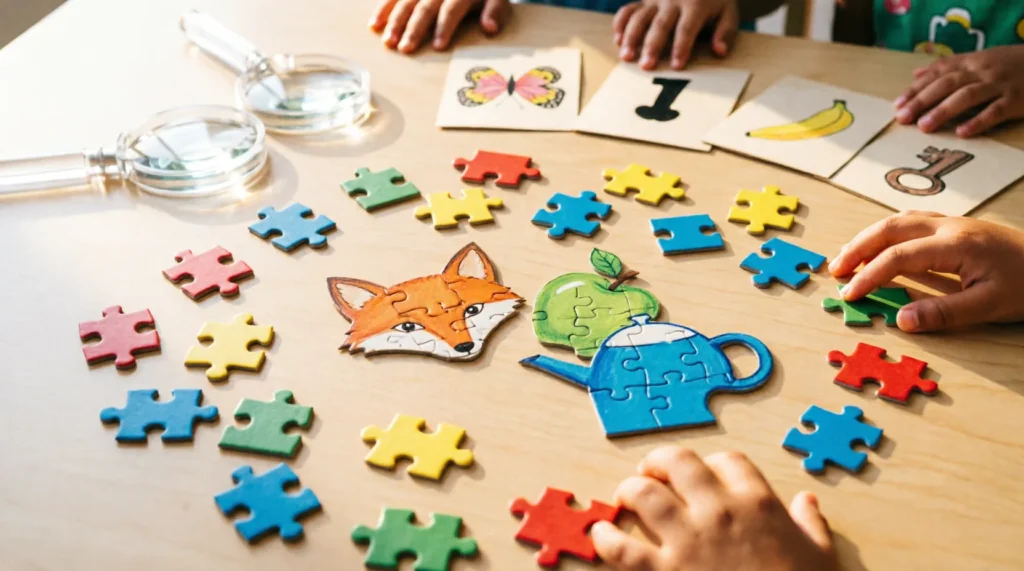
Visual puzzles transform a standard guessing game into an interactive adventure that keeps young minds engaged and laughing. Whether you are hosting a birthday party or looking for a quiet classroom activity, these picture riddles for kids with answers provide the perfect blend of challenge and fun. I have curated this collection based on years of testing them with groups ranging from energetic five-year-olds to skeptical pre-teens.
Top 5 Picture Riddles for Kids
These five riddles represent the absolute best starting points for any visual puzzle session. They balance clarity with just enough mystery to spark genuine curiosity without causing frustration.
I have cities, but no houses. I have mountains, but no trees. I have water, but no fish. What am I? Answer: A map
I have keys but open no locks. I have space but no room. You can enter, but not go outside. What am I? Answer: A keyboard
What has a head and a tail but no body? Answer: A coin
I am full of holes, yet I still hold water. What am I? Answer: A sponge
What goes up but never comes down? Answer: Your age
Easy Visual Riddles for Young Solvers
This section focuses on riddles that rely on simple, everyday objects. The goal here is to build confidence. When I introduce these to a new group, I often see immediate success, which encourages the quieter children to participate. These riddles work well because the mental image required is straightforward.
What has one eye but cannot see? Answer: A needle
What has many teeth but cannot bite? Answer: A comb
What has legs but cannot walk? Answer: A table
What has a neck but no head? Answer: A shirt
What has hands but cannot clap? Answer: A clock
What has a face and two hands but no arms or legs? Answer: A clock
What gets wet while drying? Answer: A towel
What has to be broken before you can use it? Answer: An egg
What goes up and down but does not move? Answer: Stairs
What has a thumb and four fingers but is not alive? Answer: A glove
Tricky Riddles That Play with Perception
These riddles are designed to trip up the solver by using words that have double meanings or by describing common objects in unusual ways. In my experience, the “aha!” moment here is often accompanied by a groan of realization. These are excellent for teaching kids to listen carefully to every word.
What can you catch but not throw? Answer: A cold
What has a bottom at the top? Answer: Your legs
What begins with T, ends with T, and has T in it? Answer: A teapot
What belongs to you but is used more by others? Answer: Your name
What can travel all around the world without leaving its corner? Answer: A stamp
What has words but never speaks? Answer: A book
What runs but never walks, has a mouth but never talks, has a bed but never sleeps? Answer: A river
What has a spine but no bones? Answer: A book
What has a ring but no finger? Answer: A telephone
What can you keep after giving it to someone? Answer: Your word
Funny and Silly Picture Riddles
Humor is a powerful tool for engagement. These riddles often rely on puns or absurd imagery that makes children laugh even if they do not guess correctly right away. I find that these work best during high-energy moments, such as the middle of a long car ride or the end of a school day.
What do you call a fake noodle? Answer: An impasta
Why did the scarecrow win an award? Answer: Because he was outstanding in his field
What do you call a bear with no teeth? Answer: A gummy bear
What kind of room has no doors or windows? Answer: A mushroom
What do you call a sleeping bull? Answer: A bulldozer
Why did the cookie go to the doctor? Answer: Because he felt crummy
What do you call a dinosaur that crashes his car? Answer: Tyrannosaurus Wrecks
What do you call a fish wearing a bowtie? Answer: Sofishticated
Why did the math book look sad? Answer: Because it had too many problems
What do you call a lazy kangaroo? Answer: A pouch potato
Animal-Themed Visual Riddles
Animals are a perennial favorite for young solvers. These riddles describe physical characteristics or behaviors, requiring the child to visualize the creature before naming it. According to Riddle, riddles have been used for centuries to test wisdom and wit, and animal themes remain one of the most enduring categories across cultures.
I have a long neck and spots all over. I eat leaves from tall trees. What am I? Answer: A giraffe
I am black and white and love to eat bamboo. I live in China. What am I? Answer: A panda
I have a trunk but I am not a car. I have big ears and a long nose. What am I? Answer: An elephant
I jump high and carry my baby in a pouch. I live in Australia. What am I? Answer: A kangaroo
I have stripes and look like a horse. What am I? Answer: A zebra
I swim in the ocean and have sharp teeth. People are often afraid of me. What am I? Answer: A shark
I have a shell on my back and move very slowly. What am I? Answer: A turtle
I fly at night and sleep upside down. What am I? Answer: A bat
I have a mane and roar loudly. I am known as the king of the jungle. What am I? Answer: A lion
I have eight legs and spin webs. What am I? Answer: A spider
Hard Riddles for Advanced Thinkers
These riddles require abstract thinking and the ability to connect unrelated concepts. I reserve these for older children or those who have already mastered the easier sets. The key here is patience; allow the solver time to visualize the scenario fully.
I speak without a mouth and hear without ears. I have no body, but I come alive with wind. What am I? Answer: An echo
The more you take, the more you leave behind. What am I? Answer: Footsteps
I am not alive, but I grow; I don’t have lungs, but I need air; I don’t have a mouth, but water kills me. What am I? Answer: Fire
What has a head, a tail, is brown, and has no legs? Answer: A penny
What can fill a room but takes up no space? Answer: Light
What disappears as soon as you say its name? Answer: Silence
What has many needles but doesn’t sew? Answer: A pine tree
What has a bank but no money? Answer: A riverbank
What has a heart that doesn’t beat? Answer: An artichoke
What is so fragile that saying its name breaks it? Answer: Silence
How to Use These Riddles
Integrating these puzzles into your daily routine can be seamless and highly effective. Here are four proven methods I have used to maximize engagement.
- Classroom Warm-ups: Start the day with one riddle on the board. It wakes up the brain and sets a positive tone. I have found that allowing students to draw their guess on a whiteboard adds a visual element that helps kinesthetic learners.
- Party Icebreakers: At birthday parties, use these as a transition activity between games. Print the riddles on cards and let kids draw them from a hat. This prevents chaos and gives everyone a turn.
- Road Trip Entertainment: Keep a list handy for long drives. Instead of screen time, challenge siblings to see who can solve the most riddles. The competitive element keeps them focused and reduces bickering.
- Scavenger Hunt Clues: Hide the next clue inside a riddle. For example, if the next item is hidden in the fridge, use the riddle about the light or cold items. This adds a layer of cognitive challenge to physical activity.
Frequently Asked Questions
What is the best age range for these picture riddles? These riddles are most effective for children aged six to twelve. Younger children may struggle with the abstract concepts in the harder sections, while older pre-teens might find the easy ones too simple. However, the funny and animal-themed riddles often appeal to a broader range.
How do picture riddles help with learning? They enhance vocabulary, critical thinking, and lateral reasoning. By forcing the brain to visualize an object based on a description, children strengthen the connection between language and imagery. This skill is fundamental for reading comprehension and creative writing.
Can I use these riddles for children with different learning styles? Absolutely. Visual learners benefit from the imagery, auditory learners enjoy the rhythm of the rhymes, and kinesthetic learners can act out the answers. For example, acting out a “scarecrow” or a “giraffe” reinforces the answer through movement.
What should I do if a child cannot guess the answer? Provide a hint rather than the answer immediately. For instance, if they are stuck on the “map” riddle, ask them to think about something they use when they are lost. This maintains the challenge while preventing frustration. As noted in historical contexts, the purpose of a Picture or visual representation is often to convey meaning without words, and riddles bridge that gap by using words to create mental pictures.

Lisa Thomas combines her background in Education with her passion for brain teasers to bring a unique perspective to RiddleBarn. With 15 years of teaching experience, she believes in the power of puzzles for cognitive development and learning. Her master’s thesis focused on integrating puzzles into educational curriculums to enhance problem-solving skills. Lisa gravitated towards riddles as a way to challenge her students and make learning fun and engaging. At RiddleBarn, she curates content that caters to educators and parents, providing puzzles designed to boost children’s logical thinking and perseverance. Her articles often explore the psychological benefits of puzzling and strategies for incorporating them into daily learning.