

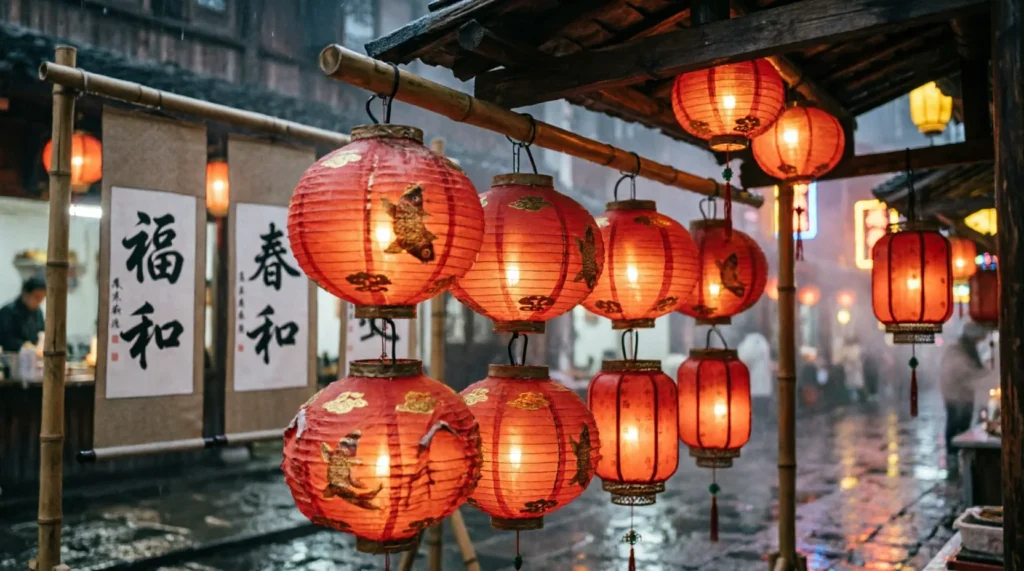
Welcome to the ultimate collection of Chinese riddles with pinyin and answers for adults. Whether you are hosting a themed dinner party, teaching a language class, or just love a good linguistic puzzle, these brain teasers blend cultural insight with clever wordplay. Get ready to test your knowledge and share a few laughs with this carefully curated list.
Top 5 Chinese Riddles with Pinyin and Answers for Adults
These are the absolute best entry points for adults new to Chinese riddles. They balance accessible logic with satisfying “aha!” moments.
1. 一口咬掉牛尾巴
Yī kǒu yǎo diào niú wěi ba
A mouth bites off the cow’s tail.
Answer: 告 (gào)
Why it works: The character for cow (牛) loses its vertical tail stroke, and a mouth (口) is added to the bottom, forming 告.
2. 七十二小时
Qī shí èr xiǎo shí
Seventy-two hours.
Answer: 晶 (jīng)
Why it works: Seventy-two hours equals exactly three days. In Chinese, three “sun/day” characters (日) stacked together form 晶, meaning “crystal” or “bright.”
3. 一人一张口,口下长只手
Yī rén yī zhāng kǒu, kǒu xià zhǎng zhī shǒu
One person, one mouth, and under the mouth grows a hand.
Answer: 拿 (ná)
Why it works: This is a visual assembly riddle. Combine person (人), one (一), mouth (口), and hand (手), and you get the character for “to hold” or “to take” (拿).
4. 半个月亮
Bàn gè yuè liang
Half a moon.
Answer: 胖 (pàng)
Why it works: The character is literally composed of “half” (半) on the left and “moon” (月) on the right. The answer ironically means “fat” or “plump.”
5. 画时圆,写时方,冬时短,夏时长
Huà shí yuán, xiě shí fāng, dōng shí duǎn, xià shí cháng
Drawn round, written square, short in winter, long in summer.
Answer: 日 (rì)
Why it works: The sun is drawn as a circle, but the Chinese character for sun/day (日) is a square. Winter days are short, and summer days are long.
Hard Chinese Character Riddles (Zi Mi) for Adults
These puzzles rely heavily on the logographic nature of the script. As detailed in the University of Hawaii’s exhibit on the art of Chinese riddles, character riddles (字谜, zì mí) often involve dismantling, combining, or visually manipulating the components of a character to reveal the answer.
1. 十张口,一颗心
Shí zhāng kǒu, yī kē xīn
Ten mouths, one heart.
Answer: 思 (sī)
Why it works: Ten (十) and mouth (口) combine to make “ancient” (古). Add a heart (心) at the bottom, and you get 思, meaning “to think.”
2. 一点一横长,一撇到南洋,南洋有个人,只有一寸长
Yī diǎn yī héng cháng, yī piě dào nán yáng, nán yáng yǒu gè rén, zhǐ yǒu yī cùn cháng
One dot, one long horizontal stroke, a slash reaching the South Seas, in the South Seas there is a person, only one inch tall.
Answer: 府 (fǔ)
Why it works: This is a classic stroke-by-stroke build. The top is 广, the middle has a person (亻), and the bottom is inch (寸), assembling perfectly into 府 (mansion/government office).
3. 半推半就
Bàn tuī bàn jiù
Half push, half yield.
Answer: 掠 (lüè)
Why it works: Take the left half of “push” (推), which is the hand radical (扌), and the right half of “yield” (就), which is (京). Combine them to get 掠 (to plunder or sweep past).
4. 需要一半,留下一半
Xū yào yī bàn, liú xià yī bàn
Need half, leave half.
Answer: 雷 (léi)
Why it works: Take the top half of “need” (需), which is rain (雨), and the bottom half of “leave” (留), which is field (田). Together, they form 雷 (thunder).
5. 四面都是山,山山都相连
Sì miàn dōu shì shān, shān shān dōu xiāng lián
Mountains on all four sides, every mountain connects to the next.
Answer: 田 (tián)
Why it works: The character for mountain is 山. If you connect four of them inward, they form the grid-like character 田 (field).
6. 一边是红,一边是绿,一边喜风,一边喜雨
Yī biān shì hóng, yī biān shì lǜ, yī biān xǐ fēng, yī biān xǐ yǔ
One side is red, one side is green, one side likes wind, one side likes rain.
Answer: 秋 (qiū)
Why it works: Adults often guess “nature” or “a garden”, but the character decomposition is the real key. The left side is 禾 (grain, which is green and likes rain), and the right side is 火 (fire, which is red and fans with wind). Together, they make 秋 (autumn).
Tricky Chinese Logic and Wordplay Riddles
These riddles test lateral thinking rather than character knowledge. They are perfect for mixed groups where not everyone reads Chinese characters.
1. 什么东西天气越热,它爬得越高?
Shén me dōng xi tiān qì yuè rè, tā pá de yuè gāo?
What climbs higher the hotter the weather gets?
Answer: 温度计 (wēn dù jì)
Translation: Thermometer.
2. 什么东西有嘴不说话,有床不睡觉?
Shén me dōng xi yǒu zuǐ bù shuō huà, yǒu chuáng bù shuì jiào?
What has a mouth but doesn’t speak, and a bed but doesn’t sleep?
Answer: 河流 (hé liú)
Translation: River (river mouth, river bed).
3. 什么动物最容易被贴在墙上?
Shén me dòng wù zuì róng yì bèi tiē zài qiáng shàng?
What animal is most easily stuck to a wall?
Answer: 海豹 (hǎi bào)
Translation: Seal. When I run this one at pub quizzes, the wrong guess is always “a fly” or “a sticker”, but the pun is the actual key: 海豹 sounds exactly like 海报 (hǎi bào), which means “poster.”
4. 什么东西你只能用左手拿,不能用右手拿?
Shén me dōng xi nǐ zhǐ néng yòng zuǒ shǒu ná, bù néng yòng yòu shǒu ná?
What can you only hold with your left hand, but not with your right hand?
Answer: 你的右手 (nǐ de yòu shǒu)
Translation: Your right hand.
5. 什么书在书店买不到?
Shén me shū zài shū diàn mǎi bù dào?
What book cannot be bought in a bookstore?
Answer: 秘书 (mì shū)
Translation: Secretary. (Literally translates to “secret book,” but refers to the profession).
6. 什么东西越洗越脏?
Shén me dōng xi yuè xǐ yuè zāng?
What gets dirtier the more you wash it?
Answer: 水 (shuǐ)
Translation: Water.
Funny and Lighthearted Chinese Riddles
Puns are the lifeblood of Chinese humor. These riddles rely on homophones and playful imagery, making them highly entertaining for adults who appreciate linguistic cleverness.
1. 什么动物最没有方向感?
Shén me dòng wù zuì méi yǒu fāng xiàng gǎn?
What animal has the worst sense of direction?
Answer: 麋鹿 (mí lù)
Translation: Elk. It sounds identical to 迷路 (mí lù), which means “to get lost.”
2. 什么水果视力最差?
Shén me shuǐ guǒ shì lì zuì chà?
What fruit has the worst eyesight?
Answer: 芒果 (máng guǒ)
Translation: Mango. It sounds like 盲果 (máng guǒ), meaning “blind fruit.”
3. 什么动物最喜欢熬夜?
Shén me dòng wù zuì xǐ huān áo yè?
What animal loves staying up late the most?
Answer: 熊猫 (xióng māo)
Translation: Panda. My 9-year-old solved this in ten seconds, while adults overthink it and guess “owl” or “bat”, entirely missing the obvious joke about the panda’s dark eye circles.
4. 什么花不能摸?
Shén me huā bù néng mō?
What flower cannot be touched?
Answer: 火花 (huǒ huā)
Translation: Spark (literally “fire flower”).
5. 什么布剪不断?
Shén me bù jiǎn bù duàn?
What cloth cannot be cut with scissors?
Answer: 瀑布 (pù bù)
Translation: Waterfall (contains the character for cloth 布, but is made of water).
6. 什么动物最会省钱?
Shén me dòng wù zuì huì shěng qián?
What animal is the best at saving money?
Answer: 铁公鸡 (tiě gōng jī)
Translation: Iron rooster. This is a classic Chinese idiom for a miser, based on the idea that you cannot pluck a single feather from an iron rooster.
Short Chinese Riddles with a Cultural Twist
Because the Chinese language is tonal and rich in homophones, many of these short riddles double as phonetic puns or cultural references that do not translate directly, making the pinyin pronunciation just as critical as the English translation.
1. 上边毛,下边毛,中间一颗黑葡萄
Shàng bian máo, xià bian máo, zhōng jiān yī kē hēi pú tao
Hair on top, hair on bottom, a black grape in the middle.
Answer: 眼睛 (yǎn jing)
Translation: Eyes.
2. 兄弟七八个,围着柱子坐,大家一分手,衣服就扯破
Xiōng dì qī bā gè, wéi zhe zhù zi zuò, dà jiā yī fēn shǒu, yī fu jiù chě pò
Seven or eight brothers sit around a pillar; when they part ways, their clothes tear.
Answer: 大蒜 (dà suàn)
Translation: Garlic.
3. 身穿绿衣裳,肚里水汪汪,生的子儿多,个个黑脸膛
Shēn chuān lǜ yī shang, dù lǐ shuǐ wāng wāng, shēng de zǐ er duō, gè gè hēi liǎn táng
Wears a green outfit, belly full of water, has many children, each with a black face.
Answer: 西瓜 (xī guā)
Translation: Watermelon.
4. 有面没有口,有脚没有手,虽有四只脚,自己不会走
Yǒu miàn méi yǒu kǒu, yǒu jiǎo méi yǒu shǒu, suī yǒu sì zhī jiǎo, zì jǐ bù huì zǒu
Has a face but no mouth, has legs but no hands, has four legs but cannot walk.
Answer: 桌子 (zhuō zi)
Translation: Table.
5. 一个黑孩,从不开口,要是开口,掉出舌头
Yī gè hēi hái, cóng bù kāi kǒu, yào shì kāi kǒu, diào chū shé tou
A black child never opens its mouth; if it does, its tongue falls out.
Answer: 瓜子 (guā zǐ)
Translation: Sunflower seed. This one stumps non-native speakers completely, but once you picture cracking a sunflower seed, the “black child” and “tongue” metaphor clicks instantly.
6. 小小诸葛亮,独坐中军帐,摆下八卦阵,专捉飞来将
Xiǎo xiǎo Zhū Gě Liàng, dú zuò zhōng jūn zhàng, bǎi xià bā guà zhèn, zhuān zhuō fēi lái jiàng
A tiny Zhuge Liang sits alone in the central tent, sets up an Eight Trigrams formation, and specializes in capturing flying generals.
Answer: 蜘蛛 (zhī zhū)
Translation: Spider. The Zhuge Liang reference makes this a genuine adult-level cultural riddle, as it requires knowing the famous strategist’s Eight Trigrams formation, which the spider’s web mimics.
How to Use These Riddles
- Dinner Party Icebreaker: Print the Top 5 list on small cards and place them at each setting. Guests can guess throughout the meal, revealing the pinyin and answers as dessert is served.
- Language Classroom Warm-up: Use the “Short Chinese Riddles with a Cultural Twist” to teach character components, tones, and cultural metaphors in an engaging, low-pressure way.
- Scavenger Hunt Clues: Hide the English translation of a riddle around the house or office, and require participants to find the matching pinyin or character answer to unlock the next clue.
- Road Trip Entertainment: Take turns reading the “Funny and Lighthearted” riddles aloud. The homophone punchlines work perfectly for audio-only guessing games.
Frequently Asked Questions
What makes a Chinese riddle suitable for adults?
Adult-level Chinese riddles often rely on character decomposition (字谜), historical references, or complex homophonic puns. Unlike children’s riddles that focus on simple object descriptions, these require a deeper understanding of linguistic structure and cultural context.
Do I need to read Chinese characters to enjoy these riddles?
Not at all. While knowing the characters enhances the “aha!” moment for the visual puzzles, the pinyin and English translations are provided so anyone can appreciate the logic, wordplay, and cultural humor.
How do character riddles (Zi Mi) actually work?
They treat Chinese characters as visual puzzles. A riddle might describe adding, removing, or rearranging specific strokes or radicals. For example, combining “sun” (日) three times creates “crystal” (晶), turning a time-based clue into a visual assembly task.
Can these riddles be used for teaching Mandarin?
Absolutely. They are fantastic for teaching radicals, stroke order, and tonal awareness. Explaining why an answer works forces learners to actively analyze character composition rather than just memorizing vocabulary lists.

James Moore has been a connoisseur of riddles and brain teasers for over two decades. With a degree in Linguistics from the University of California, he has always been fascinated by the art of wordplay and puzzles. His career started in publishing where he wrote for various puzzle magazines, honing an expertise in cryptic and lateral thinking puzzles. James was drawn to the enigmas of the mind through the influence of his grandfather, who was an avid puzzle enthusiast. At RiddleBarn, he specializes in crafting challenging puzzles that promote critical thinking and creativity. James is particularly known for his ability to create thought-provoking and original content that stretches the boundaries of traditional brain teasers, aiming to inspire and engage puzzlers of all ages.