

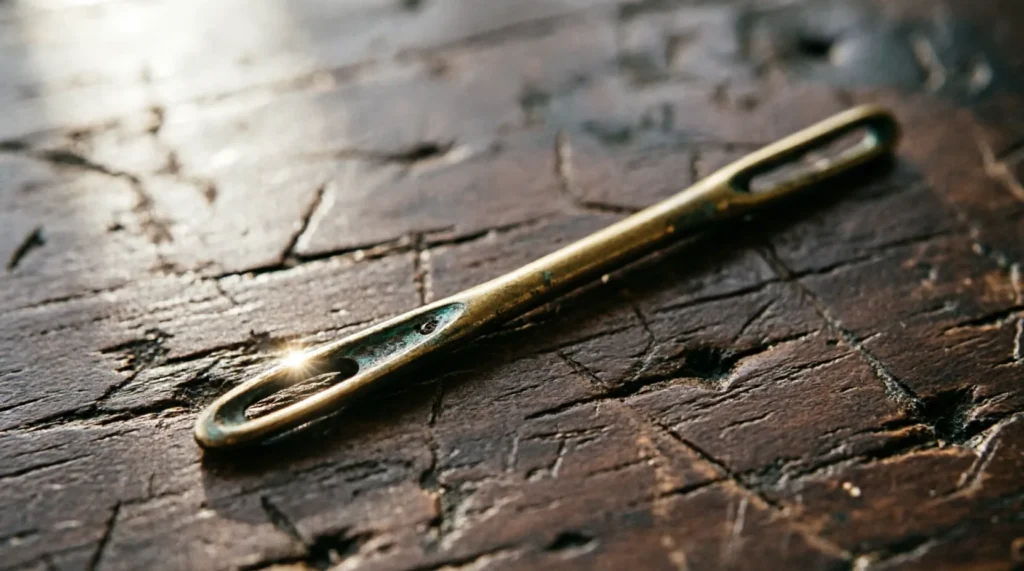
If you have ever been stumped by the classic “what has two eyes but can’t see” riddle, you are in the right place. This collection breaks down the most famous answer, explores clever variants, and provides a massive list of similar brain teasers for your next game night or classroom activity. Whether you are a parent, teacher, or puzzle enthusiast, these riddles are tested and ready to deploy.
Top 5 “Two Eyes But Can’t See” Riddles
- What has two eyes but can’t see?
Answer: A needle.
- I have eyes but cannot see, and a skin but cannot feel. What am I?
Answer: A potato.
- I have an eye but cannot see, and I spin around with destructive force. What am I?
Answer: A hurricane.
- What has glass eyes but cannot see, and often wears a dress?
Answer: A doll.
- What has hundreds of eyes but cannot see, and fans out in a brilliant display?
Answer: A peacock’s tail feathers.
The Classic “Two Eyes But Can’t See” Riddle Explained
The most famous answer to the “what has two eyes but can’t see” riddle is a needle. This riddle is a masterclass in linguistic misdirection. When you hear the word “eyes,” your brain immediately defaults to the biological organ responsible for vision. However, in sewing terminology, the small hole at the top of a needle used for threading is universally called its “eye.”
According to the historical study of Riddle, the best brain teasers rely on double meanings and polysemy, which is exactly why the word “eye” tricks our brains into thinking of vision rather than a hole or a bud. The riddle works because it forces the listener to abandon their primary definition of a word and search for a secondary, context-specific meaning.
When I run this one with kids at family game nights, the wrong guess is always “a blind person” or “a statue.” The trick is gently guiding them away from living beings and toward everyday objects. Once the answer is revealed, the “aha!” moment is almost instantaneous because the logic is perfectly sound, yet entirely hidden in plain sight.
Tricky Variants of the “Eyes That Don’t See” Riddle
Once your audience has mastered the needle, it is time to introduce variants that twist the formula. These riddles use the same core mechanic but apply it to different objects, keeping guessers on their toes.
- I have an eye but cannot see, and a tongue but cannot taste or speak. What am I?
Answer: A shoe.
- I have three eyes but cannot see, and I hold refreshing water inside my hard shell. What am I?
Answer: A coconut.
- I have an eye but cannot see, and I am the exact center of an archer’s goal. What am I?
Answer: A bullseye.
- I have an eye but cannot see, and I am a wooden carving mounted on the bow of a ship. What am I?
Answer: A ship’s figurehead.
- I have an eye but cannot see, and I am a small legume often served in Southern cuisine. What am I?
Answer: A black-eyed pea.
- I have an eye but cannot see, and I watch over a room from a wall without ever blinking. What am I?
Answer: A portrait (or painting).
At pub quizzes, adults often overthink the shoe riddle and guess “a river” (which has a bed and a mouth, but no eye), making “a shoe” the perfect tricky pivot. Similarly, my 9-year-old solved the coconut riddle in ten seconds because we had just opened a coconut at the grocery store, proving that real-world exposure beats abstract guessing every time.
Hard “What Am I” Riddles About Objects with Eyes
For advanced riddle solvers, these questions remove the direct “what has” phrasing and replace it with descriptive “What am I?” formatting. This requires the listener to synthesize multiple clues before arriving at the correct object.
- I have many eyes but cannot see, and I grow in the dark underground before becoming a delicious meal. What am I?
Answer: A potato.
- I have an eye but cannot see, and I am the calm, cloudless center of a violent, swirling storm. What am I?
Answer: A hurricane (or cyclone).
- I have hundreds of eyes but cannot see, and I belong to a magnificent bird that uses me to attract a mate. What am I?
Answer: A peacock’s tail feather.
- I have an eye but cannot see, and I am forged from metal to help you mend a tear in your favorite shirt. What am I?
Answer: A sewing needle.
- I have many eyes but cannot see, and I wear a spiky, rough exterior while hiding sweet fruit inside. What am I?
Answer: A pineapple.
- I have glass eyes but cannot see, and I sit on a shelf collecting dust until a child picks me up to play. What am I?
Answer: A doll.
While human Eyes are complex optical organs designed for vision, language playfully borrows the term for any circular opening or prominent spot, completely stripping away the biological function of sight. This linguistic borrowing is what makes the pineapple and hurricane riddles so effective; the listener must recognize that “eye” can mean a bud on a fruit or a meteorological phenomenon, not just a body part. This one stumps most adults because they associate “eye” strictly with biology, forgetting meteorological or botanical terms entirely.
Funny and Unexpected “Blind Eye” Riddles
Humor is a fantastic tool in riddle-making. These entries lean into the absurd or the mundane, catching solvers off guard with a punchline-style reveal.
- I have two eyes but cannot see, and I sit on your nose to help you see better. What am I?
Answer: A pair of glasses.
- I have an eye but cannot see, and I am the reason you painfully stub your toe in the dark. What am I?
Answer: A sewing needle left on the floor.
- I have an eye but cannot see, and I am a beautiful yellow flower with a dark center. What am I?
Answer: A Black-eyed Susan flower.
- I have an eye but cannot see, and I am a metal ring pressed into fabric to hold a rope or lace. What am I?
Answer: A grommet (or eyelet).
- I have eyes but cannot see, and I spend all day sitting on the couch watching television. What am I?
Answer: A couch potato.
- I have an eye but cannot see, and I am a tangled, circular flaw in a piece of lumber. What am I?
Answer: A knot in wood.
In my classroom tests, students instantly guess “a monster” or “a spy” because of the “couch potato” clue’s personification, making the reveal of a humble vegetable a guaranteed laugh. The glasses riddle is also a favorite because it points out the irony that the very object designed to aid vision possesses “eyes” (lenses) that are completely blind on their own.
How to use these riddles
These brain teasers are incredibly versatile and can be adapted for almost any social or educational setting.
For a family party, use them as an icebreaker during dinner. Place a small prize in the center of the table and award it to the first person who can correctly answer three riddles in a row.
In a classroom setting, these make perfect transition activities. Use one riddle to settle the room after recess or while waiting for the tardy bell, rewarding the first correct answer with a sticker or classroom privilege.
For a scavenger hunt, hide the actual physical objects around the house or yard. Write the riddle on a card and hand it to the player; they must solve the riddle to know what object they are looking for next, such as finding the potato in the pantry or the needle in the sewing kit.
On a road trip, these are invaluable for keeping children engaged without screens. The “I spy” nature of the clues encourages kids to look at the world around them differently, turning a boring car ride into an interactive guessing game.
Frequently Asked Questions
What is the most common answer to the “what has two eyes but can’t see” riddle? The most classic and widely accepted answer is a needle. The small hole at the top of a needle used for threading is traditionally called its “eye,” making it the perfect fit for the riddle’s wordplay.
Are these riddles suitable for young children? Yes, absolutely. While some variants might require a bit of vocabulary knowledge (like “grommet” or “figurehead”), the core riddles about needles, potatoes, and shoes are easily understood by children as young as five or six, especially with a minor hint.
How do riddles with “eyes” trick our brains? They rely on a linguistic concept called polysemy, where a single word has multiple related meanings. Your brain automatically defaults to the most common definition of “eye” (the organ of sight), forcing you to actively suppress that assumption to find the secondary definition (a hole, a bud, or a storm center).
Can I use these riddles for commercial trivia events? Yes, these are classic, public-domain folk riddles. You are free to use them in pub quizzes, classroom materials, or published trivia books without any copyright concerns.

Nathan Smith is a seasoned puzzle enthusiast with over 18 years of experience in the field of recreational mathematics and logic puzzles. He holds a degree in Mathematics from the University of Chicago, which has significantly influenced his approach to puzzle creation and analysis. Nathan’s journey into brain teasers began during his college years, where he led the university’s puzzle club and organized annual puzzle hunts. At RiddleBarn, Nathan is dedicated to designing intricate logic puzzles and number riddles that challenge even the most seasoned solvers. His content often features a blend of mathematical insights and playful challenges, aiming to captivate readers who seek depth in their puzzling experiences. Nathan’s expertise lies in breaking down complex ideas into engaging and accessible formats.