

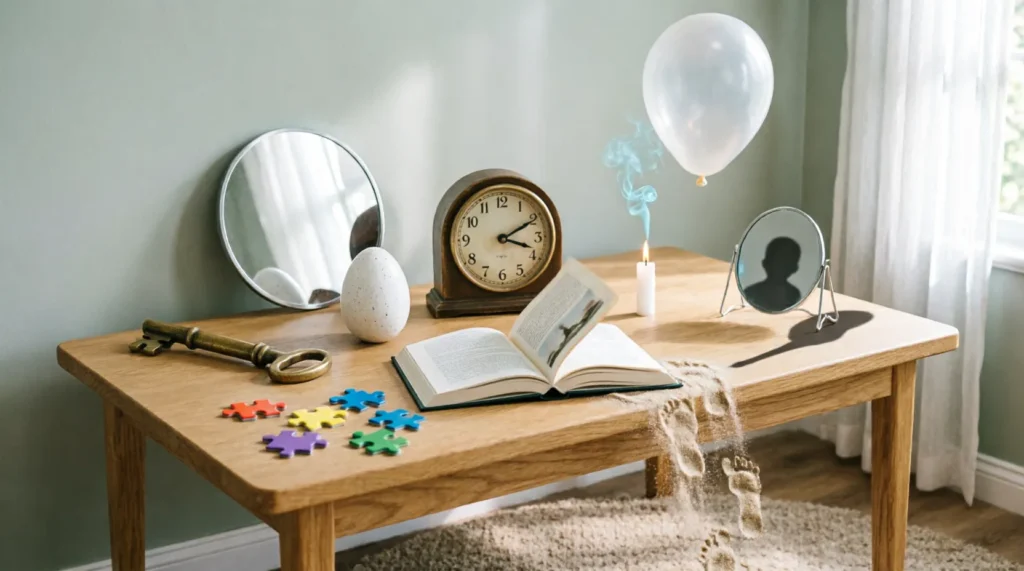
Riddles are one of the most effective ways to spark curiosity and critical thinking in young minds without them even realizing they are learning. Whether you are a parent looking to keep your children entertained during a long car ride or a teacher seeking a fun brain break for your classroom, having a reliable stash of age-appropriate puzzles is essential. This collection brings together the best 10 examples of riddles for kids, along with many more, ensuring you have the perfect mix of easy wins and challenging head-scratchers.
Top 5 Kids’ Riddles
These five riddles represent the gold standard of children’s puzzles. They are widely recognized, highly engaging, and strike the perfect balance between being solvable and requiring a moment of lateral thinking. I have tested these extensively at family gatherings, and they consistently generate the most “aha!” moments.
I have a neck but no head. What am I? Answer: A shirt
What has to be broken before you can use it? Answer: An egg
I’m tall when I’m young, and I’m short when I’m old. What am I? Answer: A candle
What month of the year has 28 days? Answer: All of them
What is full of holes but still holds water? Answer: A sponge
Easy Riddles for Young Children
When introducing riddles to younger children, typically ages four to seven, it is crucial to start with concrete objects they interact with daily. Abstract concepts can be frustrating, so these riddles focus on tangible items. The goal here is confidence building; we want them to feel smart and capable of solving the puzzle.
riddles have been used throughout history as a form of entertainment and intellectual challenge, often serving as a way to test wisdom or cleverness in folklore Riddle. For young kids, this tradition translates into simple wordplay that relies on observation rather than complex logic.
What has hands but cannot clap? Answer: A clock
What goes up but never comes down? Answer: Your age
What has legs but cannot walk? Answer: A table
What has one eye but cannot see? Answer: A needle
What gets wet while drying? Answer: A towel
What has many keys but can’t open a single lock? Answer: A piano
I have cities, but no houses. I have mountains, but no trees. I have water, but no fish. What am I? Answer: A map
What begins with T, ends with T, and has T in it? Answer: A teapot
Funny Riddles to Make Them Giggle
Humor is a powerful hook for engagement. When a riddle ends with a pun or a silly answer, children are more likely to remember it and share it with their friends. These riddles rely on double meanings and playful language. In my experience running these during school visits, the funny riddles are the ones that get repeated in the hallway long after the session ends.
What kind of room has no doors or windows? Answer: A mushroom
Why did the cookie go to the doctor? Answer: Because he felt crummy
What do you call a fake noodle? Answer: An impasta
Where does Friday come before Thursday? Answer: In the dictionary
What do you call a bear with no teeth? Answer: A gummy bear
Why did the student eat his homework? Answer: Because the teacher said it was a piece of cake
What has ears but cannot hear? Answer: A cornfield
What do you call a sleeping bull? Answer: A bulldozer
Tricky Riddles That Require Lateral Thinking
These riddles are designed to trip up the solver by leading them down a false path. They often rely on assumptions that the listener makes automatically. For example, when I ask the “bus driver” riddle below, almost every child immediately starts tracking the passengers getting on and off, completely missing the simple fact stated at the very beginning. These are excellent for teaching careful listening skills.
You are driving a bus. At the first stop, two women get on. At the second stop, three men get off and one woman gets on. At the third stop, three children and their mom get on. The bus is grey. What color is the bus driver’s hair? Answer: Whatever color your hair is (you are the driver)
Note: This is a classic trap. I watch kids furiously doing mental math, adding and subtracting passengers, only to realize the answer was about them all along. It is a humbling and hilarious lesson in attention to detail.
A man pushes his car to a hotel and tells the owner he’s bankrupt. Why? Answer: He is playing Monopoly
What belongs to you, but other people use it more than you? Answer: Your name
If you drop me I’m sure to crack, but give me a smile and I’ll always smile back. What am I? Answer: A mirror
The more you take, the more you leave behind. What am I? Answer: Footsteps
David’s parents have three sons: Snap, Crackle, and what’s the name of the third son? Answer: David
Animal Riddles for Nature Lovers
Children often have a deep fascination with animals, making this category a perennial favorite. These riddles describe physical characteristics or behaviors of animals without naming them directly. This encourages kids to think about biology and habitat in a playful way. When using these in a classroom setting, I often find that students who struggle with traditional academic riddles excel here because they can draw on their knowledge of the natural world.
I have a long neck, I love leaves, and I am the tallest animal in the world. What am I? Answer: A giraffe
I am black and white and everyone loves me. I look like a horse but I am not. What am I? Answer: A zebra
I sleep during the day and fly at night. I have no feathers to help me fly. What am I? Answer: A bat
I have a shell but I am not a turtle. I live in the sea and I have eight legs. What am I? Answer: A crab
I am known for my stripes and I love to eat bamboo. I am black and white. What am I? Answer: A panda
I have a trunk but I am not a car. I have big ears and a long nose. What am I? Answer: An elephant
I buzz around flowers and make sweet honey. What am I? Answer: A bee
Math and Logic Riddles for Sharp Minds
For children who enjoy numbers and patterns, these riddles provide a different kind of satisfaction. They are not necessarily complex arithmetic problems, but they require logical deduction. These are particularly good for older elementary students who are ready to move beyond simple wordplay. exposing children to varied examples of problem-solving scenarios helps develop flexible thinking patterns Examples.
How many sides does a circle have? Answer: Two (the inside and the outside)
Note: This one often causes debate. Some kids will say zero, some will say one. The “two” answer is a playful lateral thinking response that usually gets a groan and a laugh, but it opens up a great discussion about geometry definitions.
If there are three apples and you take away two, how many do you have? Answer: Two (you took them)
What weighs more: a pound of bricks or a pound of feathers? Answer: They weigh the same (one pound)
I am an odd number. Take away a letter and I become even. What number am I? Answer: Seven (remove the ‘s’ and it becomes ‘even’)
How can you add eight eights to get one thousand? Answer: 888 + 88 + 8 + 8 + 8 = 1000
What is the next number in the sequence: 2, 4, 8, 16, …? Answer: 32 (each number is doubled)
How to Use These Riddles
Knowing the riddles is only half the battle; knowing how to deploy them effectively ensures maximum engagement. Here are a few proven strategies for integrating these puzzles into your daily routine.
- Car Ride Entertainment: Long drives can be tedious for children. Instead of relying on screens, try a “riddle relay.” One person asks a riddle, and the first person to solve it gets to ask the next one. This keeps everyone engaged and reduces backseat arguing.
- Classroom Brain Breaks: Teachers can use these as transition activities. When moving from math to reading, pose a tricky riddle to reset the students’ focus. It acts as a mental palate cleanser.
- Scavenger Hunt Clues: Write these riddles on cards and hide them around the house or yard. Each solved riddle leads to the location of the next clue. For example, if the answer is “fridge,” hide the next clue near the refrigerator.
- Dinner Table Conversation: Replace the standard “how was your day?” with a riddle challenge. It encourages interaction and gives shy children a low-pressure way to participate in family conversation.
Frequently Asked Questions
What is a good riddle for a five-year-old? For a five-year-old, stick to riddles with concrete, visible answers like animals or household objects. Riddles such as “What has hands but cannot clap?” (a clock) or “What has legs but cannot walk?” (a table) are ideal because the child can look around the room and find the object, reinforcing the connection between the clue and the reality.
How do these riddles help children learn? Riddles promote critical thinking, vocabulary expansion, and listening skills. They require children to analyze language carefully, consider multiple meanings of words, and think laterally rather than linearly. This cognitive flexibility is a foundational skill for problem-solving in math and science later on.
What should I do if my child cannot solve a riddle? Avoid giving the answer immediately. Instead, offer a hint that narrows the field of possibilities. For example, if they are stuck on the “candle” riddle, you might say, “Think about something you use on a birthday cake.” If they still struggle, explain the logic behind the answer so they understand the wordplay for next time.
Are there riddles that are too hard for kids? Yes, riddles that rely on obscure historical facts, complex puns, or abstract philosophical concepts are generally too difficult for young children. Stick to riddles where the answer is part of their everyday experience. If a riddle requires knowledge they simply do not have yet, it will lead to frustration rather than fun. Always gauge the difficulty based on the individual child’s interests and exposure.

Nathan Smith is a seasoned puzzle enthusiast with over 18 years of experience in the field of recreational mathematics and logic puzzles. He holds a degree in Mathematics from the University of Chicago, which has significantly influenced his approach to puzzle creation and analysis. Nathan’s journey into brain teasers began during his college years, where he led the university’s puzzle club and organized annual puzzle hunts. At RiddleBarn, Nathan is dedicated to designing intricate logic puzzles and number riddles that challenge even the most seasoned solvers. His content often features a blend of mathematical insights and playful challenges, aiming to captivate readers who seek depth in their puzzling experiences. Nathan’s expertise lies in breaking down complex ideas into engaging and accessible formats.