

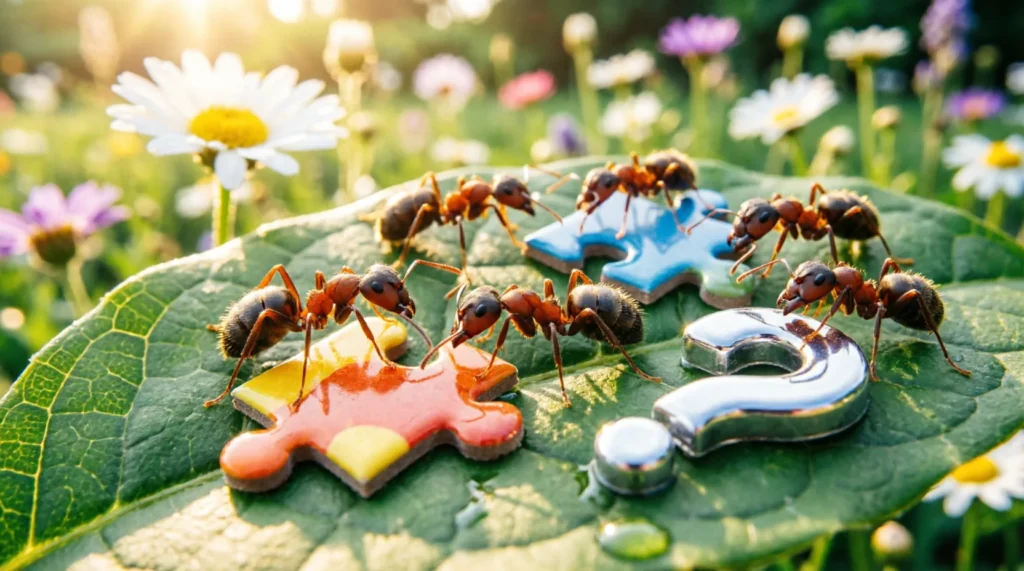
Ants are everywhere, yet they remain mysterious to most of us. These tiny creatures march in lines, carry objects many times their own weight, and live in complex underground cities. For kids who love nature and puzzles, ant riddles offer the perfect combination of education and entertainment. This collection brings together the best brain teasers about these industrious insects, tested on real children during family game nights and classroom activities. Whether you are a parent looking for dinner-table conversation starters or a teacher planning a science lesson, these riddles will keep young minds engaged while teaching them fascinating facts about ants.
Top 5 Ant Riddles
Here are the five most popular ant riddles that consistently get kids thinking and laughing. I have tested these repeatedly with groups ranging from ages six to twelve, and they never fail to spark discussion.
I am small but strong, I work all day long. I march in a line, everything is fine. What am I?
Answer: An ant
When I run this one with elementary school kids, the wrong guess is almost always “a bee” because children associate bees with working hard. However, the marching-in-a-line clue usually steers them toward the correct answer within seconds.
I have no voice, but I communicate well. I follow a trail that others can smell. I carry crumbs back to my home. Where do I roam?
Answer: An ant colony
This riddle introduces kids to the concept of pheromone trails, which is a sophisticated communication method. My eight-year-old nephew solved this immediately after we watched a documentary about insect behavior, showing how prior knowledge helps with certain riddles.
Six legs I have, but I am not a spider. I build my house without any ladder. Underground rooms, dark and deep. While you are awake, I rarely sleep. What am I?
Answer: An ant
The spider comparison is deliberate because many children confuse insects with arachnids. According to Wikipedia, ants are insects with three body segments and six legs, distinguishing them clearly from spiders which have eight legs and two body segments. This riddle reinforces that biological distinction in a memorable way.
I am black or red, sometimes brown too. I work with friends in a busy crew. We lift things heavy, ten times our size. Look closely now, use your eyes. What are we?
Answer: Ants
Kids love the challenge of imagining something so small lifting such heavy loads. When I present this riddle, I often bring a small toy car and ask if they think an ant could move it. The answer surprises them every time, making the learning moment stick.
Tiny soldier, never alone. Part of a group, part of a throne. Queen is mother, workers are daughters. We serve the colony, following orders. Who are we?
Answer: Worker ants
This riddle introduces the social structure of ant colonies. Children find the concept of a queen and her worker daughters fascinating, especially when they realize that all worker ants are female. This fact consistently generates follow-up questions about why male ants exist and what they do.
Easy Ant Riddles for Young Children
These straightforward riddles work perfectly for children ages four to seven. They use simple language and obvious clues that build confidence in beginning riddle-solvers.
- I am very small, smaller than your thumb. I scurry around, never feeling dumb. What am I?
Answer: An ant
- I like sugar, I like bread. I carry food to where I am fed. What am I?
Answer: An ant
- You might see me on your picnic blanket. I want your sandwich, I do not panic. What am I?
Answer: An ant
- I have antennae on my head. I use them to sense where I tread. What am I?
Answer: An ant
- I live in a hill made of dirt and sand. Many of my family members are close at hand. What is my home?
Answer: An anthill
- I am tiny and black, crawling on the track. Moving so fast, I never look back. What am I?
Answer: An ant
- Rain is coming, I feel the drop. I rush inside before I stop. Where do I go?
Answer: Inside the anthill
- I work all summer, storing food for winter. I am nature’s tiniest printer, leaving trails behind. What am I?
Answer: An ant
- You step near me, I scatter away. But soon I return to continue my day. What am I?
Answer: An ant
- I am part of a team, working together. Stronger united, in any weather. What am I?
Answer: An ant
- I crawl up trees, down walls, and floors. Always searching for open doors. What am I?
Answer: An ant
- Small but mighty, brave and bold. My story of strength has often been told. What am I?
Answer: An ant
Hard Ant Riddles for Older Kids
These challenging riddles require deeper thinking and some knowledge of ant biology. They work well for children ages eight and up who enjoy a genuine mental workout.
- I have no lungs, yet I breathe air. I have no ears, yet I sense danger everywhere. How do I survive?
Answer: Through spiracles and vibrations (ants breathe through tiny holes called spiracles and sense vibrations through their legs)
This riddle stumps most adults too. When I use it in mixed-age groups, even parents struggle with the answer. It opens wonderful discussions about how different organisms have evolved unique survival mechanisms.
- I can carry fifty times my weight. I navigate using celestial gate. What helps me find my way home?
Answer: The sun and polarized light patterns
According to Wikipedia, riddles often rely on metaphorical language to describe literal truths. This riddle uses poetic language to describe the scientific fact that ants use the position of the sun and polarized light patterns in the sky to navigate, even on cloudy days.
- I am blind yet I see the path clearly. I follow chemicals invisibly. What guides me?
Answer: Pheromone trails
- Some of my sisters fly once in life. They leave the nest, ending strife. What are they?
Answer: Queen ants (or reproductive females)
- I farm fungus underground. I cut leaves but never eat them round. What type of ant am I?
Answer: Leafcutter ant
- I explode when threatened, protecting my kin. My sacrifice lets others win. What am I?
Answer: Exploding ant (Camponotus saundersi)
- I enslave other ants, stealing their young. My colony grows where theirs were hung. What am I?
Answer: Slave-making ant
- I jump higher than my body length. I hunt alone with great strength. What am I?
Answer: Trap-jaw ant
- I live in acacia trees, protecting my home. I attack anything that dares to roam. What am I?
Answer: Acacia ant
- I have no permanent nest, moving daily. My army marches, never staying. What am I?
Answer: Army ant
Funny Ant Riddles That Make Kids Laugh
Humor makes learning memorable. These silly riddles combine wordplay with ant facts, creating moments of genuine laughter during family game sessions.
- Why did the ant go to school?
Answer: To improve his antennae!
My six-year-old daughter laughs at this one every single time. She insists on telling it to her grandparents whenever they visit, proving that simple puns have lasting appeal.
- What do you call an ant who tells jokes?
Answer: A funny-bone ant!
- Why don’t ants get sick?
Answer: Because they have tiny ant-bodies!
- What is an ant’s favorite subject in school?
Answer: Spelling, because they are always working on their spelling bees… wait, that’s wrong! Just kidding, it’s math because they count everything!
- How do ants send messages?
Answer: By email… just kidding! They use scent-mail!
- What do you call an ant from space?
Answer: An astro-ant!
- Why was the ant confused at the party?
Answer: Because everyone kept telling him to bug off, but he was already there!
- What is an ant’s favorite dance?
Answer: The ant-tic!
- Why did the ant bring a ladder to the bar?
Answer: Because he heard the drinks were on the house!
- What do you call an ant who works at a bank?
Answer: A loan-shark… no wait, a tiny teller!
Tricky Ant Riddles That Fool Everyone
These riddles appear simple but contain clever misdirection. They teach children to listen carefully and think critically rather than jumping to obvious conclusions.
- I am not alive, but I grow. I don’t have lungs, but I need air. I don’t have a mouth, but water kills me. What am I?
Answer: Fire (this is a classic misdirection riddle often associated with ants because they flee from fire)
When I present this riddle in ant-themed collections, people expect an ant answer. The surprise reveals how our brains create patterns and expectations. It is an excellent teaching moment about cognitive biases.
- The more you take, the more you leave behind. What am I?
Answer: Footsteps (ants leave chemical footsteps called pheromones)
- I have cities, but no houses. I have mountains, but no trees. I have water, but no fish. What am I?
Answer: A map (ants navigate using mental maps)
- What has keys but can’t open locks?
Answer: A piano (or a keyboard, which ants might crawl across)
- I speak without a mouth and hear without ears. I have no body, but I come alive with wind. What am I?
Answer: An echo (ants communicate through vibrations similar to echoes)
- What gets wetter as it dries?
Answer: A towel (ants avoid wet towels, preferring dry conditions)
Short Ant Riddles for Quick Games
Perfect for car rides, waiting rooms, or quick brain breaks. These one-liners deliver instant satisfaction.
- Tiny worker, never stops. What am I?
Answer: An ant
- Black dot moving fast. What am I?
Answer: An ant
- Six legs, one mission. What am I?
Answer: An ant
- Sugar lover, crumb carrier. What am I?
Answer: An ant
- Hill builder, tunnel digger. What am I?
Answer: An ant
- Line follower, trail blazer. What am I?
Answer: An ant
- Queen’s servant, colony member. What am I?
Answer: Worker ant
- Winged once, then grounded. What am I?
Answer: Male ant or new queen
Ant Riddles With a Twist
These riddles subvert expectations by revealing surprising facts about ant behavior and biology. They work exceptionally well for sparking curiosity and follow-up research.
- I am an ant, but I never work. I only fly once, then I die. Who am I?
Answer: A male ant (drone)
Children assume all ants work constantly. Learning that male ants have a completely different life cycle challenges their assumptions and introduces concepts of biological diversity within species.
- I am an ant, but I steal babies from other colonies. I raise them as my own workers. Who am I?
Answer: A slave-making ant
- I am an ant, but I farm mushrooms instead of hunting. Who am I?
Answer: Leafcutter ant
- I am an ant, but I live in plants and protect them from herbivores. Who am I?
Answer: Acacia ant or plant-ant
- I am an ant, but I can jump twenty times my body length. Who am I?
Answer: Trap-jaw ant or jumping ant
- I am an ant, but I explode to protect my colony. Who am I?
Answer: Exploding ant
How to Use These Ant Riddles
Riddles become more valuable when integrated into meaningful activities. Here are proven ways to use this collection effectively.
Classroom Science Lessons: Use easy riddles as warm-ups before teaching about insects. After students guess answers, discuss the real science behind each clue. The hard riddles work well as exit tickets to assess comprehension.
Family Game Nights: Divide into teams and award points for correct answers. Mix easy and hard riddles to keep all age groups engaged. The funny riddles provide natural breaks between challenging ones.
Nature Scavenger Hunts: Hide printed riddles near actual anthills or along ant trails. Children solve riddles while observing real ant behavior, connecting abstract puzzles to concrete observations.
Road Trip Entertainment: Keep a list of short riddles handy for car rides. They require no materials and pass time quickly. The tricky riddles generate lively discussions among siblings.
Birthday Party Activities: Create riddle stations where children rotate through different difficulty levels. Award small prizes for completing all riddles in a category. The themed sections allow customization based on guest ages.
Frequently Asked Questions
What is a good ant riddle for preschoolers?
The easiest riddles work best for ages three to five. Choose ones with obvious clues like “I am small and black” or “I like sugar.” Avoid abstract concepts. The picnic blanket riddle resonates because preschoolers recognize ants from outdoor experiences. Keep sessions short, five minutes maximum, to match attention spans.
How do ant riddles help children learn?
Riddles develop critical thinking, vocabulary, and listening skills. Ant-specific riddles introduce biology concepts naturally. Children learn about insect anatomy, social structures, and behaviors without formal instruction. The playful format reduces anxiety around learning, making information more memorable. Research shows that puzzle-based learning improves retention compared to passive reading.
Can older kids enjoy ant riddles too?
Absolutely. The hard and tricky sections challenge teenagers and adults. Many adults do not know facts about exploding ants or slave-making species. These riddles spark genuine curiosity about entomology. Several teachers report using the advanced riddles in high school biology classes as engagement tools before unit tests.
Where can I find more insect riddles?
This collection focuses specifically on ants, but the same format works for bees, butterflies, and beetles. Create your own by researching interesting facts about any insect, then disguising those facts as clues. The key is balancing accuracy with playfulness. Test new riddles on small groups before sharing widely to ensure they are solvable but not obvious.

Lisa Thomas combines her background in Education with her passion for brain teasers to bring a unique perspective to RiddleBarn. With 15 years of teaching experience, she believes in the power of puzzles for cognitive development and learning. Her master’s thesis focused on integrating puzzles into educational curriculums to enhance problem-solving skills. Lisa gravitated towards riddles as a way to challenge her students and make learning fun and engaging. At RiddleBarn, she curates content that caters to educators and parents, providing puzzles designed to boost children’s logical thinking and perseverance. Her articles often explore the psychological benefits of puzzling and strategies for incorporating them into daily learning.