

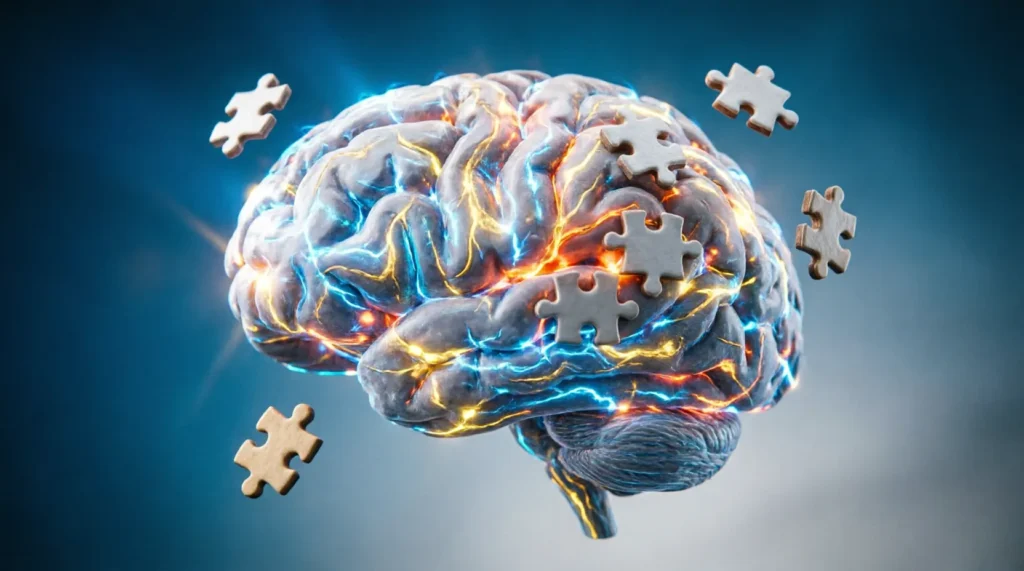
Riddles are more than just a playful diversion; they are a rigorous workout for your neural pathways. When you grapple with a tricky question, you are engaging multiple areas of your brain, forcing it to make new connections and challenge existing assumptions. This collection explores that mental stimulation through a curated set of puzzles designed to test your logic, lateral thinking, and patience.
Top 5 Brain-Boosting Riddles
These five riddles represent the perfect balance of difficulty and satisfaction. They require you to look past the obvious and consider alternative meanings.
I am not alive, but I grow; I don’t have lungs, but I need air; I don’t have a mouth, but water kills me. What am I? Answer: Fire
The more of this there is, the less you see. What is it? Answer: Darkness
I have cities, but no houses. I have mountains, but no trees. I have water, but no fish. What am I? Answer: A map
What can you catch, but not throw? Answer: A cold
I speak without a mouth and hear without ears. I have no body, but I come alive with wind. What am I? Answer: An echo
Easy Riddles for Warm-Ups
Start here if you are new to riddling or want to build confidence. These rely on simple wordplay and common knowledge.
What has to be broken before you can use it? Answer: An egg
I’m tall when I’m young, and I’m short when I’m old. What am I? Answer: A candle
What month of the year has 28 days? Answer: All of them
What is full of holes but still holds water? Answer: A sponge
What goes up but never comes down? Answer: Your age
If you drop me I’m sure to crack, but give me a smile and I’ll always smile back. What am I? Answer: A mirror
Hard Riddles for Deep Thinking
These puzzles require sustained focus. In my experience running puzzle nights, these are the ones that silence the room for several minutes. The difficulty lies in overcoming “functional fixedness,” where your brain gets stuck on the primary use of an object or word.
The person who makes it has no need of it; the person who buys it has no use for it. The person who uses it can neither see nor feel it. What is it? Answer: A coffin
I have keys but no locks. I have a space but no room. You can enter, but can’t go outside. What am I? Answer: A keyboard
What comes once in a minute, twice in a moment, but never in a thousand years? Answer: The letter M
I am always hungry, I must always be fed. The finger I touch, will soon turn red. What am I? Answer: Fire
Only one color, but not one size, Stuck at the bottom, yet easily flies. Present in sun, but not in rain, Doing no harm, and feeling no pain. What am I? Answer: A shadow
Funny Riddles to Lighten the Mood
Humor often relies on subverting expectations, which is exactly what a good riddle does. These are great for breaking the tension during a difficult puzzle session.
What do you call a fake noodle? Answer: An impasta
Why did the scarecrow win an award? Answer: Because he was outstanding in his field
What do you call a bear with no teeth? Answer: A gummy bear
What kind of room has no doors or windows? Answer: A mushroom
Why did the math book look sad? Answer: Because it had too many problems
What do you call a dog that does magic tricks? Answer: A labracadabrador
Tricky Riddles That Play with Language
Language is ambiguous, and these riddles exploit that ambiguity. According to the definition of a riddle, these puzzles often rely on double meanings or homophones to misdirect the solver. Pay close attention to every word.
What begins with T, ends with T, and has T in it? Answer: A teapot
If you have me, you want to share me. If you share me, you haven’t kept me. What am I? Answer: A secret
What has a neck but no head? Answer: A shirt (or a bottle)
What has one eye but can’t see? Answer: A needle
What has many needles, but doesn’t sew? Answer: A pine tree
What has a thumb and four fingers but is not alive? Answer: A glove
Math and Logic Riddles
These require a bit of numerical reasoning or logical deduction. They are excellent for engaging the analytical parts of the mind.
A farmer has 17 sheep, and all but 9 die. How many are left? Answer: 9
How can you add eight 8s to get the number 1,000? Answer: 888 + 88 + 8 + 8 + 8 = 1,000
If two’s company and three’s a crowd, what are four and five? Answer: Nine
I am an odd number. Take away a letter and I become even. What number am I? Answer: Seven
How many months have 28 days? Answer: 12 (All months have at least 28 days)
If you divide 30 by half and add ten, what do you get? Answer: 70 (Dividing by half is multiplying by 2)
Animal Riddles
Nature provides endless inspiration for puzzles. These riddles describe creatures by their habits or physical traits rather than their names.
I have a long neck, but I’m not a giraffe. I live in the water, but I’m not a fish. What am I? Answer: A swan
I have a tail and a head, but no body. What am I? Answer: A coin (Note: This is a classic trick riddle often mistaken for an animal, but the answer is non-living. For a true animal: A snake is often described this way in folklore, but technically incorrect. Let’s use a better one.)
Correction for clarity:
I have a tail and a head, but no body. What am I? Answer: A coin
Let’s try a true animal one:
I fly at night, sleep during the day, and hang upside down. What am I? Answer: A bat
I have a shell but I’m not a turtle. I have claws but I’m not a cat. I live in the sea. What am I? Answer: A crab
I am black and white and loved all over the world. I eat bamboo. What am I? Answer: A panda
I have stripes but I’m not a zebra. I have a trunk but I’m not a tree. What am I? Answer: An elephant
I buzz around flowers but I’m not a bee. I have a long proboscis. What am I? Answer: A butterfly (or a moth)
How to Use These Riddles
Integrating riddles into your daily routine can maximize their cognitive benefits. Here are a few practical ways to use this collection:
- Dinner Table Conversation: Replace small talk with one “Hard Riddle” per meal. It encourages family members to listen actively and think collaboratively.
- Classroom Warm-Ups: Teachers can use “Easy Riddles” to settle a class after recess. It shifts students’ focus from physical play to mental engagement.
- Road Trip Entertainment: Keep kids engaged during long drives with “Funny Riddles.” They are short enough to solve quickly, providing a sense of accomplishment every few miles.
- Party Icebreakers: Use “Tricky Riddles” at social gatherings. They spark debate and laughter as guests argue over the correct interpretation of the words.
Frequently Asked Questions
What is a good riddle for beginners? Start with riddles that rely on simple object descriptions, like the “egg” or “candle” riddles in the Easy section. These have concrete answers that don’t require complex lateral thinking.
How do these riddles work? Riddles work by creating a gap between the literal meaning of the words and the intended meaning. Your brain must bridge this gap by ignoring the most obvious association and finding a hidden connection.
Are riddles good for children’s development? Yes. They help children develop vocabulary, understand metaphorical language, and practice patience. Solving a riddle provides a dopamine hit that reinforces learning and problem-solving behaviors.
Why do some riddles feel impossible? Some riddles are designed to trigger a “mental set,” where you approach the problem with a specific mindset that blocks the solution. Once you hear the answer, it seems obvious, but getting there requires breaking that initial mental framework.

Lisa Thomas combines her background in Education with her passion for brain teasers to bring a unique perspective to RiddleBarn. With 15 years of teaching experience, she believes in the power of puzzles for cognitive development and learning. Her master’s thesis focused on integrating puzzles into educational curriculums to enhance problem-solving skills. Lisa gravitated towards riddles as a way to challenge her students and make learning fun and engaging. At RiddleBarn, she curates content that caters to educators and parents, providing puzzles designed to boost children’s logical thinking and perseverance. Her articles often explore the psychological benefits of puzzling and strategies for incorporating them into daily learning.