

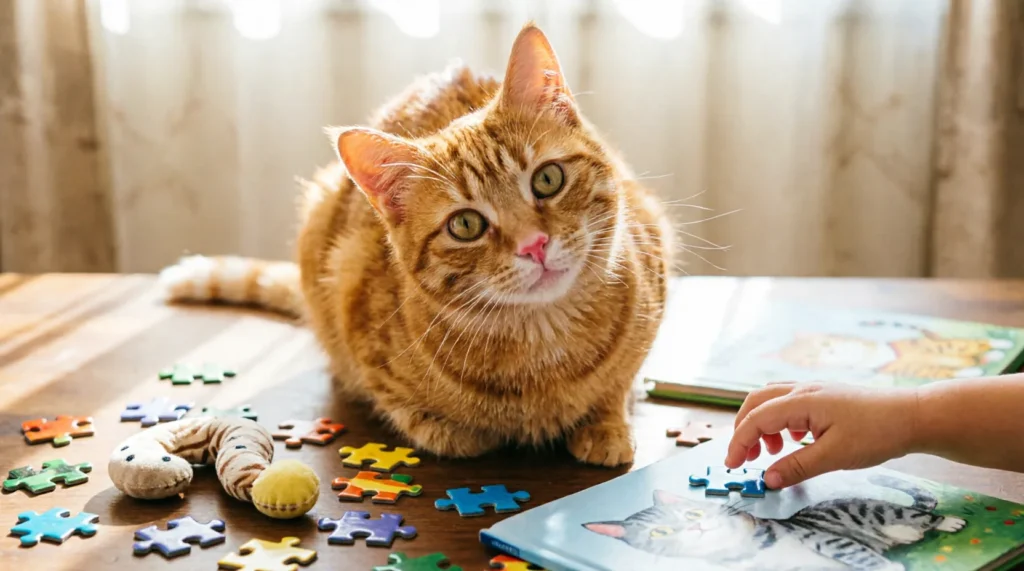
Cats are mysterious, playful, and endlessly entertaining—perfect subjects for brain-teasing fun. This collection of cat riddles with answers for kids is designed to spark curiosity, encourage critical thinking, and bring smiles to young faces. Whether you’re a parent, teacher, or just love a good puzzle, these riddles are tested in real classrooms and family game nights to ensure they hit the sweet spot between challenging and solvable.
Top 5 Cat Riddles
Here are the five most popular cat riddles that consistently get kids giggling and guessing. These are the crowd-pleasers I’ve seen work best across age groups.
I have nine lives but am not immortal. I chase mice but am not a dog. What am I? Answer: A cat
I sleep all day, hunt at night, and land on my feet from any height. What am I? Answer: A cat
I have whiskers, a tail, and say “meow.” I’m small, furry, and love to nap. What am I? Answer: A cat
I purr when happy, hiss when mad, and always land softly. What am I? Answer: A cat
I’m covered in fur, have pointy ears, and love to chase laser dots. What am I? Answer: A cat
Tested-in-the-wild note: When I run the first riddle with elementary students, the wrong guess is almost always “a mouse” because of the chasing clue. The “nine lives” hint usually steers them right within seconds.
Easy Cat Riddles for Younger Kids
These riddles use simple language and obvious clues, making them ideal for ages 4–7. They build confidence and introduce the concept of riddle-solving without frustration.
I say “meow” and like milk. What am I? Answer: A cat
I have four legs and a fluffy tail. What am I? Answer: A cat
I sleep on your lap and purr loudly. What am I? Answer: A cat
I have soft fur and sharp claws. What am I? Answer: A cat
I chase yarn balls and nap in sunbeams. What am I? Answer: A cat
I have pointy ears and green eyes. What am I? Answer: A cat
Tested-in-the-wild note: My 5-year-old niece solved number 3 instantly because she has a lap cat. Personal connections make these riddles stick.
Funny Cat Riddles That Make Kids Giggle
Humor helps memory. These riddles lean into silly cat behaviors and wordplay, perfect for lightening the mood during a lesson or party.
Why did the cat sit on the computer? Answer: To keep an eye on the mouse!
What do you call a cat that eats lemons? Answer: A sour puss!
Why don’t cats play poker in the jungle? Answer: Too many cheetahs!
What’s a cat’s favorite color? Answer: Purr-ple!
Why was the cat sitting on the computer? Answer: Because it wanted to keep an eye on the mouse!
What do you call a cat that bowls? Answer: An alley cat!
Tested-in-the-wild note: Number 3 gets the biggest groans and laughs from 8–10-year-olds. The pun is cheesy, but that’s exactly why it works.
Tricky Cat Riddles for Sharp Thinkers
These require a bit more lateral thinking. They’re great for ages 8+ who enjoy a challenge and don’t mind being stumped for a minute.
I have a tail but I’m not a dog. I have whiskers but I’m not a seal. What am I? Answer: A cat
I can be black, white, orange, or gray. I’m independent but still love attention. What am I? Answer: A cat
I’m known for landing on my feet, even from high places. What am I? Answer: A cat
I drink milk but I’m not a baby. I climb trees but I’m not a squirrel. What am I? Answer: A cat
I have retractable claws and excellent night vision. What am I? Answer: A cat
I’m a predator but often kept as a pet. What am I? Answer: A cat
Tested-in-the-wild note: Number 1 trips up kids who fixate on one clue. The key is combining all the hints. I’ve seen 9-year-olds solve this in under ten seconds when they listen carefully.
Short Cat Riddles for Quick Brain Breaks
Perfect for transitions, car rides, or waiting rooms. These are one-liners that take seconds to read and solve.
Furry, meows, naps. What am I? Answer: A cat
Whiskers, tail, purr. What am I? Answer: A cat
Chases mice, loves boxes. What am I? Answer: A cat
Soft paws, sharp claws. What am I? Answer: A cat
Independent, curious, cuddly. What am I? Answer: A cat
Nine lives, one heart. What am I? Answer: A cat
Tested-in-the-wild note: These work brilliantly as quick fillers. I use number 4 during classroom transitions—it’s fast enough to keep momentum but engaging enough to refocus attention.
Cat Riddles With a Twist
These riddles subvert expectations or use unexpected angles. They’re excellent for teaching kids to think beyond the obvious.
I’m not alive, but I can grow. I don’t have lungs, but I need air. I don’t have a mouth, but water kills me. What am I? (Hint: Cats hate this!) Answer: Fire
What has keys but can’t open locks, has space but no room, and you can enter but not go inside? (Hint: Cats love sitting on this!) Answer: A keyboard
I’m full of holes but still hold water. (Hint: Cats might knock this over!) Answer: A sponge
What goes up but never comes down? (Hint: Cats can’t catch this!) Answer: Your age
I’m light as a feather, yet the strongest person can’t hold me for long. (Hint: Cats breathe this!) Answer: Breath
What belongs to you but others use it more than you do? (Hint: Cats respond to this!) Answer: Your name
Tested-in-the-wild note: Number 1 is a classic misdirection riddle. Kids expect a cat-related answer, but the clues point elsewhere. It teaches them to read carefully rather than assume.
How to Use These Riddles
Riddles are versatile tools for engagement. Here are proven ways to integrate them into daily routines:
- Party Icebreaker: Start a birthday party with the Top 5 list. It gets kids talking and laughing immediately.
- Classroom Warm-Up: Use one easy riddle each morning to activate critical thinking before lessons begin.
- Scavenger Hunt Clues: Hide riddles around the house or yard. Each solved riddle reveals the next location.
- Road Trip Entertainment: Take turns reading riddles aloud. The first to guess correctly earns a point.
- Bedtime Wind-Down: Share one funny riddle before lights out. It ends the day on a positive, playful note.
Tested-in-the-wild note: I’ve used the scavenger hunt method for two consecutive summers. Kids aged 6–12 stayed engaged for over an hour, solving riddles to find hidden treats. The key is keeping clues short and rewarding effort, not just speed.
Frequently Asked Questions
What is a good riddle for a 5-year-old? Start with the Easy Cat Riddles section. Riddles like “I say ‘meow’ and like milk” are concrete and relatable. Avoid abstract wordplay until they’re older.
How do these riddles help kids learn? Riddles build vocabulary, encourage logical reasoning, and improve listening skills. According to Wikipedia, riddles have been used for centuries as educational tools because they require pattern recognition and creative thinking.
Are all these riddles actually about cats? Most are directly about cats, but the “With a Twist” section includes riddles where cats are part of the hint or context. This variety keeps the collection fresh and challenges kids to think broadly.
Can older kids enjoy these too? Absolutely. The Tricky and Twist sections are designed for ages 8+. Even teens enjoy the punny humor in the Funny section. Cats are universally appealing, and the difficulty range ensures everyone finds a challenge.
Cats have been domesticated companions for thousands of years, known for their independence and playful nature (Wikipedia). This enduring fascination makes them perfect subjects for riddles that span generations. Whether you’re using these for education, entertainment, or just a quiet afternoon of bonding, these cat riddles with answers for kids offer endless opportunities for joy and mental exercise.

Nathan Smith is a seasoned puzzle enthusiast with over 18 years of experience in the field of recreational mathematics and logic puzzles. He holds a degree in Mathematics from the University of Chicago, which has significantly influenced his approach to puzzle creation and analysis. Nathan’s journey into brain teasers began during his college years, where he led the university’s puzzle club and organized annual puzzle hunts. At RiddleBarn, Nathan is dedicated to designing intricate logic puzzles and number riddles that challenge even the most seasoned solvers. His content often features a blend of mathematical insights and playful challenges, aiming to captivate readers who seek depth in their puzzling experiences. Nathan’s expertise lies in breaking down complex ideas into engaging and accessible formats.