

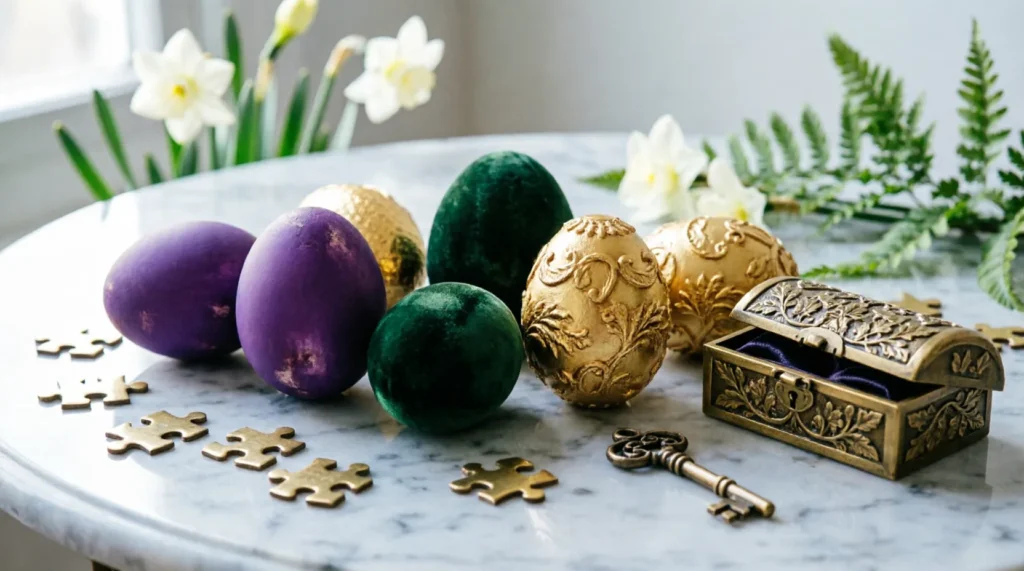
Easter isn’t just about chocolate bunnies and pastel eggs; it is a perfect opportunity to engage your guests with some clever wordplay. Whether you are hosting a brunch, hiding clues in a scavenger hunt, or simply looking to break the ice at a family gathering, these riddles add a layer of intellectual fun to the holiday festivities. This collection is designed specifically for adults, moving beyond simple nursery rhymes into witty puns, historical trivia, and lateral thinking puzzles that require a bit more mental gymnastics.
Top 5 Easter Riddles with Answers for Adults
These five riddles represent the cream of the crop—puzzles that balance difficulty with satisfaction. They are ideal for kicking off your game night or serving as the “master key” riddle in a larger Easter egg hunt.
I have no voice, yet I speak to all. I have no wings, yet I fly in spring. I am hidden in plain sight, often painted bright. What am I?
Answer: An Easter Egg
I am a creature of the night, but I bring joy in the day. I hop instead of walk, and I hide things away. I am not a rabbit, though I look quite similar. What am I?
Answer: The Easter Bunny (Note: Technically a hare, which is a common point of debate among trivia buffs)
What comes once in a minute, twice in a moment, but never in a thousand years?
Answer: The letter ‘M’
I am born in the spring, covered in white or brown. Crack me open, and I might make you frown. But paint me up, and I’m a prize to be found. What am I?
Answer: An Egg
Which month has 28 days?
Answer: All of them (This is a classic trick question that trips up many adults who immediately jump to February)
Easy Easter Riddles for Warm-Ups
Start your event with these accessible puzzles. They are great for getting everyone into the mindset of lateral thinking without causing frustration. When I use these at parties, they serve as excellent icebreakers because even those who claim to hate riddles can usually solve at least one of these quickly.
- What do you call a bunny who tells jokes?
Answer: A funny bunny
- Why did the Easter egg hide?
Answer: Because it was a little chicken
- What kind of jewelry does the Easter Bunny wear?
Answer: 14 carrot gold
- Where does the Easter Bunny go when he needs a haircut?
Answer: To the hare salon
- What is the best way to catch a unique rabbit?
Answer: Unique up on it
- How does the Easter Bunny stay fit?
Answer: Lots of hare-obics
- What do you get if you cross a rabbit with a bee?
Answer: A honey bunny
- Why was the Easter bunny so upset?
Answer: He was having a bad hare day
- What kind of music do bunnies like?
Answer: Hip hop
- What do you call a rabbit who likes to play basketball?
Answer: A hoopster
Hard Easter Riddles for Serious Solvers
These puzzles require deeper thought, knowledge of history, or careful attention to wording. According to Wikipedia, the holiday has deep roots in both Christian theology and earlier pagan spring festivals, which provides rich material for more complex riddles. I recommend saving these for the middle of your event when the competitive spirit is high. In my experience running pub quizzes, these are the ones that cause the most heated debates before the answer is revealed.
- I am a symbol of rebirth, ancient and new. Pagans celebrated me before Christians did too. I am associated with dawn and the rising sun. What is my name?
Answer: Easter (Derived from Eostre, the Germanic goddess of spring and dawn)
- I am not alive, but I grow. I don’t have lungs, but I need air. I don’t have a mouth, but water kills me. What am I? (Often used in Easter candle lighting ceremonies)
Answer: Fire
- The more you take, the more you leave behind. What am I? (Think about the Easter Bunny’s journey)
Answer: Footsteps
- I have cities, but no houses. I have mountains, but no trees. I have water, but no fish. What am I? (A common item in an Easter basket for older kids)
Answer: A map
- What has keys but can’t open locks?
Answer: A piano (Or a keyboard, if you are thinking of modern Easter gifts)
- I speak without a mouth and hear without ears. I have no body, but I come alive with wind. What am I?
Answer: An echo
- What can travel around the world while staying in a corner?
Answer: A stamp (Perfect for sending Easter cards)
- I am always hungry, I must always be fed. The finger I touch will soon turn red. What am I?
Answer: Fire
- What belongs to you, but other people use it more than you do?
Answer: Your name
- If you drop me I’m sure to crack, but give me a smile and I’ll always smile back. What am I?
Answer: A mirror
Funny Easter Puns and Wordplay
Humor is a crucial element of any social gathering. These riddles rely on puns and double meanings. They are less about logic and more about groaning at the cleverness of the wordplay. I find that these work best after a few drinks or during a casual brunch setting where the mood is light.
- What do you call a bunny with fleas?
Answer: Bugs Bunny
- Why did the bunny go to the barber?
Answer: He needed a hare cut
- What do you call a rabbit who is good at karate?
Answer: A kick-bunny
- How does the Easter Bunny deliver eggs?
Answer: By hare-mail
- What do you get when you cross a rabbit with a lawn mower?
Answer: Grasshopper
- Why don’t rabbits ever get hot in the summer?
Answer: Because they have hare conditioning
- What is a bunny’s favorite type of music?
Answer: Hip-hop
- Why did the egg go to school?
Answer: To get egg-ucated
- What do you call a sleeping bull at Easter?
Answer: A bulldozer (Wait, that’s not right… let’s try: What do you call a sleeping bunny? A snooze-berry!)
Answer: A snooze-berry (Okay, that was a stretch, but it fits the theme!)
- What kind of car does a bunny drive?
Answer: A Ford Hare-i
Tricky Easter Riddles to Test Logic
These riddles are designed to mislead. They use ambiguous language to lead the solver down the wrong path. According to Wikipedia, riddles have been used for centuries to test wisdom and wit, often relying on metaphorical language that requires the listener to look beyond the literal meaning. These are my personal favorites because they reveal how our brains make assumptions. When I present these, I watch for the moment the solver realizes they were tricked by their own logic.
- A rooster lays an egg on the roof of a barn. Which way does it roll?
Answer: Roosters don’t lay eggs
- You are participating in a race. You overtake the second person. What position are you in?
Answer: Second place (Most people say first)
- Some months have 30 days, some have 31. How many have 28?
Answer: All 12 months have at least 28 days
- What has a head and a tail but no body?
Answer: A coin (Like the ones used to decide who hides the eggs)
- The person who makes it has no need of it; the person who buys it has no use for it. The person who uses it can neither see nor feel it. What is it?
Answer: A coffin (A morbid twist, but historically relevant to the solemn side of Easter)
- I am light as a feather, yet the strongest man cannot hold me for much longer than a minute. What am I?
Answer: His breath
- What goes up but never comes down?
Answer: Your age
- What has many needles, but doesn’t sew?
Answer: A pine tree (Or a Christmas tree, but also relevant for spring decor)
- What can you catch but not throw?
Answer: A cold
- What has words, but never speaks?
Answer: A book
Easter Riddles with a Twist
These riddles combine elements of math, logic, and lateral thinking. They are perfect for groups that enjoy a challenge. I often use these in classroom settings or with families who have teenagers, as they require a bit more cognitive load than simple puns.
- If you have three apples and you take away two, how many do you have?
Answer: Two (The ones you took)
- A farmer has 17 sheep, and all but 9 die. How many are left?
Answer: Nine
- How many times can you subtract 10 from 100?
Answer: Once (After that, you are subtracting from 90)
- What number do you get when you multiply all the numbers on a telephone keypad?
Answer: Zero (Because of the 0)
- If there are three doctors and one of them is your brother, but the doctor says he has no brother, how is this possible?
Answer: The doctor is his sister
- What has a neck but no head?
Answer: A bottle (Like a wine bottle for your Easter dinner)
- What has hands but cannot clap?
Answer: A clock
- What has a face and two hands but no arms or legs?
Answer: A clock
- What gets wetter the more it dries?
Answer: A towel
- What can fill a room but takes up no space?
Answer: Light
How to Use These Riddles
Integrating these riddles into your Easter celebration can elevate the experience from a standard meal to an engaging event. Here are a few practical ways to deploy them:
- Scavenger Hunt Clues: Write each riddle on a card and hide it inside a plastic egg. The answer to the riddle leads to the next location. For example, if the answer is “fridge,” hide the next clue in the refrigerator.
- Dinner Table Icebreakers: Place a printed riddle under each plate. Guests can try to solve them while waiting for food to be served. It prevents awkward silences and gets conversation flowing.
- Party Competition: Divide guests into teams. Read a riddle aloud and give teams 30 seconds to write down their answer. Award points for correct answers and bonus points for the fastest team.
- Social Media Engagement: Post one riddle a day leading up to Easter on your social media channels. Ask followers to comment with their answers. This builds anticipation and engagement.
Frequently Asked Questions
What is a good riddle for an adult Easter party? The best riddles for adults are those that involve wordplay, historical references, or lateral thinking rather than simple nursery rhymes. Riddles that reference the origins of Easter, such as those involving Eostre or the vernal equinox, add an educational twist that adults appreciate. Avoid riddles that are too childish, as they may bore your guests.
How do these riddles work? Riddles work by presenting a description that can be interpreted in multiple ways. The solver must look past the literal meaning to find the metaphorical or logical answer. Many Easter riddles rely on puns related to bunnies, eggs, and spring, while others use classic riddle structures applied to an Easter theme. The satisfaction comes from the “aha!” moment when the double meaning is revealed.
Can I use these riddles for children? While this collection is tailored for adults, many of the “Easy” and “Funny” sections are suitable for older children (ages 8+). However, the “Hard” and “Tricky” sections may be too abstract for younger kids. If you have a mixed-age group, consider separating the riddles by difficulty or having adults help the children with the more complex ones.
Where did Easter riddles originate? Riddles themselves have ancient origins, dating back to Greek and Norse mythology. While there is no specific historical record of “Easter riddles” as a distinct tradition, the practice of incorporating games and puzzles into spring festivals is common across many cultures. The modern trend of Easter riddles likely evolved from the general popularity of holiday-themed trivia and the desire to add interactive elements to family gatherings.

Lisa Thomas combines her background in Education with her passion for brain teasers to bring a unique perspective to RiddleBarn. With 15 years of teaching experience, she believes in the power of puzzles for cognitive development and learning. Her master’s thesis focused on integrating puzzles into educational curriculums to enhance problem-solving skills. Lisa gravitated towards riddles as a way to challenge her students and make learning fun and engaging. At RiddleBarn, she curates content that caters to educators and parents, providing puzzles designed to boost children’s logical thinking and perseverance. Her articles often explore the psychological benefits of puzzling and strategies for incorporating them into daily learning.