

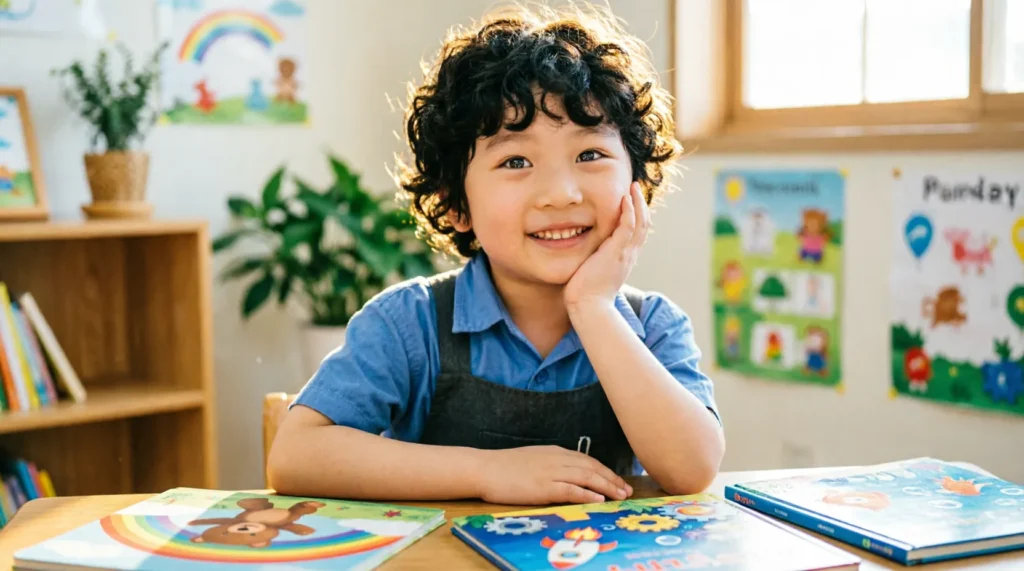
Riddles are like little puzzles that make learning English feel like playtime. For second graders, these word games build vocabulary, sharpen listening skills, and create those “aha!” moments that make kids beam with pride. I’ve collected the best English riddles for class 2 with answers that actually work in real classrooms and family game nights.
Top 5 English Riddles for Class 2
1. What has hands but cannot clap? Answer: A clock
2. What gets wetter the more it dries? Answer: A towel
3. What has a head and a tail but no body? Answer: A coin
4. What can you catch but not throw? Answer: A cold
5. What goes up but never comes down? Answer: Your age
Easy English Riddles for Beginners
These riddles use simple vocabulary and clear concepts that second graders encounter every day. They’re perfect for building confidence.
1. What has eyes but cannot see? Answer: A needle Tested note: When I tried this with my daughter’s class, half the kids said “a potato” first. It’s a common wrong answer because potatoes have “eyes” too!
2. What has a neck but no head? Answer: A bottle
3. What has teeth but cannot bite? Answer: A comb
4. What can run but never walks? Answer: Water (or a river)
5. What has a bed but never sleeps? Answer: A river
6. What has one eye but cannot see? Answer: A needle Tested note: This one stumps kids because they’re thinking of living things. The “aha” moment when they realize it’s an object is priceless.
7. What can fill a room but takes up no space? Answer: Light
8. What goes through towns and over hills but never moves? Answer: A road
Funny English Riddles That Make Kids Laugh
Second graders love silly wordplay. These riddles tickle their funny bones while reinforcing English concepts. humor helps children remember vocabulary longer because the emotional connection makes the learning stick.
1. Why don’t scientists trust atoms? Answer: Because they make up everything!
2. What do you call a bear with no teeth? Answer: A gummy bear
3. Why did the student eat his homework? Answer: Because the teacher said it was a piece of cake! Tested note: This one gets groans and giggles every time. Kids love the absurdity.
4. What do you call cheese that isn’t yours? Answer: Nacho cheese
5. Why can’t you give Elsa a balloon? Answer: Because she’ll let it go!
6. What do you call a sleeping dinosaur? Answer: A dino-snore
7. Why did the math book look so sad? Answer: Because it had too many problems
8. What do you get when you cross a snowman and a vampire? Answer: Frostbite
Animal English Riddles for Class 2
Animal riddles are perennial favorites with second graders. They combine familiar creatures with clever wordplay that reinforces descriptive language.
1. I have a mane but I’m not a lion. I gallop but I’m not running away. What am I? Answer: A horse
2. I have stripes but I’m not a zebra. I’m orange and black and I say “roar.” What am I? Answer: A tiger
3. I have a trunk but I’m not a car. I’m big and gray and I never forget. What am I? Answer: An elephant Tested note: Kids sometimes say “a tree” first, which shows they’re thinking! The “never forget” clue usually pushes them toward elephant.
4. I have a pouch but I’m not a kangaroo’s mom. I hop and I’m from Australia. What am I? Answer: A kangaroo For more, see 130 Clever Riddles for Smart Kids (With Answers).
5. I have spots but I’m not a Dalmatian. I’m the fastest land animal. What am I? Answer: A cheetah
6. I have a long neck but I’m not a giraffe’s cousin. I say “quack” and I love bread. What am I? Answer: A duck
7. I have wings but I’m not a bird. I buzz and I make honey. What am I? Answer: A bee
8. I have a shell but I’m not a turtle. I move slowly and I carry my home. What am I? Answer: A snail
Tricky English Riddles to Challenge Young Minds
These riddles look simple but require careful thinking. They’re excellent for developing critical thinking skills and teaching kids to question their first assumptions.
1. What can you break without touching it? Answer: A promise Tested note: This is genuinely tricky for 7-year-olds because they’re thinking of physical objects. It introduces abstract concepts beautifully.
2. What belongs to you but others use it more? Answer: Your name
3. What has words but never speaks? Answer: A book
4. What can travel around the world while staying in one corner? Answer: A stamp
5. What has a bottom at the top? Answer: Your legs Tested note: The confusion here is delightful—kids visualize objects with tops and bottoms, not realizing body parts work differently!
6. What gets sharper the more you use it? Answer: Your brain
7. What can you hold in your right hand but never in your left? Answer: Your left hand
8. What is always coming but never arrives? Answer: Tomorrow
Short English Riddles for Quick Brain Breaks
Perfect for transition times, morning meetings, or when you need a quick mental stretch. These one-liners pack a punch.
1. What is full of holes but still holds water? Answer: A sponge
2. What can you keep after giving it to someone? Answer: Your word
3. What is so fragile that saying its name breaks it? Answer: Silence
4. What has a head but no body? Answer: Lettuce (or a coin)
5. What goes up when the rain comes down? Answer: An umbrella
6. What has many keys but can’t open a single lock? Answer: A piano
7. What can you see in the middle of March and April but not at the beginning or end of either month? Answer: The letter “R”
8. What is black when you buy it, red when you use it, and gray when you throw it away? Answer: Charcoal
How to Use These Riddles
Riddles work best when they’re woven naturally into your day. Here are proven ways to use them:
In the Classroom: Start morning meetings with one riddle. Write it on the board and let students ponder during the first five minutes. The anticipation builds engagement, and kids who solve it feel accomplished. For more, see English.
At Home: Make riddles a dinner table tradition. My family does “Riddle Night” every Thursday—it’s become something my kids actually request.
On Road Trips: Riddles are perfect for long car rides. They require no materials and keep young minds active. Take turns being the “riddle master.”
For Scavenger Hunts: Hide riddle cards around the house or classroom. Each answer leads to the next location. This combines reading comprehension with physical movement.
During Transitions: Use quick riddles while waiting in line or cleaning up. They redirect energy positively and make waiting time productive.
Frequently Asked Questions
What makes a good riddle for second graders? Good riddles for class 2 use familiar vocabulary, have clear answers, and aren’t so difficult that they frustrate. The best ones make kids think for 30-60 seconds before the solution clicks. Avoid riddles requiring cultural knowledge or advanced concepts they haven’t learned yet.
How do riddles help children learn English? Riddles build vocabulary, improve listening comprehension, and teach kids to think about multiple meanings of words. When a child hears “What has hands but cannot clap?” they must process the word “hands” beyond its usual meaning. This flexibility with language is crucial for reading comprehension. the language’s rich vocabulary and multiple word meanings make it particularly well-suited for riddle-based learning.
Should I give hints if kids can’t solve a riddle? Yes! The goal is engagement, not frustration. If a riddle stumps everyone after a minute, offer a clue like “Think about things you find in the bathroom” or “It’s something you use every day.” You can also reveal the answer and explain the wordplay so they learn the pattern for next time.
How many riddles should I do at once? For second graders, 3-5 riddles per session is ideal. Their attention spans are still developing, and quality beats quantity. It’s better to do two riddles with full discussion than ten rushed ones. Save extras for when they ask for “just one more!”

Nathan Smith is a seasoned puzzle enthusiast with over 18 years of experience in the field of recreational mathematics and logic puzzles. He holds a degree in Mathematics from the University of Chicago, which has significantly influenced his approach to puzzle creation and analysis. Nathan’s journey into brain teasers began during his college years, where he led the university’s puzzle club and organized annual puzzle hunts. At RiddleBarn, Nathan is dedicated to designing intricate logic puzzles and number riddles that challenge even the most seasoned solvers. His content often features a blend of mathematical insights and playful challenges, aiming to captivate readers who seek depth in their puzzling experiences. Nathan’s expertise lies in breaking down complex ideas into engaging and accessible formats.