

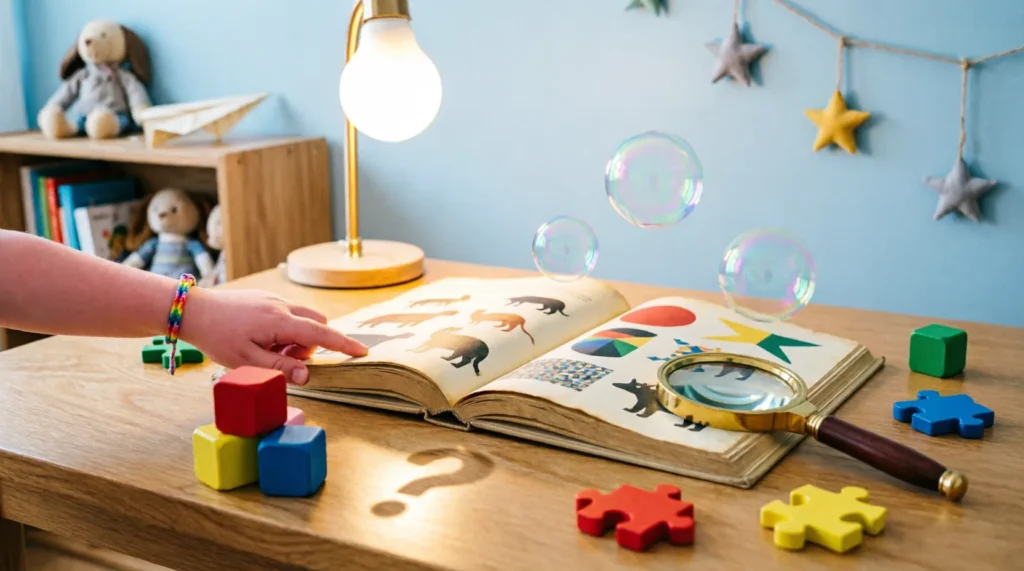
Riddles are one of the simplest ways to spark curiosity and laughter in children. They turn ordinary moments into mini-adventures where logic, wordplay, and imagination collide. Whether you are a parent looking for dinner-table entertainment or a teacher seeking a quick brain break, this collection of fun riddles for kids with answers is designed to engage young minds without frustrating them.
Top 5 Classic Riddles for Kids
These five riddles are the absolute staples of childhood puzzle-solving. They strike the perfect balance between being solvable and requiring a moment of lateral thinking. If you are new to riddling, start here.
I have a neck but no head. I have two arms but no hands. What am I? Answer: A shirt
What has to be broken before you can use it? Answer: An egg
I’m tall when I’m young, and I’m short when I’m old. What am I? Answer: A candle
What month of the year has 28 days? Answer: All of them
What is full of holes but still holds water? Answer: A sponge
Easy Riddles for Young Beginners
When introducing riddles to younger children (ages 4–7), simplicity is key. The goal is to build confidence. These riddles rely on concrete objects and straightforward associations. riddles have been used historically as a form of intellectual play, helping children develop linguistic flexibility and abstract thinking skills Riddle.
- What has keys but can’t open locks? Answer: A piano
Tester’s Note: When I run this one with first-graders, they often guess “a map” or “a treasure chest.” The leap to a musical instrument usually requires a hint about music.
What has legs but doesn’t walk? Answer: A table
What has one eye but can’t see? Answer: A needle
What goes up but never comes down? Answer: Your age
What has many teeth but can’t bite? Answer: A comb
What gets wet while drying? Answer: A towel
What has a face and two hands but no arms or legs? Answer: A clock
What begins with T, ends with T, and has T in it? Answer: A teapot
What belongs to you but is used more by others? Answer: Your name
What has a thumb and four fingers but is not alive? Answer: A glove
Funny Riddles to Spark Laughter
Humor is a powerful motivator for learning. These riddles rely on puns and unexpected twists. The concept of “fun” is deeply rooted in social interaction and enjoyment, making these riddles excellent for building rapport among peers or family members Fun.
Why did the cookie go to the doctor? Answer: Because he felt crummy
What do you call a fake noodle? Answer: An impasta
Why did the scarecrow win an award? Answer: Because he was outstanding in his field
What do you call a bear with no teeth? Answer: A gummy bear
Why can’t you give Elsa a balloon? Answer: Because she will let it go
What do you call a dog that does magic tricks? Answer: A labracadabrador
Why did the math book look sad? Answer: Because it had too many problems
What do you call a sleeping bull? Answer: A bulldozer
Why did the banana go to the doctor? Answer: Because it wasn’t peeling well
What do you call a fish wearing a bowtie? Answer: Sofishticated
Tester’s Note: My 8-year-old niece loves the “impasta” riddle. She groans every time, which is exactly the reaction you want from a good pun-based riddle.
Tricky Riddles That Require Lateral Thinking
These riddles are designed to trip up the solver by using misleading language. They are not necessarily “hard” in terms of vocabulary, but they require the child to listen carefully and avoid jumping to the most obvious conclusion.
What has a head and a tail but no body? Answer: A coin
What can travel all around the world without leaving its corner? Answer: A stamp
What has words but never speaks? Answer: A book
What runs all around a backyard yet never moves? Answer: A fence
What has a bottom at the top? Answer: Your legs
What goes through cities and fields but never moves? Answer: A road
What has a ring but no finger? Answer: A telephone
What has a spine but no bones? Answer: A book
What can you catch but not throw? Answer: A cold
What has a bank but no money? Answer: A river
Tester’s Note: The “coin” riddle is a classic trap. Kids often guess “a snake” or “a worm” because they focus on the biological definition of head and tail. It’s a great teachable moment about homonyms.
Animal Riddles for Nature Lovers
Animals are a perennial favorite topic for children. These riddles combine basic zoological facts with wordplay. They are excellent for reinforcing knowledge about animal characteristics while keeping the mood light.
What has a trunk but isn’t an elephant? Answer: A car
What bird lifts heavy things? Answer: A crane
What kind of room has no doors or windows? Answer: A mushroom
What do you call a pig that does karate? Answer: A pork chop
What has four legs in the morning, two legs in the afternoon, and three legs in the evening? Answer: A human (This is the Sphinx’s riddle; baby crawls, adult walks, elder uses a cane)
What do you call a snake that works for the government? Answer: A civil serpent
What animal is always at a baseball game? Answer: A bat
What do you call a cow with no legs? Answer: Ground beef
What do you call a deer with no eyes? Answer: No idea (no-eye deer)
What do you call a fish that needs help with his vocals? Answer: Auto-tune
Math and Logic Riddles for Sharp Minds
For children who enjoy numbers and patterns, these riddles offer a gentle introduction to logical deduction. They do not require advanced arithmetic, but they do require careful counting and attention to detail.
If you have three apples and you take away two, how many do you have? Answer: Two (You took two, so you have two)
How many sides does a circle have? Answer: Two (Inside and outside)
What number do you get when you multiply all the numbers on a telephone keypad? Answer: Zero (Because of the 0)
If there are four apples and you take away three, how many do you have? Answer: Three
How many months have 28 days? Answer: 12 (All of them have at least 28)
What is the next number in the sequence: 2, 4, 8, 16, …? Answer: 32 (Doubling each time)
If a rooster lays an egg on the roof of a barn, which way does it roll? Answer: Neither way (Roosters don’t lay eggs)
How many letters are in the alphabet? Answer: 11 (The word “alphabet” has 11 letters) Note: This is a trick question. If they mean the English alphabet, it’s 26. But usually, in riddles, it’s a wordplay trick.
What weighs more: a pound of bricks or a pound of feathers? Answer: They weigh the same (One pound)
If you have a bowl with six apples and you take away four, how many do you have? Answer: Four
Tester’s Note: The “pound of bricks vs. feathers” riddle is a staple in my classroom. Almost every child initially says bricks. It’s a fantastic opportunity to discuss the difference between weight and density.
Short and Snappy Riddles for Quick Breaks
Sometimes you only have thirty seconds. These one-liners are perfect for filling wait times, such as standing in line or waiting for the bus. They are quick to deliver and quick to solve.
What is black when it’s clean and white when it’s dirty? Answer: A chalkboard
What has a neck but no head? Answer: A bottle
What goes up and down but doesn’t move? Answer: Stairs
What has a bed but never sleeps? Answer: A river
What has a head and a tail but no body? Answer: A coin
What is so fragile that saying its name breaks it? Answer: Silence
What has a heart that doesn’t beat? Answer: An artichoke
What has a thumb and four fingers but is not alive? Answer: A glove
What has a face and two hands but no arms or legs? Answer: A clock
What has to be broken before you can use it? Answer: An egg
How to Use These Riddles
Riddles are versatile tools. Here are a few practical ways to integrate them into your daily routine:
- Dinner Table Conversation: Replace the standard “How was your day?” with a riddle. It encourages everyone to pause and think together.
- Classroom Brain Breaks: Use a tricky riddle to reset focus after a long lesson. The laughter helps reduce stress and re-engages students.
- Scavenger Hunts: Write riddles on clues that lead to the next item. For example, “I have keys but no locks” could lead to a piano or a keyboard.
- Road Trip Entertainment: Keep a list of these riddles handy. They are much more engaging than passive screen time and help pass the miles.
- Bedtime Wind-Down: Choose easier, calming riddles to help children transition to sleep. Avoid overly stimulating or frustrating puzzles right before bed.
Frequently Asked Questions
What is a good age to start telling riddles to kids? You can start as early as age 4 or 5. At this age, stick to very concrete riddles involving animals or everyday objects. As their vocabulary and abstract thinking skills grow, you can introduce more complex wordplay and logic puzzles.
How do I help a child who is stuck on a riddle? Avoid giving the answer immediately. Instead, offer a small hint. For example, if they are stuck on “What has keys but can’t open locks?”, ask them to think about things that make sound. Encouraging them to think about the function of the object rather than just its appearance often leads to the “aha!” moment.
Are riddles good for brain development? Yes. Riddles promote critical thinking, vocabulary expansion, and lateral thinking. They require children to look at problems from different angles and consider multiple meanings of words. This cognitive flexibility is a valuable skill in both academic and social settings.
What makes a riddle “fun” for kids? A fun riddle is one that is challenging but not impossible. It should have a clear, satisfying answer that makes sense once revealed. Puns and humorous twists are particularly effective because they add an element of surprise and joy to the solving process.

James Moore has been a connoisseur of riddles and brain teasers for over two decades. With a degree in Linguistics from the University of California, he has always been fascinated by the art of wordplay and puzzles. His career started in publishing where he wrote for various puzzle magazines, honing an expertise in cryptic and lateral thinking puzzles. James was drawn to the enigmas of the mind through the influence of his grandfather, who was an avid puzzle enthusiast. At RiddleBarn, he specializes in crafting challenging puzzles that promote critical thinking and creativity. James is particularly known for his ability to create thought-provoking and original content that stretches the boundaries of traditional brain teasers, aiming to inspire and engage puzzlers of all ages.