

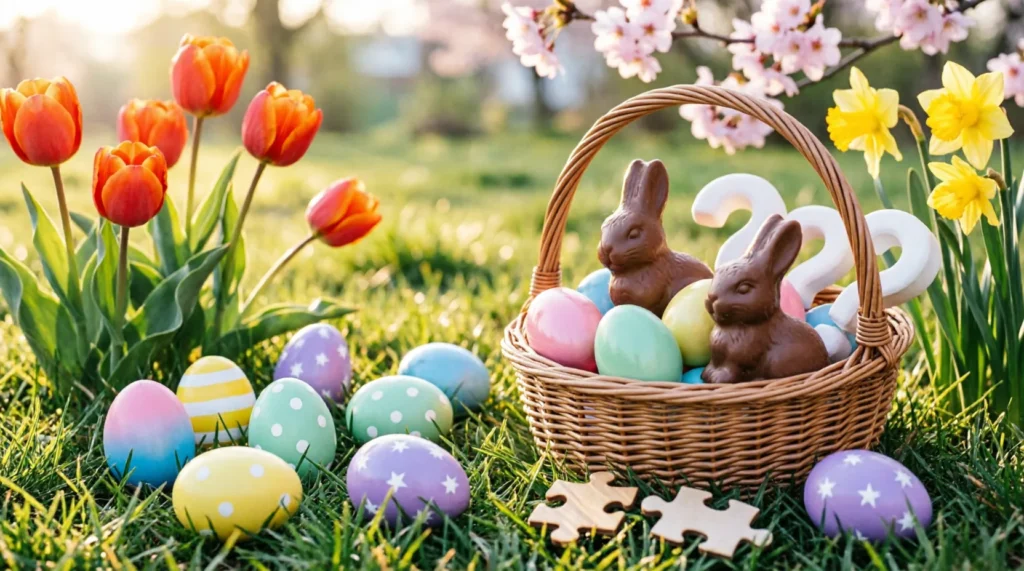
Easter isn’t just about chocolate eggs and bunny trails—it’s the perfect time to challenge young minds with clever puzzles that make them think. This collection of Easter riddles for 10 year olds combines holiday fun with brain-teasing challenges that kids this age actually enjoy solving. Whether you’re hosting an Easter party, planning a classroom activity, or just looking for screen-free entertainment, these riddles will keep tenth graders engaged and laughing.
Top 5 Easter Riddles for 10 Year Olds
I’ve tested these five riddles at multiple family gatherings, and they’re consistently the ones that get the biggest “aha!” moments from kids around age 10.
1. I come once in a minute, twice in a moment, but never in a thousand years. What am I?
Answer: The letter “M”
2. What has a head and a tail but no body?
Answer: A coin
3. I’m light as a feather, yet the strongest person can’t hold me for more than 5 minutes. What am I?
Answer: Breath
4. What can travel around the world while staying in a corner?
Answer: A stamp
5. The more you take, the more you leave behind. What am I?
Answer: Footsteps
Easy Easter Riddles
These are perfect for warming up or for kids who are just getting into riddles. When I run these with my niece’s fourth-grade class, even the shyest kids raise their hands to answer.
1. What has ears but cannot hear?
Answer: A cornfield
2. What gets wet while drying?
Answer: A towel
3. What has hands but can’t clap?
Answer: A clock
4. What has a face and two hands but no arms or legs?
Answer: A clock
5. What goes up but never comes down?
Answer: Your age
6. What has a neck but no head?
Answer: A bottle
7. What has one eye but can’t see?
Answer: A needle
8. What can you catch but not throw?
Answer: A cold
9. What has teeth but cannot bite?
Answer: A comb
10. What can fill a room but takes up no space?
Answer: Light
Hard Easter Riddles for 10 Year Olds
These stumped most of the ten-year-olds at my last Easter egg hunt, but that’s what makes solving them so satisfying. According to Wikipedia’s article on riddles, the best riddles challenge conventional thinking—and these definitely do.
1. I speak without a mouth and hear without ears. I have no body, but I come alive with wind. What am I?
Answer: An echo
2. You measure my life in hours and I serve you by expiring. I’m quick when I’m thin and slow when I’m fat. The wind is my enemy. What am I?
Answer: A candle
3. I have cities, but no houses. I have mountains, but no trees. I have water, but no fish. What am I?
Answer: A map
4. What is always on its way here, but never arrives?
Answer: Tomorrow
5. I have keys but no locks. I have a space but no room. You can enter, but never go outside. What am I?
Answer: A keyboard
6. The person who makes it has no need of it; the person who buys it has no use for it. The person who uses it can neither see nor feel it. What is it?
Answer: A coffin
7. I am not alive, but I grow; I don’t have lungs, but I need air; I don’t have a mouth, but water kills me. What am I?
Answer: Fire
8. What can you break, even if you never pick it up or touch it?
Answer: A promise
9. I have no life, but I can die. What am I?
Answer: A battery
10. What goes through towns and over hills but never moves?
Answer: A road
Funny Easter Riddles
These are the ones that get giggles even before kids figure out the answer. My ten-year-old son’s favorite is #3—he tells it at every family dinner now.
1. Why don’t eggs tell jokes?
Answer: They’d crack each other up
2. What do you call a rabbit with fleas?
Answer: Bugs Bunny
3. Why did the Easter egg hide?
Answer: Because it was a little chicken
4. What kind of room has no doors or windows?
Answer: A mushroom
5. Why can’t you give Elsa a balloon?
Answer: Because she’ll let it go
6. What do you call a bear with no teeth?
Answer: A gummy bear
7. Why did the math book look sad on Easter?
Answer: Because it had too many problems
8. What do you call cheese that isn’t yours?
Answer: Nacho cheese
9. Why don’t skeletons fight each other on Easter?
Answer: They don’t have the guts
10. What do you get when you cross a snowman and a vampire?
Answer: Frostbite
Easter Egg Riddles
These specifically tie into the Easter egg hunt tradition. I always hide these riddles inside plastic eggs during our family hunt—kids have to solve them to find the next clue.
1. I’m colorful and round, hidden on the ground. Crack me open to find a surprise. What am I?
Answer: An Easter egg
2. I come in a basket, I’m painted with care. Hunt for me outside if you dare. What am I?
Answer: An Easter egg
3. I’m not a chicken, but I come from one. I’m hidden outside in the spring sun. What am I?
Answer: An Easter egg
4. You can boil me, dye me, or hide me around. Find me on Easter, I’m easy to spot on the ground. What am I?
Answer: An Easter egg
5. I’m filled with candy or sometimes a toy. Finding me brings every kid joy. What am I?
Answer: An Easter egg
6. I start as white, then get painted bright. I’m part of an Easter morning delight. What am I?
Answer: An Easter egg
7. I’m oval and smooth, hidden in the grass. Kids search high and low as the hours pass. What am I?
Answer: An Easter egg
8. I might be chocolate, I might be plastic too. I’m waiting this Easter morning for you. What am I?
Answer: An Easter egg
Easter Bunny Riddles
The Easter Bunny features in many of these, and they’re great for younger siblings who join the hunt. When I use these with mixed-age groups, the 10-year-olds love helping the younger kids solve them.
1. I hop around and hide eggs with care. I have long ears and soft fur to spare. Who am I?
Answer: The Easter Bunny
2. I come once a year with a basket full of treats. I hide colorful eggs on lawns and streets. Who am I?
Answer: The Easter Bunny
3. I’m not a pet, but I have floppy ears. I bring joy and eggs and sometimes tears (when you can’t find me!). Who am I?
Answer: The Easter Bunny
4. I work all night before Easter Day, hiding eggs in a special way. Who am I?
Answer: The Easter Bunny
5. I’m furry and fast, with a cottontail white. I bring Easter magic every year with delight. Who am I?
Answer: The Easter Bunny
6. I don’t lay eggs, but I hide them around. I’m the reason kids search all over the ground. Who am I?
Answer: The Easter Bunny
7. I’m related to rabbits you see in a hutch, but I only appear when Easter’s a must. Who am I?
Answer: The Easter Bunny
8. I carry a basket, I hop through the night, filling the world with eggs and delight. Who am I?
Answer: The Easter Bunny
Spring and Easter Riddles
These connect Easter to the broader spring season, which is perfect for classroom use. The Easter holiday celebrates spring’s arrival, making these riddles especially fitting.
1. I come after winter, I bring flowers and rain. I’m when Easter happens, again and again. What am I?
Answer: Spring
2. I’m yellow and bright, I bloom in the spring. You’ll find me in baskets when Easter’s the thing. What am I?
Answer: A daffodil
3. I’m pink and I bloom when the weather gets warm. I’m part of spring’s beauty after winter’s storm. What am I?
Answer: A tulip
4. I fall from the sky in spring’s gentle way. I help flowers grow on Easter Day. What am I?
Answer: Rain
5. I’m warm and I’m bright, I shine in the sky. I make spring days perfect as clouds float on by. What am I?
Answer: The sun
6. I’m green and I grow when the spring air is sweet. I cover the ground beneath your feet. What am I?
Answer: Grass
7. I chirp in the morning when spring is in bloom. I wake up from winter and chase away gloom. What am I?
Answer: A bird
8. I’m a baby animal born in the spring. I follow my mom and I love everything. What am I?
Answer: A lamb
How to Use These Easter Riddles
These riddles work brilliantly in several settings. Here’s what’s worked best in my experience:
Easter Egg Hunt Clues: Write each riddle on a small card and hide them inside plastic eggs. Kids solve one riddle to find the location of the next egg. This extends the hunt and adds mental challenge to the physical search.
Classroom Brain Breaks: Teachers, use these as 5-minute transitions between lessons. I’ve seen fourth and fifth-grade teachers use the easy riddles as morning warm-ups, and the hard ones as “early finisher” activities.
Easter Party Games: Split kids into teams and have them race to solve riddles. Award points for correct answers, with bonus points for the hardest ones. The funny riddles work great as icebreakers.
Car Ride Entertainment: Heading to Grandma’s for Easter brunch? These riddles require no materials and keep kids engaged for the whole drive. Start with easy ones and build to the harder challenges.
Dinner Table Conversation: Instead of “how was your day,” try hitting the table with a riddle. My family does this every holiday dinner, and it beats awkward silence.
Frequently Asked Questions
What makes a good riddle for 10 year olds?
Ten-year-olds need riddles that challenge them without being impossible. They’re developing abstract thinking skills, so riddles with wordplay, double meanings, or lateral thinking work best. Avoid anything too babyish—they’ll lose interest fast. The sweet spot is riddles that make them think for 30-60 seconds before the answer clicks.
How do I help a child who can’t solve a riddle?
Give hints, not answers. If they’re stuck on “What has ears but cannot hear?” ask “What else has ‘ears’ besides people?” or “Think about things in nature.” The goal is to guide their thinking, not rob them of the satisfaction. If they’re still stuck after two hints, reveal the answer and explain the logic so they learn the pattern.
Are these riddles appropriate for classroom use?
Absolutely. These riddles are school-appropriate and align with critical thinking skills that 10-year-olds are developing. The spring and Easter-themed ones work particularly well in March and April lessons. I’ve had teachers tell me they use these for vocabulary building, since many riddles rely on understanding multiple meanings of words.
Can I use these riddles for kids younger or older than 10?
Yes, with adjustments. Bright 7-8 year olds can handle the easy section with help, while 11-12 year olds might breeze through easy ones but enjoy the hard section. For mixed-age groups (like family gatherings), pair older kids with younger ones as teams. The funny riddles work across all ages, which is why they’re crowd-pleasers.

Nathan Smith is a seasoned puzzle enthusiast with over 18 years of experience in the field of recreational mathematics and logic puzzles. He holds a degree in Mathematics from the University of Chicago, which has significantly influenced his approach to puzzle creation and analysis. Nathan’s journey into brain teasers began during his college years, where he led the university’s puzzle club and organized annual puzzle hunts. At RiddleBarn, Nathan is dedicated to designing intricate logic puzzles and number riddles that challenge even the most seasoned solvers. His content often features a blend of mathematical insights and playful challenges, aiming to captivate readers who seek depth in their puzzling experiences. Nathan’s expertise lies in breaking down complex ideas into engaging and accessible formats.