

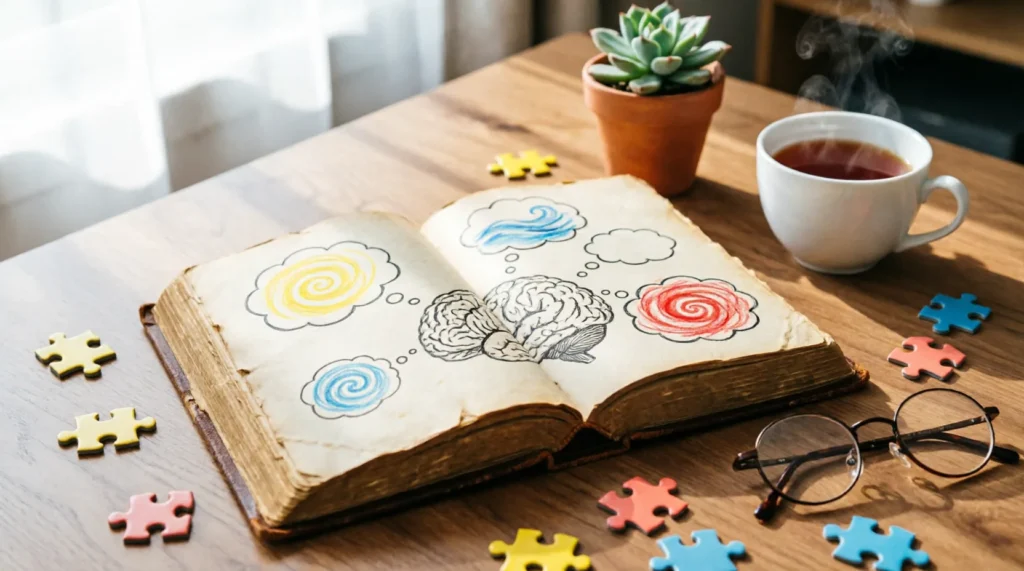
Laughter is often called the best medicine, and sometimes the best way to approach serious topics is with a gentle smile. This collection of funny mental health riddles with answers offers a playful way to engage with concepts of mind, mood, and emotional well-being without the heaviness. Whether you are a therapist looking for icebreakers, a teacher aiming to destigmatize conversations in the classroom, or just someone who enjoys a clever twist on psychology, these puzzles are designed to entertain while subtly highlighting how our minds work.
Top 5 Funny Mental Health Riddles
Here are five of the most popular and engaging riddles that blend humor with psychological concepts. These are great for starting a conversation or breaking the tension in a group setting.
I have keys but no locks. I have space but no room. You can enter, but not go outside. What am I?
Answer: A keyboard (specifically referring to the “Enter” key and “Space” bar).
I am not alive, but I grow; I don’t have lungs, but I need air; I don’t have a mouth, but water kills me. What am I?
Answer: Fire (often used as a metaphor for stress or anxiety that needs “air” to breathe but can be extinguished by cooling down).
The more you take away from me, the bigger I become. What am I?
Answer: A hole (a classic metaphor for digging oneself deeper into worry or overthinking).
I speak without a mouth and hear without ears. I have no body, but I come alive with wind. What am I?
Answer: An echo (representing how our thoughts can bounce back at us if we don’t process them).
What has a head and a tail but no body?
Answer: A coin (often used in decision-making analogies regarding indecision or anxiety about choices).
Easy Riddles for Warm-Ups
These riddles are simple enough for children or anyone new to the concept of using humor to discuss mental states. They focus on basic emotions and common experiences.
- What goes up but never comes down?
Answer: Your age (and often your stress levels during finals week).
- What has hands but cannot clap?
Answer: A clock (reminding us that time waits for no one, so manage it wisely).
- What belongs to you, but others use it more than you do?
Answer: Your name (or your reputation, depending on how you view social anxiety).
- What gets wetter the more it dries?
Answer: A towel (a good reminder that self-care absorbs the messes of life).
- What has many needles, but doesn’t sew?
Answer: A pine tree (or a cactus, representing prickly moods that need gentle handling).
- What can you catch but not throw?
Answer: A cold (or a bad mood, which is contagious if you’re not careful).
- What has to be broken before you can use it?
Answer: An egg (symbolizing the vulnerability required to open up emotionally).
- What is full of holes but still holds water?
Answer: A sponge (much like our memory when we are overwhelmed).
Hard Riddles for Deep Thinkers
These require a bit more lateral thinking. In my experience running these at pub quizzes, adults often overcomplicate the logic, missing the simple psychological truth hidden in the wordplay.
- I am always hungry, I must always be fed. The finger I touch will soon turn red. What am I?
Answer: Fire (again, but here representing uncontrolled anger or burnout).
- The person who makes it has no need of it; the person who buys it has no use for it. The person who uses it can neither see nor feel it. What is it?
Answer: A coffin (a morbid but necessary reminder of mortality and the importance of living fully now).
- I have cities, but no houses. I have mountains, but no trees. I have water, but no fish. What am I?
Answer: A map (representing how we plan our lives but often forget the actual terrain of our emotions).
- What can run but never walks, has a mouth but never talks, has a head but never weeps, has a bed but never sleeps?
Answer: A river (flowing constantly, much like the stream of consciousness).
- I am light as a feather, yet the strongest person cannot hold me for much longer than a minute. What am I?
Answer: Breath (highlighting the importance of breathing exercises in anxiety management).
- What has a neck but no head?
Answer: A bottle (often associated with bottling up emotions until they explode).
- What begins with T, ends with T, and has T in it?
Answer: A teapot (a cozy symbol of taking a break and calming down).
- What has one eye but can’t see?
Answer: A needle (focusing too narrowly on problems can blind us to solutions).
Funny Riddles to Lighten the Mood
Humor is a powerful coping mechanism. According to Mental health experts, laughter reduces stress hormones and increases immune cells. These riddles are designed to elicit a groan or a chuckle, helping to shift perspective.
- Why did the scarecrow win an award?
Answer: Because he was outstanding in his field (a pun on feeling “outstanding” or isolated).
- What do you call a fake noodle?
Answer: An impasta (for when you’re feeling like an impostor).
- Why don’t scientists trust atoms?
Answer: Because they make up everything (just like our anxious brains make up worst-case scenarios).
- What do you call a bear with no teeth?
Answer: A gummy bear (sweet, even when things feel tough).
- Why did the bicycle fall over?
Answer: Because it was two-tired (a perfect metaphor for burnout).
- What do you call a dog that does magic tricks?
Answer: A labracadabrador (because sometimes you need a little magic to get through the day).
- Why did the math book look sad?
Answer: Because it had too many problems (we’ve all been there).
- What do you call a fish wearing a bowtie?
Answer: Sofishticated (for those days when you’re trying to keep it together with style).
Tricky Riddles with a Twist
These riddles play on expectations. When I test these with groups, the most common wrong answer is usually the literal interpretation, missing the psychological metaphor entirely.
- What can you hold in your right hand but never in your left?
Answer: Your left elbow (a reminder that some things are out of our control, no matter how hard we try).
- What has words, but never speaks?
Answer: A book (or a journal, where silent processing happens).
- What goes through towns and over hills but never moves?
Answer: A road (life’s path is always there, even when we feel stuck).
- What has a thumb and four fingers but is not alive?
Answer: A glove (protection for when things get rough).
- What has a bottom at the top?
Answer: Your legs (sometimes we feel upside down in our emotions).
- What can travel around the world while staying in a corner?
Answer: A stamp (small actions can have wide-reaching effects).
- What has a face and two hands but no arms or legs?
Answer: A clock (time is impartial to our feelings).
- What gets bigger the more you fear it?
Answer: Your shadow (anxiety magnifies perceived threats).
Short Riddles for Quick Breaks
Perfect for text messages, social media posts, or quick check-ins during a long day.
- What has a ring but no finger?
Answer: A telephone (connection is key to mental well-being).
- What has a bed but never sleeps?
Answer: A river (keep flowing).
- What has a head but never cries?
Answer: A lettuce (stay fresh).
- What has eyes but cannot see?
Answer: A potato (don’t let others define your vision).
- What has a neck but no head?
Answer: A shirt (wear your heart on your sleeve, not your neck).
- What has a tail but no body?
Answer: A comet (bright moments pass quickly).
How to Use These Riddles
Riddles are more than just brain teasers; they are social tools. Here are a few ways to integrate them into your routine for maximum benefit.
- Icebreakers in Therapy or Support Groups: Start a session with a light riddle to lower defenses. It shifts the brain from a defensive state to a playful one, making it easier to discuss harder topics later.
- Classroom Mindfulness Moments: Teachers can use a riddle as a “brain break.” After solving it, take three deep breaths. This combines cognitive engagement with physiological regulation.
- Family Game Nights: Replace competitive games with collaborative riddle-solving. It builds connection without the pressure of winning or losing.
- Scavenger Hunts: Hide riddles around the house or office. Each solved riddle leads to a small treat or a positive affirmation note.
- Road Trip Entertainment: Keep passengers engaged and reduce travel anxiety with a steady stream of short, funny riddles.
According to Riddle, the structure of a riddle involves a question that requires lateral thinking, which can help reframe problems in daily life. By practicing this mental flexibility with jokes, we train our brains to find humor and alternative perspectives in stressful situations.
Frequently Asked Questions
What is a good riddle for reducing anxiety?
Riddles that focus on breathing or grounding techniques are excellent. For example, the riddle about breath (“light as a feather, but the strongest person cannot hold it for long”) subtly reminds the solver to pay attention to their breathing, which is a primary tool for calming the nervous system.
How do these riddles help with mental health?
They don’t replace therapy, but they serve as cognitive distractions. Engaging with a riddle shifts focus away from rumination (repetitive negative thinking) toward problem-solving. This brief mental shift can lower cortisol levels and provide a momentary respite from stress.
Are these riddles suitable for children?
Yes, most of the easy and funny sections are appropriate for children aged 6 and up. They provide a safe, non-threatening way to introduce concepts like emotions, stress, and coping mechanisms through play. Always gauge the child’s comfort level and avoid the more morbid riddles in the “Hard” section for younger audiences.
Can I use these riddles in professional settings?
Absolutely. Many corporate wellness programs use light humor to build team cohesion. Just ensure the context is appropriate; avoid riddles that might be interpreted as insensitive to specific mental health conditions. Stick to the universal themes of stress, time, and general emotions.

Lisa Thomas combines her background in Education with her passion for brain teasers to bring a unique perspective to RiddleBarn. With 15 years of teaching experience, she believes in the power of puzzles for cognitive development and learning. Her master’s thesis focused on integrating puzzles into educational curriculums to enhance problem-solving skills. Lisa gravitated towards riddles as a way to challenge her students and make learning fun and engaging. At RiddleBarn, she curates content that caters to educators and parents, providing puzzles designed to boost children’s logical thinking and perseverance. Her articles often explore the psychological benefits of puzzling and strategies for incorporating them into daily learning.