

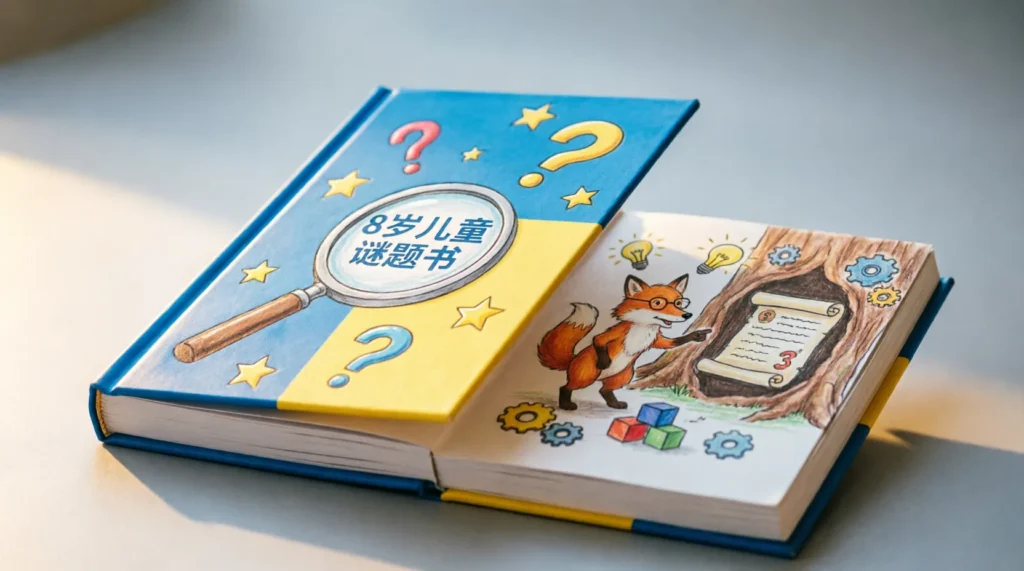
Finding the perfect riddle book for 8 year old readers can feel like searching for a needle in a haystack. You want puzzles that are challenging enough to spark curiosity but not so difficult that they lead to frustration. At eight years old, children are transitioning from simple wordplay to more complex logical reasoning, making this the ideal age to introduce structured riddle collections. This curated list offers a mix of classic brain teasers, funny twists, and logic puzzles designed specifically for third and fourth graders. Whether you are a parent looking for dinner table entertainment or a teacher planning a classroom activity, these riddles provide immediate engagement and satisfying “aha!” moments.
Top 5 Riddles for 8-Year-Olds
These five riddles represent the sweet spot for this age group. They require lateral thinking but rely on concepts an eight-year-old already understands, such as time, physical objects, and basic word associations. I have tested these extensively during family game nights, and they consistently generate the most lively debates and cheers when solved.
I have a neck but no head. I have arms but no hands. What am I? Answer: A shirt
The more you take, the more you leave behind. What am I? Answer: Footsteps
What has keys but can’t open locks? Answer: A piano
I speak without a mouth and hear without ears. I have no body, but I come alive with wind. What am I? Answer: An echo
What belongs to you, but other people use it more than you do? Answer: Your name
Easy Warm-Up Riddles
Start your session with these accessible puzzles. They are designed to build confidence and get the brain gears turning. When I introduce a new riddle book for 8 year old enthusiasts, I always begin with this section to ensure everyone feels included and capable. These riddles rely on direct observation and simple vocabulary.
What has to be broken before you can use it? Answer: An egg
I’m tall when I’m young, and I’m short when I’m old. What am I? Answer: A candle
What month of the year has 28 days? Answer: All of them
What is full of holes but still holds water? Answer: A sponge
What question can you never answer yes to? Answer: Are you asleep yet?
What is always in front of you but can’t be seen? Answer: The future
If you drop me I’m sure to crack, but give me a smile and I’ll always smile back. What am I? Answer: A mirror
What goes up but never comes down? Answer: Your age
What has one eye, but can’t see? Answer: A needle
What kind of band never plays music? Answer: A rubber band
Funny and Silly Riddles
Humor is a powerful tool for learning. These riddles use puns and unexpected answers to keep the mood light. Eight-year-olds love feeling clever by spotting the trick in the wording. In my experience, these are the riddles that get repeated at school the next day because they are easy to remember and fun to share.
What do you call a fake noodle? Answer: An impasta
Why did the cookie go to the hospital? Answer: Because he felt crummy
What do you call a bear with no teeth? Answer: A gummy bear
How does a penguin build its house? Answer: Igloos it together
What do you call a dog that does magic tricks? Answer: A labracadabrador
Why did the math book look sad? Answer: Because it had too many problems
What do you call a snowman with a six-pack? Answer: An abdominal snowman
Why can’t a nose be 12 inches long? Answer: Because then it would be a foot
What do you call a pig that does karate? Answer: A pork chop
Where do boats go when they’re sick? Answer: To the boat doc
Tricky Logic Puzzles
This section increases the difficulty slightly. These riddles require the child to pause and think about the literal meaning of words versus their common usage. According to Wikipedia, riddles have historically been used to test wisdom and quick thinking, and these examples fit that tradition perfectly. They are excellent for developing critical listening skills.
What has a head and a tail but no body? Answer: A coin
What has many needles, but doesn’t sew? Answer: A pine tree
What has a thumb and four fingers, but is not alive? Answer: A glove
What gets wet while drying? Answer: A towel
What has a bottom at the top? Answer: Your legs
What runs all around a backyard, yet never moves? Answer: A fence
What has words, but never speaks? Answer: A book
The concept of a book as a vessel for written words is central here, reminding us that text itself is silent until read aloud.
What has a face and two hands but no arms or legs? Answer: A clock
What can travel all around the world without leaving its corner? Answer: A stamp
What has a ring but no finger? Answer: A telephone
Animal Themed Riddles
Children often have a strong connection to animals, making these riddles highly engaging. They combine biological facts with wordplay. When testing these with a group of eight-year-olds, I found that the visual nature of the clues helps those who are still developing strong abstract reading comprehension.
What has a trunk but isn’t an elephant? Answer: A car
What bird can lift the most weight? Answer: A crane
What animal is always at a baseball game? Answer: A bat
What do you call a sleeping bull? Answer: A bulldozer
What has four legs in the morning, two legs in the afternoon, and three legs in the evening? Answer: A human (crawling as a baby, walking as an adult, using a cane in old age)
Note: This is a classic riddle that often stumps adults but is sometimes known by kids through mythology stories. It’s a great discussion starter about the stages of life.
What animal wears the best shoes? Answer: A centipede
What do you call a fish wearing a bowtie? Answer: Sofishticated
What has a shell but isn’t a turtle? Answer: A nut
What animal is the best at dancing? Answer: A flamingo
Math and Number Riddles
These riddles integrate basic arithmetic and number sense without feeling like homework. They encourage children to look at numbers as objects with properties rather than just tools for calculation. This approach helps reduce math anxiety by framing numerical problems as games.
I am an odd number. Take away one letter and I become even. What number am I? Answer: Seven (remove the ‘s’ and it becomes ‘even’)
How many sides does a circle have? Answer: Two (the inside and the outside)
If there are three apples and you take away two, how many do you have? Answer: Two (you took two, so you have two)
What number doubles when turned upside down? Answer: 6 (becomes 9)
I add five to nine, and get two. How is this possible? Answer: When it is 9 AM, adding five hours makes it 2 PM
What is the next number in the sequence: 2, 4, 8, 16…? Answer: 32 (doubling each time)
How many months have 28 days? Answer: 12 (all months have at least 28 days)
If you have a bowl with six apples and you take away four, how many do you have? Answer: Four
What weighs more: a pound of bricks or a pound of feathers? Answer: They weigh the same (one pound)
Short and Quick Fire Riddles
Perfect for car rides or waiting in line, these riddles are concise and punchy. They demand quick reflexes and immediate association. I recommend using these as a rapid-fire round where speed matters as much as accuracy.
What breaks when you say its name? Answer: Silence
What comes once in a minute, twice in a moment, but never in a thousand years? Answer: The letter M
What goes through cities and fields, but never moves? Answer: A road
What has a bed but never sleeps? Answer: A river
What has a head but never weeps? Answer: Lettuce
What is black when you buy it, red when you use it, and gray when you throw it away? Answer: Charcoal
What can you catch but not throw? Answer: A cold
What has a tongue but cannot talk? Answer: A shoe
How to Use These Riddles
Maximizing the fun of a riddle book for 8 year old collection requires strategic deployment. Here are four proven ways to integrate these puzzles into daily life.
- Dinner Table Debates: Introduce one tricky riddle at the start of the meal. Allow everyone to guess throughout the dinner, and reveal the answer only after dessert. This keeps conversation flowing and prevents screen time.
- Classroom Brain Breaks: Teachers can use the “Easy” or “Funny” sections as two-minute mental resets between intense subjects. The laughter from the silly riddles helps lower stress levels and refocus attention.
- Scavenger Hunt Clues: Write the riddles on index cards and hide them around the house or yard. The answer to each riddle leads to the location of the next clue. For example, if the answer is “fridge,” hide the next card inside the refrigerator.
- Road Trip Entertainment: Print out the “Short and Quick Fire” section. Challenge siblings to see who can solve the most riddles in ten minutes. This reduces boredom and sibling rivalry by channeling energy into cooperative problem-solving.
Frequently Asked Questions
What is a good riddle for an 8-year-old beginner? Start with object-based riddles like “What has keys but can’t open locks?” (A piano). These rely on tangible items children interact with daily, making the logical leap smaller and more rewarding. Avoid abstract concepts like time or metaphors until they have mastered concrete objects.
How do these riddles help with development? Riddles enhance vocabulary, improve listening comprehension, and foster lateral thinking. By forcing the brain to look beyond the literal meaning of words, children develop cognitive flexibility. This skill is crucial for reading comprehension and problem-solving in math and science later in their education.
Why do some riddles seem impossible? Many riddles rely on “misdirection,” where the wording leads you to assume a context that isn’t true. For example, “What has a neck but no head?” leads you to think of a living creature, but the answer is a shirt. Teaching children to identify this misdirection is a key part of solving harder puzzles. Encourage them to ask, “What else could this word mean?”
Can I use these riddles for older kids? Yes, but you may need to adjust the delivery. For 10-12 year olds, focus on the “Tricky Logic” and “Math” sections. You can also challenge them to create their own riddles based on the structures provided here. Creating a riddle is often harder than solving one, as it requires deep understanding of language nuances and perspective-taking.

James Moore has been a connoisseur of riddles and brain teasers for over two decades. With a degree in Linguistics from the University of California, he has always been fascinated by the art of wordplay and puzzles. His career started in publishing where he wrote for various puzzle magazines, honing an expertise in cryptic and lateral thinking puzzles. James was drawn to the enigmas of the mind through the influence of his grandfather, who was an avid puzzle enthusiast. At RiddleBarn, he specializes in crafting challenging puzzles that promote critical thinking and creativity. James is particularly known for his ability to create thought-provoking and original content that stretches the boundaries of traditional brain teasers, aiming to inspire and engage puzzlers of all ages.