

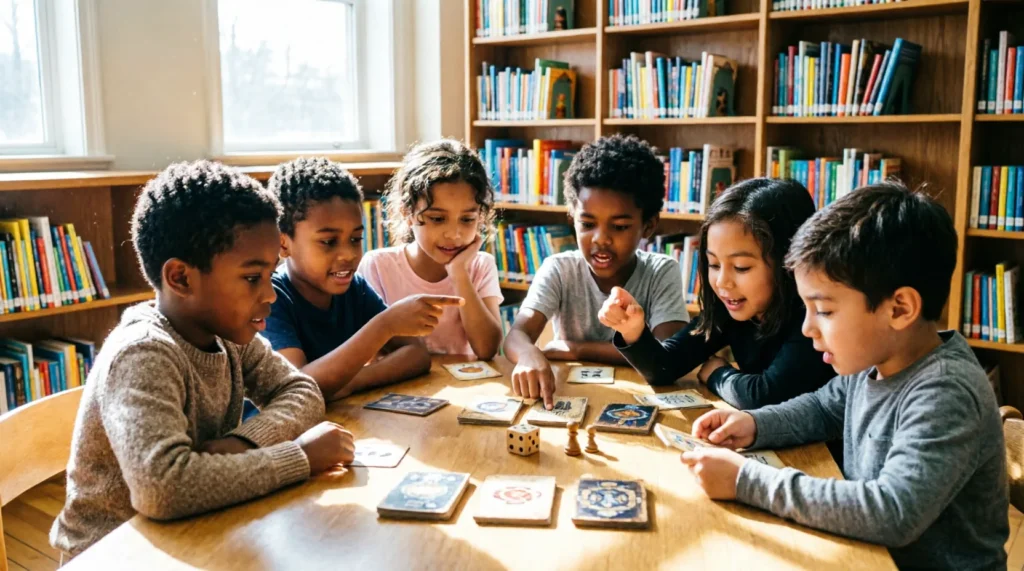
Finding the perfect brain teasers for children can be tricky, as you need a careful mix of logic, wordplay, and pure silliness to keep them engaged. According to Riddle, these puzzles have been used for centuries across cultures to test wit and lateral thinking, making them a timeless activity for growing minds. This collection is curated for kids of all ages, with every single answer provided right below the question so you never get stuck during game night.
Top 5 Riddles for Kids with Answers in English
These are the absolute heavy hitters—the riddles that consistently get the best reactions at family gatherings, birthday parties, and classroom events.
- What has to be broken before you can use it?
Answer: An egg.
- I’m tall when I’m young, and I’m short when I’m old. What am I?
Answer: A candle.
- What month of the year has 28 days?
Answer: All of them.
Tested in the wild: When I run this one with kids, the wrong guess is always “February!” They get so delightfully mad when they realize it’s a trick question and every single month has at least 28 days.
- What is full of holes but still holds water?
Answer: A sponge.
- There’s a one-story house in which everything is yellow. Yellow walls, yellow doors, yellow furniture. What color are the stairs?
Answer: There are no stairs—it’s a one-story house.
Easy Riddles for Younger Kids
These are perfect for preschoolers and early elementary students. They rely on simple observations of the physical world rather than complex linguistic wordplay.
- What has hands but cannot clap?
Answer: A clock.
Tested in the wild: My 5-year-old solved this in ten seconds, but adults somehow overthink it and guess “a mannequin” or “a statue.”
- What has a head and a tail but no body?
Answer: A coin.
- What can you catch, but not throw?
Answer: A cold.
- What has many teeth, but can’t bite?
Answer: A comb.
- What goes up but never comes down?
Answer: Your age.
- What has one eye, but can’t see?
Answer: A needle.
- What building has the most stories?
Answer: A library.
- What has words, but never speaks?
Answer: A book.
- What gets wetter the more it dries?
Answer: A towel.
- What has a thumb and four fingers, but is not alive?
Answer: A glove.
Funny Riddles That Make Kids Laugh
Puns and jokes are a massive hit with the elementary school crowd. Because the English language is full of homophones, idioms, and double meanings, it provides the absolute perfect playground for wordplay and pun-based riddles.
- What do you call a bear with no teeth?
Answer: A gummy bear.
- Why did the teddy bear say no to dessert?
Answer: Because she was stuffed.
- What do you call a fake noodle?
Answer: An impasta.
Tested in the wild: This always gets a massive groan followed by giggles at our family dinner table. It’s a guaranteed crowd-pleaser that breaks the ice immediately.
- What do you call cheese that isn’t yours?
Answer: Nacho cheese.
- Why do bees have sticky hair?
Answer: Because they use honeycombs.
- What did the zero say to the eight?
Answer: Nice belt!
- What do you call a snowman with a six-pack?
Answer: An abdominal snowman.
- Why did the bicycle fall over?
Answer: Because it was two tired.
- What do you call a pig that does karate?
Answer: A pork chop.
- Why can’t you give Elsa a balloon?
Answer: Because she will let it go.
Tricky Animal Riddles
Kids love animals, and these riddles use distinct animal traits to create fun little mysteries that test their knowledge of the natural world.
- I jump when I walk and sit when I stand. What am I?
Answer: A kangaroo.
Tested in the wild: Middle schoolers solve this instantly, while younger kids usually guess “a rabbit” before I remind them to think closely about the standing and sitting clues.
- I wear a tuxedo but never go to parties. What am I?
Answer: A penguin.
- What has a long neck, four legs, and eats leaves from tall trees?
Answer: A giraffe.
- I am a furry pet that purrs and catches mice.
Answer: A cat.
- I have eight legs and spin a web to catch my dinner.
Answer: A spider.
- What animal is famously known as man’s best friend?
Answer: A dog.
- I have black and white stripes and live in Africa.
Answer: A zebra.
- I am the roaring king of the jungle.
Answer: A lion.
- I sleep upside down and use echolocation to fly at night.
Answer: A bat.
- I carry my house on my back and move very slowly.
Answer: A snail.
Hard Riddles for Older Kids
These require a bit more lateral thinking and abstract reasoning. They are excellent for kids aged 10 and up who are ready to flex their logic muscles and look past the obvious.
- I speak without a mouth and hear without ears. I have no body, but I come alive with wind. What am I?
Answer: An echo.
- The more of this there is, the less you see. What is it?
Answer: Darkness.
- What can travel all around the world without leaving its corner?
Answer: A stamp.
- I have cities, but no houses. I have mountains, but no trees. I have water, but no fish. What am I?
Answer: A map.
Tested in the wild: This looks genuinely hard to most adults, but kids who play sandbox video games figure out it’s a map in about five seconds flat.
- What is seen in the middle of March and April that can’t be seen at the beginning or end of either month?
Answer: The letter R.
Difficulty stance: I rate this as a true brain-bender. It looks like a calendar math problem, but it’s actually a pure spelling trap that tricks the brain into doing unnecessary calculations.
- What disappears as soon as you say its name?
Answer: Silence.
- What has a bottom at the top?
Answer: Your legs.
- If you have me, you want to share me. If you share me, you haven’t kept me. What am I?
Answer: A secret.
- What can you hold in your right hand, but never in your left hand?
Answer: Your left elbow.
- I am always coming, but never arrive. What am I?
Answer: Tomorrow.
How to use these riddles
Having a list is great, but knowing how to deploy them makes all the difference. Here are a few ways I use these brain teasers in real life:
- Classroom Warm-ups: Teachers can write one riddle on the whiteboard each morning. It gets students talking and thinking critically before the official lessons begin, shifting their brains into an active learning state.
- Scavenger Hunts: Write the riddles on index cards and hide them around the house or yard. The answer to the riddle tells the kids where the next clue is hidden. For example, if the answer is “a clock,” they run to the grandfather clock in the hallway to find clue number two.
- Road Trip Entertainment: Long car rides are the perfect time for riddles. Keep the driver focused on the road while the kids in the backseat take turns stumping each other. It kills hours of screen-free time without anyone complaining about being bored.
- Dinner Table Icebreakers: Instead of asking the dreaded “how was school” question, drop a funny riddle into the conversation. It shifts the dynamic and usually gets even the most quiet kids laughing and participating in the family dialogue.
- Birthday Party Contests: Split the kids into teams and read the riddles out loud. Give them 30 seconds to whisper their answers to you. The team with the most points wins a small prize, like a sticker or a piece of candy. It turns a simple list into a high-energy competitive game that burns off sugar-fueled excitement.
Frequently Asked Questions
What is a good riddle for a 5-year-old? Stick to riddles about physical objects they interact with daily. Riddles about animals, household items like clocks or combs, and basic body parts work best. Avoid abstract wordplay until they are a bit older and have a stronger grasp of vocabulary and double meanings.
How do these riddles help child development? Beyond just being fun, riddles teach kids to listen carefully, recognize patterns, and think outside the box. They introduce the concept that words can have multiple meanings, which is a foundational skill for reading comprehension and language arts. This cognitive flexibility helps them navigate complex instructions later in school.
Why do kids love riddles so much? Kids love the feeling of being “in on the secret.” When they figure out a riddle, they experience a rush of dopamine and feel incredibly smart. It gives them a chance to outsmart adults or their older siblings, which is a rare and empowering dynamic in their daily lives where they are usually the ones being told what to do.
What should I do if my child gets frustrated by hard riddles? Give them gentle, progressive hints rather than just handing over the answer. If the riddle is about a map, ask them to think about things they look at when planning a trip. The goal is to guide them to the “aha!” moment themselves, which builds resilience and problem-solving confidence. If they are still stuck, laugh it off together and reveal the answer so the mood stays light and playful.

James Moore has been a connoisseur of riddles and brain teasers for over two decades. With a degree in Linguistics from the University of California, he has always been fascinated by the art of wordplay and puzzles. His career started in publishing where he wrote for various puzzle magazines, honing an expertise in cryptic and lateral thinking puzzles. James was drawn to the enigmas of the mind through the influence of his grandfather, who was an avid puzzle enthusiast. At RiddleBarn, he specializes in crafting challenging puzzles that promote critical thinking and creativity. James is particularly known for his ability to create thought-provoking and original content that stretches the boundaries of traditional brain teasers, aiming to inspire and engage puzzlers of all ages.